A great wildlife viewing kayak tour in Illinois does not begin with a checklist of rare birds. It begins with that first quiet stretch of water, when the car noise drops away, the paddle makes a soft splash, and somebody in your group suddenly points toward the shoreline. Maybe it is a heron lifting out of the reeds. Maybe it is a turtle lineup catching the sun. Maybe it is an eagle silhouette that makes everyone stop talking for a second.
Near Starved Rock, the Illinois River gives Chicago-area families, couples, and friend groups an easy way to trade screens and schedules for sandstone bluffs, open sky, and a little wild surprise. You do not need to be an expert paddler to enjoy it. In fact, slow, relaxed paddling is often the best way to notice what is already around you.
Why Kayaks Are So Good for Wildlife Viewing
Wildlife rarely performs on command. That is part of the fun. A kayak moves quietly and sits low to the water, giving you a close-to-nature perspective that is hard to get from a hiking trail or a parking lot overlook. Instead of racing from one sight to another, you can drift, look, listen, and let the river set the pace.
The flatwater environment near Starved Rock is especially friendly for first-time paddlers. Dam-controlled conditions help keep the water approachable, with shallow areas and no need to battle a fast current. That means less energy spent worrying about where your boat is going and more attention available for the tree line, rocky banks, and ripples beside your kayak.
A guided trip adds another layer. Guides handle the on-water leadership, help everyone get comfortable with the basics, and know when to slow down for a promising section of shoreline. They cannot promise a bald eagle will fly directly over your bow right on cue – wildlife has better things to do than follow an itinerary – but they can help you notice more of the landscape and paddle with confidence.
What You May See on an Illinois River Paddle
Every season writes a different river story. Some days bring plenty of activity. Other days offer quieter views, changing light, and the kind of calm that still feels like a win. Come with curiosity rather than a must-see list, and the experience gets better.
Birds Along the Bluffs and Banks
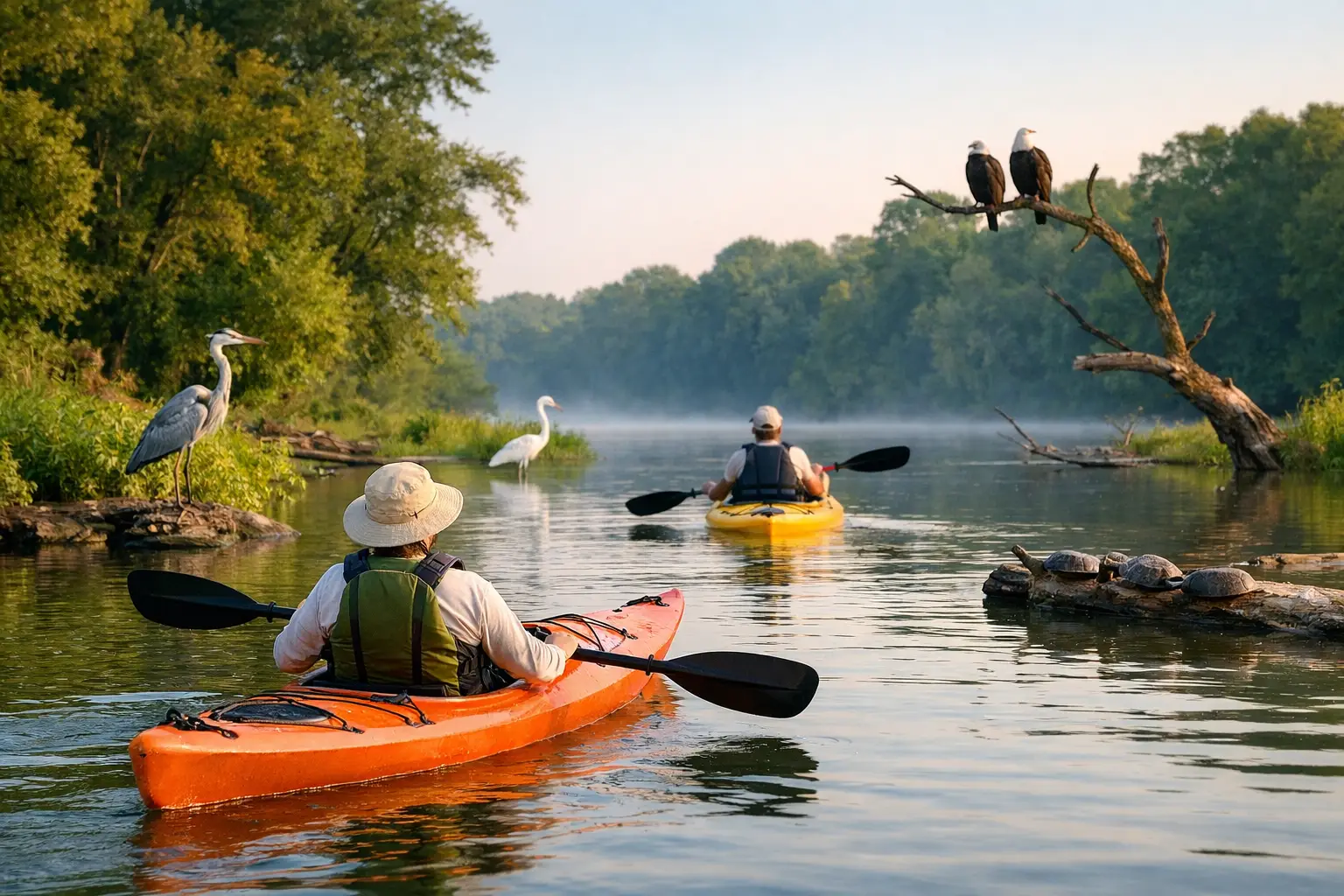
Great blue herons are among the most memorable sightings because they are both huge and wonderfully still. You may spot one standing at the water’s edge before it unfolds its wings and glides away. Egrets, ducks, geese, kingfishers, and hawks can also appear along the river corridor.
Bald eagle viewing is a major draw around Starved Rock, particularly in the colder months when eagles gather near open water. Winter paddling is not the same as a warm-weather kayak outing, of course, and availability depends on weather and operations. But if eagle season is your goal, plan ahead and ask about the conditions for the date you have in mind.
Turtles, Fish, and Small River Moments
Warm, sunny days can bring turtles onto logs, rocks, and muddy banks. They often slide into the water before a kayak gets close, which is a good reminder that viewing is not chasing. Look for their shapes from a distance, pause, and enjoy the tiny splash when they disappear.
You may also see fish breaking the surface, dragonflies hovering around the reeds, frogs tucked along the bank, and busy shorebirds moving through the shallows. These are not always the photos people expect to take home, but they are often the sightings that make kids lean forward and ask a dozen questions.
The Scenery Counts Too
Wildlife viewing near Starved Rock is not just about animals. Sandstone bluffs, wooded river edges, and wide Illinois River views create a setting that feels far removed from a normal Saturday near Chicago. The scenery is part of why the quiet moments work so well. Even when the birds are being shy, you are still paddling through a place worth seeing.
How to Have a Better Wildlife Viewing Kayak Tour in Illinois
The best wildlife watchers are not necessarily the loudest spotters or the people with the biggest camera lenses. They are the people willing to settle in. Give your eyes time to adjust to the shoreline, and scan slowly from the waterline to the tops of the trees.
Morning and later afternoon can feel especially peaceful, with softer light and fewer distractions. That said, the best launch time depends on the season, the weather, and your group’s comfort level. Families with young children may have more fun choosing the time when everyone is rested and fed rather than forcing an early start for the theoretical perfect birding window.
Wear clothing that can handle a splash, bring water, and use sun protection on bright days. Binoculars can be helpful, but they are not required. A phone camera is fine for casual photos, although it is worth putting it down sometimes. You will remember the paddle better if you actually watch the heron instead of spending five minutes trying to zoom in on it.
Most importantly, wear your PFD. Life jackets are required on the water, and they are part of a smart, relaxed day outside. A properly fitted PFD lets beginners focus on having fun while guides focus on leading the group safely.
Give Wildlife Its Space
A good river encounter leaves no stress behind for the animal. Keep a comfortable distance from birds, turtles, nests, and shoreline habitat. Do not paddle straight at an animal for a closer photo, and never feed wildlife. Human snacks are not good for wild animals, and food can teach them to approach people in ways that are unsafe for everyone.
Keep voices low when you see something special, especially near the bank. A kayak is already a quieter way to travel than many boats, so use that advantage. Drift, observe, and let the animal choose whether to stay or move on.
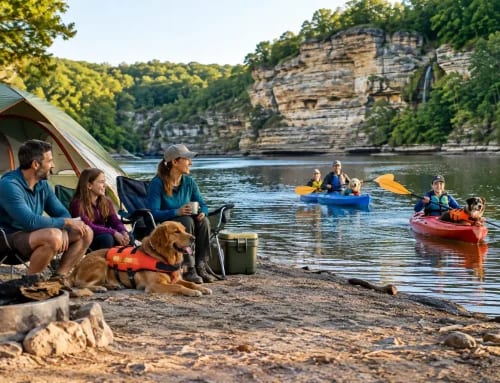
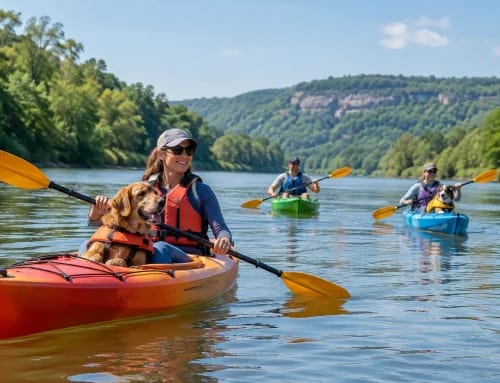
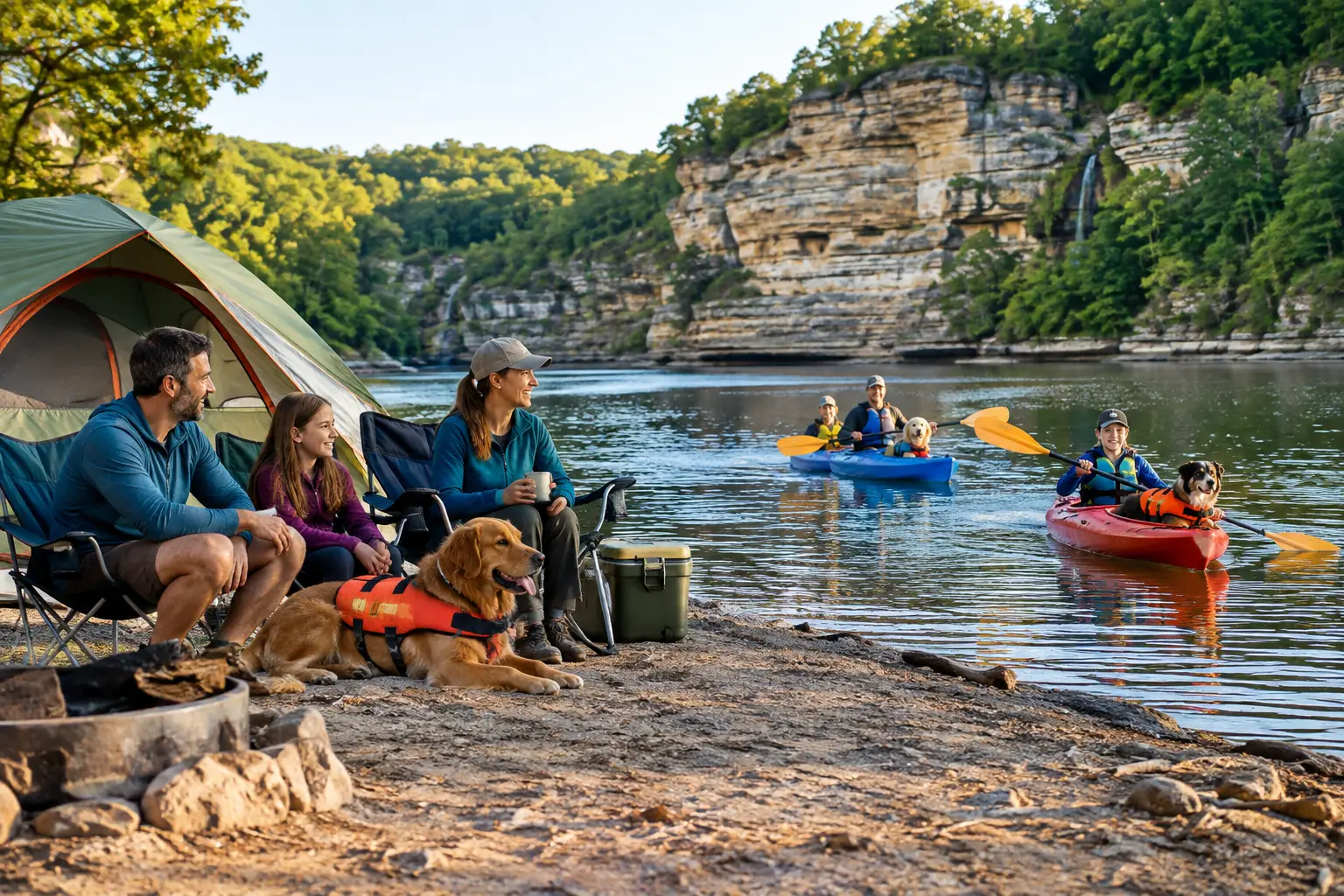
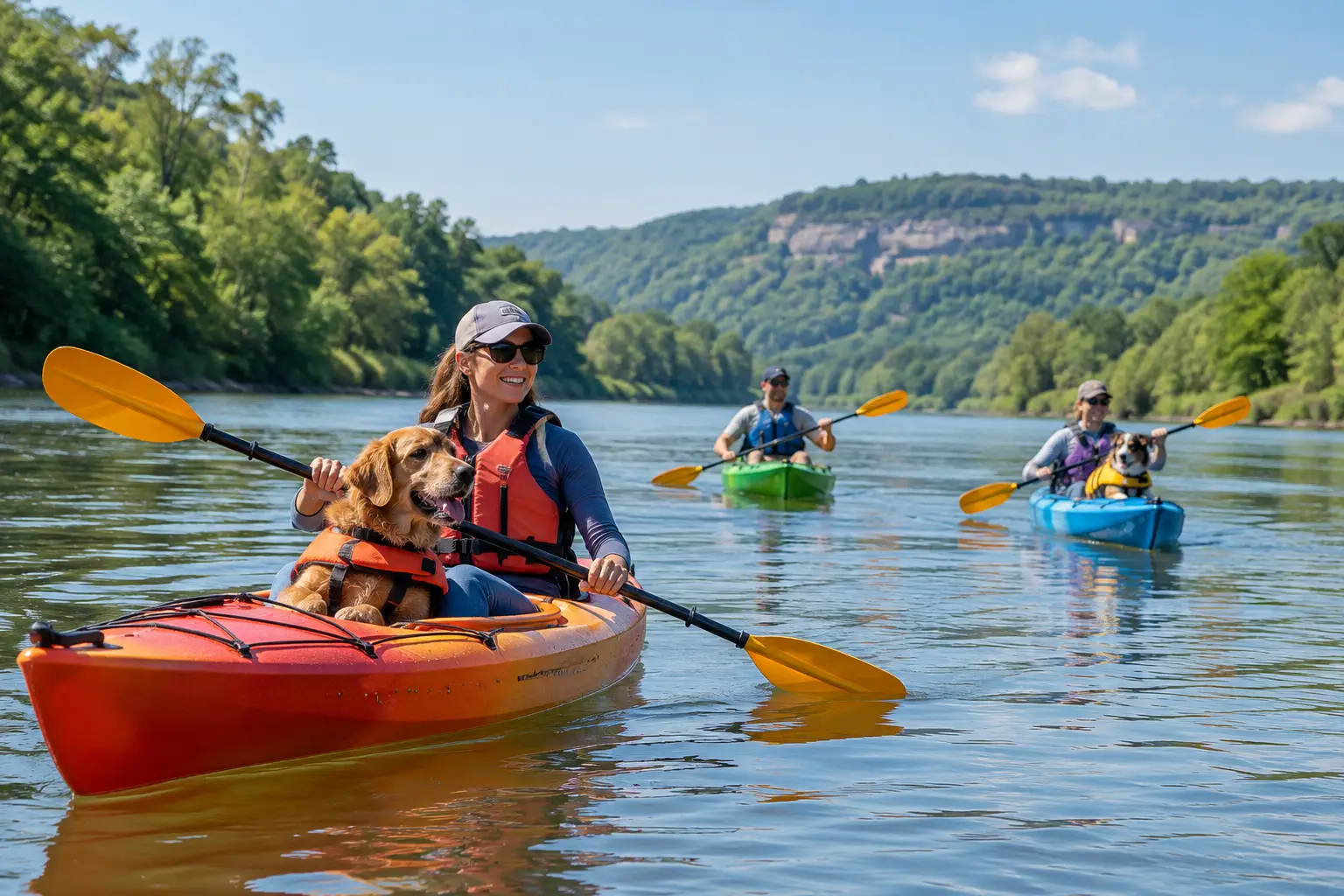
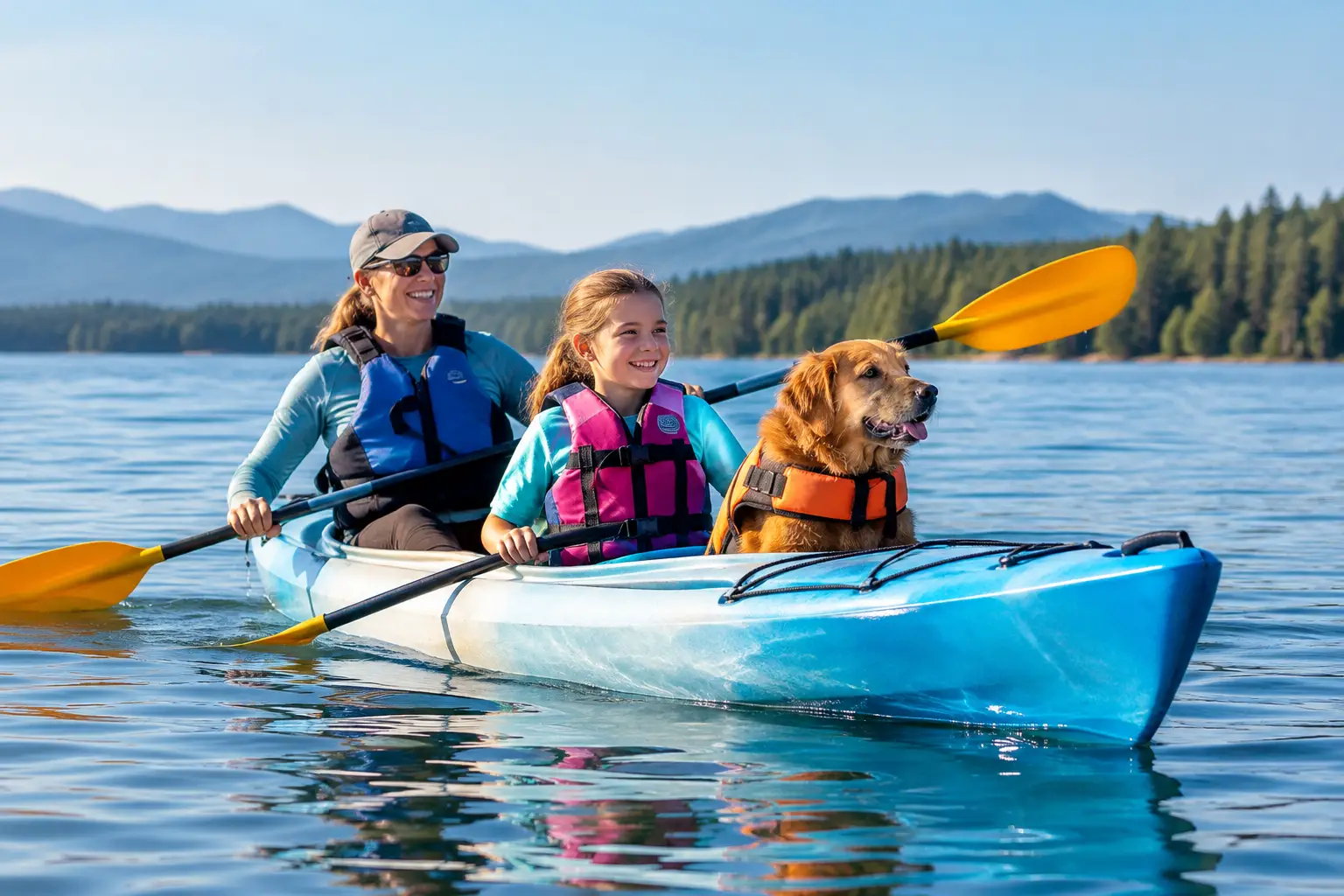
If you bring a dog, make sure your pup is comfortable around water and able to settle in the boat. Dog-friendly kayaking can be a blast, but it works best when your dog stays close, wears appropriate flotation gear, and does not bark at or chase wildlife. The goal is a peaceful river day, not a floating squirrel patrol.
Make It a Near-Chicago Weekend Escape
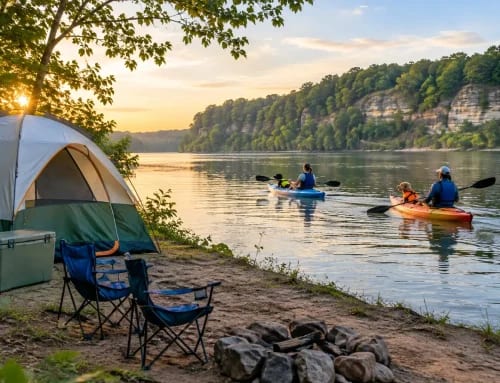
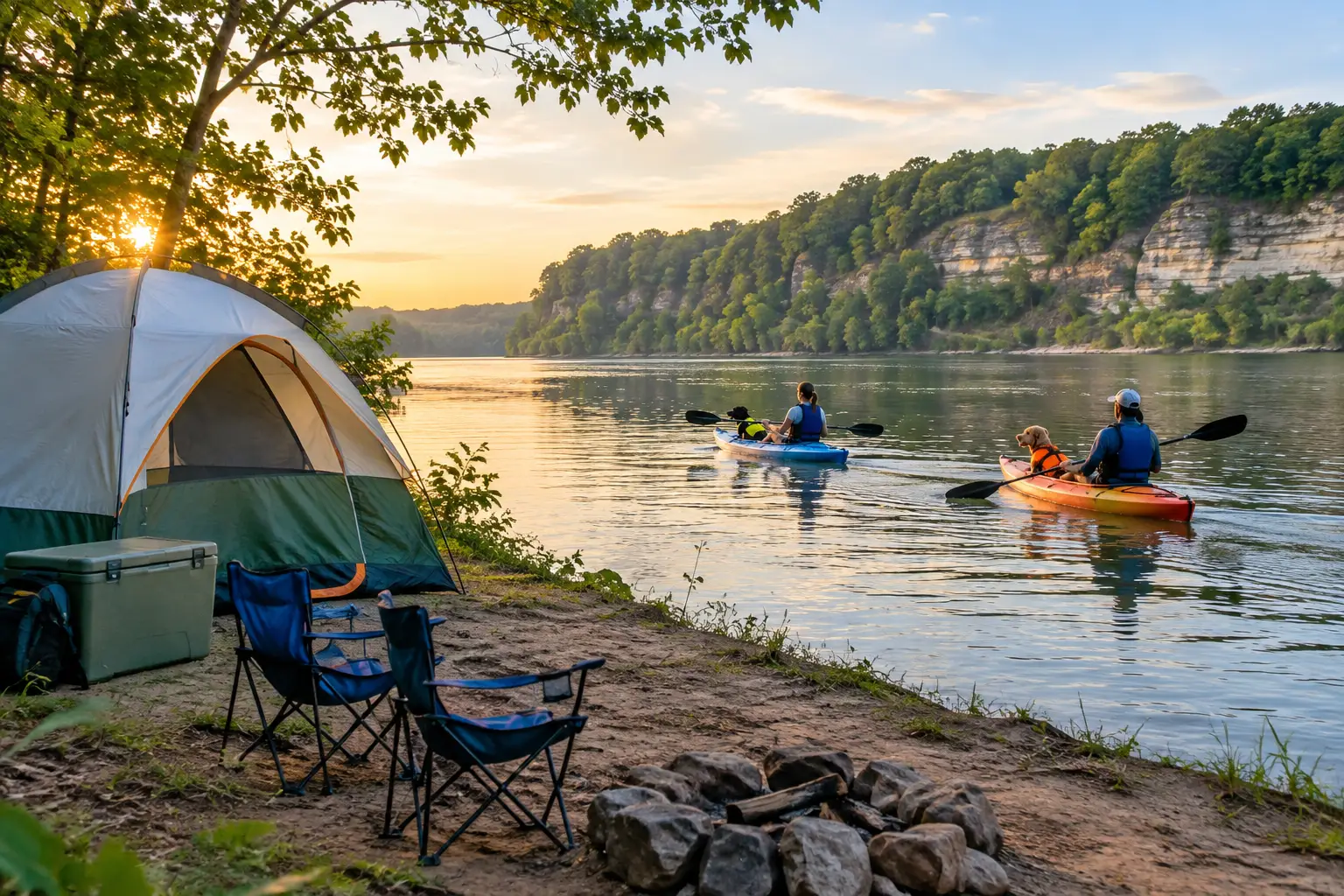
A wildlife paddle can be a simple day trip, but it also fits beautifully into a low-stress weekend near Starved Rock State Park. Rather than rushing back to Chicago after your tour, spend the night at a waterfront campground and let the river setting do some of the work. The evening light, campfire conversations, and early-morning birds make the outing feel bigger than a few hours on the water.
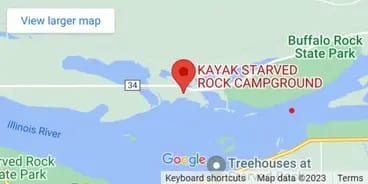
Kayak Starved Rock Campground offers an easy paddle-and-camp setup for groups who want nature without turning the trip into a logistics project. Bring your own tent, choose a pop-up camping option, or book a tear drop camping stay for a more comfortable base camp. Tent rentals can also make sense for travelers who want the camping experience without storing gear all year.
Camping is especially useful for families, friend groups, and couples who want time for both kayaking and nearby Starved Rock trails. Just remember that campground comfort still comes with real outdoor basics: pack layers for cool evenings, bring bug spray, secure food, and follow quiet hours so everyone can enjoy the setting.
A Few Things That Make the Day Easier
Book ahead when you can, especially for weekends, guided trips, and camping dates. Arrive with enough time for check-in, safety instruction, and getting fitted for your kayak and PFD. Rushing the launch is a fast way to turn a relaxing adventure into a scramble.
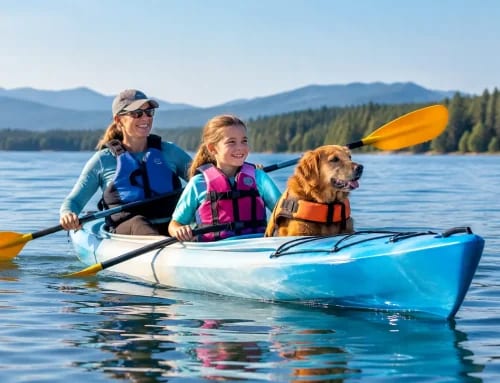
If you are new to kayaking, a tandem can be a great choice for couples, a parent and child, or anyone who wants to share the paddling. Single kayaks offer more independence. Neither option is automatically better – it depends on how confident everyone feels and whether you would rather coordinate strokes or chart your own little course.
The river does not need to deliver a once-in-a-lifetime sighting to make the day worthwhile. Give yourself permission to paddle slowly, laugh when someone turns the wrong way, and enjoy every small discovery along the shore. That is where a wildlife-focused Illinois kayak trip becomes more than an outing – it becomes the kind of easy, fresh-air memory people keep talking about on the drive home.