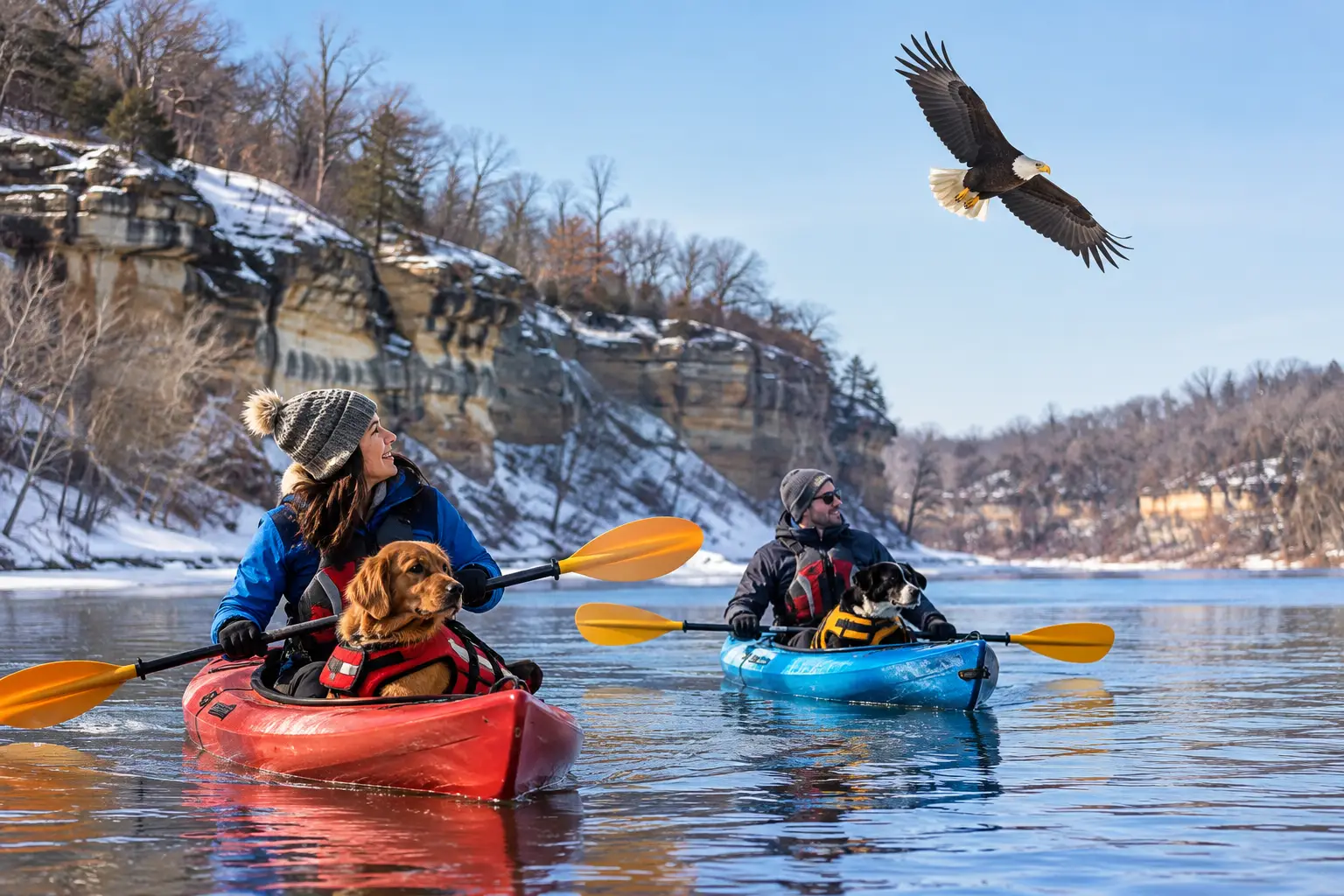
A bald eagle lifting off an Illinois River ice shelf is the kind of moment that quiets an entire group. Bald eagles at Starved Rock are one of Northern Illinois’ best winter wildlife experiences, and you do not need to be a hardcore birder to enjoy it. Bring warm layers, a little patience, and a plan that gives you time to look up from the river.
For Chicago-area families, couples, and friend groups, this is an easy reason to trade one ordinary winter weekend for a real outdoor story. Starved Rock State Park is known for sandstone bluffs, frozen waterfalls, and trail views, but the open water around the river creates a different kind of show: eagles scouting for fish, perching in tall trees, or circling over the channel.
Why Bald Eagles Gather at Starved Rock
Winter is the headline season for eagle watching in the Starved Rock area. As smaller waterways freeze, stretches of moving or open water on the Illinois River can remain available for fishing. That draws bald eagles looking for food, particularly during the colder months.
The river, the nearby lock and dam system, and the wooded shoreline all help create habitat that works for these large birds. You may see a mature adult with a white head and tail, but keep an eye out for younger eagles, too. Juvenile bald eagles are bigger-looking than many first-time viewers expect, with mottled brown-and-white feathers and no classic white head yet.
Sightings are never a guarantee. Weather, ice conditions, river activity, time of day, and plain old eagle behavior all affect what you see. That unpredictability is part of the fun. A good trip treats the eagle as a wild animal, not an appointment on the calendar.
When to Look for Bald Eagles at Starved Rock
Late winter is often the prime window, with January and February commonly drawing the most attention. Cold snaps can concentrate activity near open water, while a milder stretch may spread birds across a wider area. If eagle viewing is your main goal, plan enough time to watch rather than rushing through one overlook and calling it a day.
Morning and late afternoon can be especially rewarding because the light is better for viewing and photos. Eagles may be most visible when they are moving between perches and feeding areas, but there is no magic minute that works every time. Give yourself a few unhurried hours along the river corridor.
Check local conditions before leaving home. Winter trail surfaces can be icy, parking areas can be busy on popular weekends, and access conditions change quickly after snow, rain, or a hard freeze. Dress for standing still. Eagle watching involves more waiting than hiking, and cold finds its way through thin gloves fast.
Bring binoculars, not expectations of a close-up
A pair of binoculars makes the experience dramatically better. Eagles need room to behave naturally, and the best view is often from a respectful distance. A phone camera can capture the memory, but binoculars let you see the details: the yellow beak, powerful feet, and the remarkably broad wings of a bird in flight.
Keep your voice down near likely viewing areas, do not try to call birds closer, and never approach a perched eagle for a photo. Respecting wildlife is not the boring part of the trip. It is how visitors help keep this river corridor a place eagles return to year after year.
A River Day That Does More Than Eagle Watch
Starved Rock makes a great winter destination because you can build the day around more than one activity. Start with a scenic drive along the Illinois River, spend time at a river overlook or on a carefully chosen trail, then warm up and settle into a relaxed campsite or nearby meal plan. It is a full reset without a five-hour drive north.
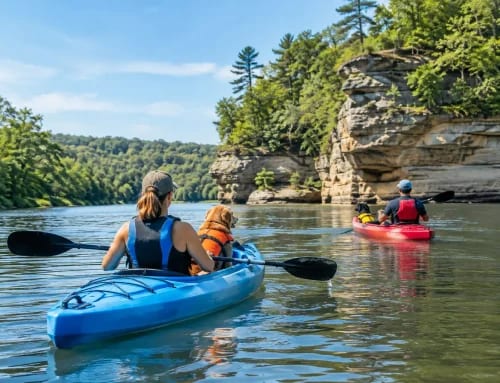
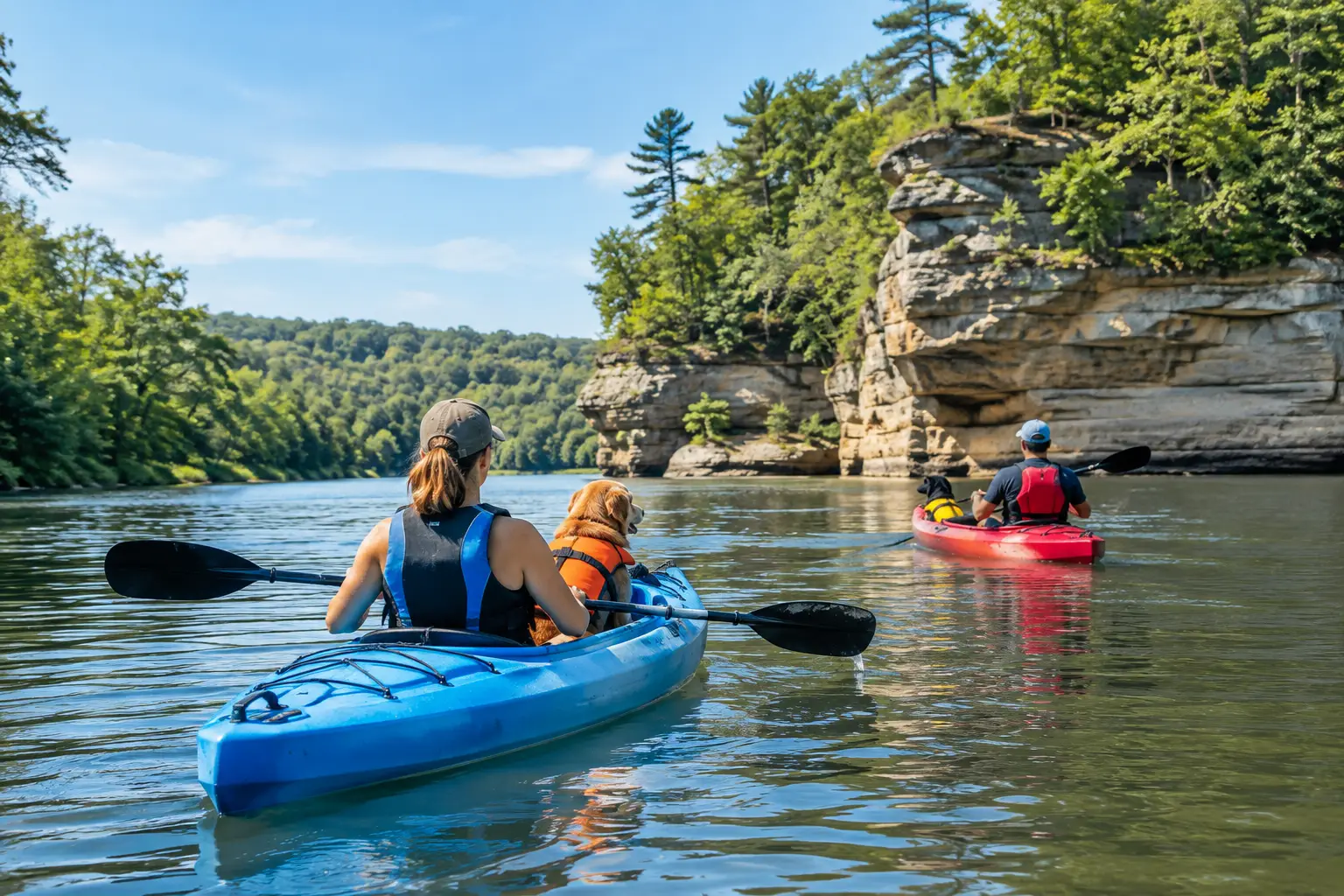
If you are visiting in a paddling season, the river offers another perspective on the landscape. A kayak puts you low on the water with sandstone bluffs and wooded shoreline rising around you. It is a peaceful way to take in the Starved Rock area, but it should not be treated as an eagle-chasing mission. Wildlife viewing is always a bonus, and safe boating decisions come first.
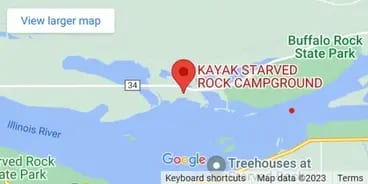
At Kayak Starved Rock Campground, flatwater kayak experiences are designed to make the Illinois River approachable for first-timers, families, and groups. Rentals and guided options include the practical support that helps people relax: clear direction, equipment, maps, and on-water guidance for guided trips. Every paddler wears a properly fitted PFD. No exceptions, no stylish workaround, no arguing with your life jacket.
Winter paddling requires a more cautious standard than a warm July rental. Water temperatures, wind, ice, and operating schedules matter more than your enthusiasm. Only paddle when conditions and available services support it, follow all launch guidance, and choose a guided experience when you want added structure. Some days are made for the trail and hot drinks, not the water. That is still a win.
Turn an Eagle Trip Into Illinois River Camping
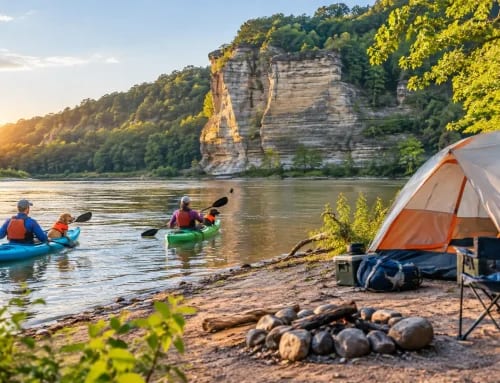
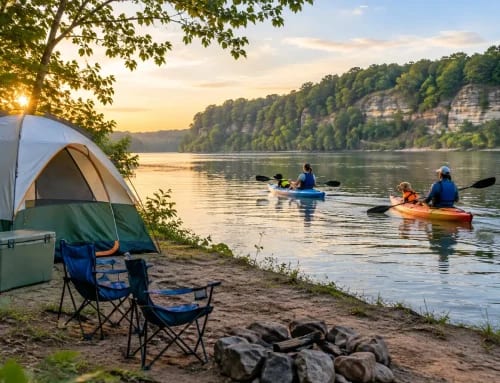
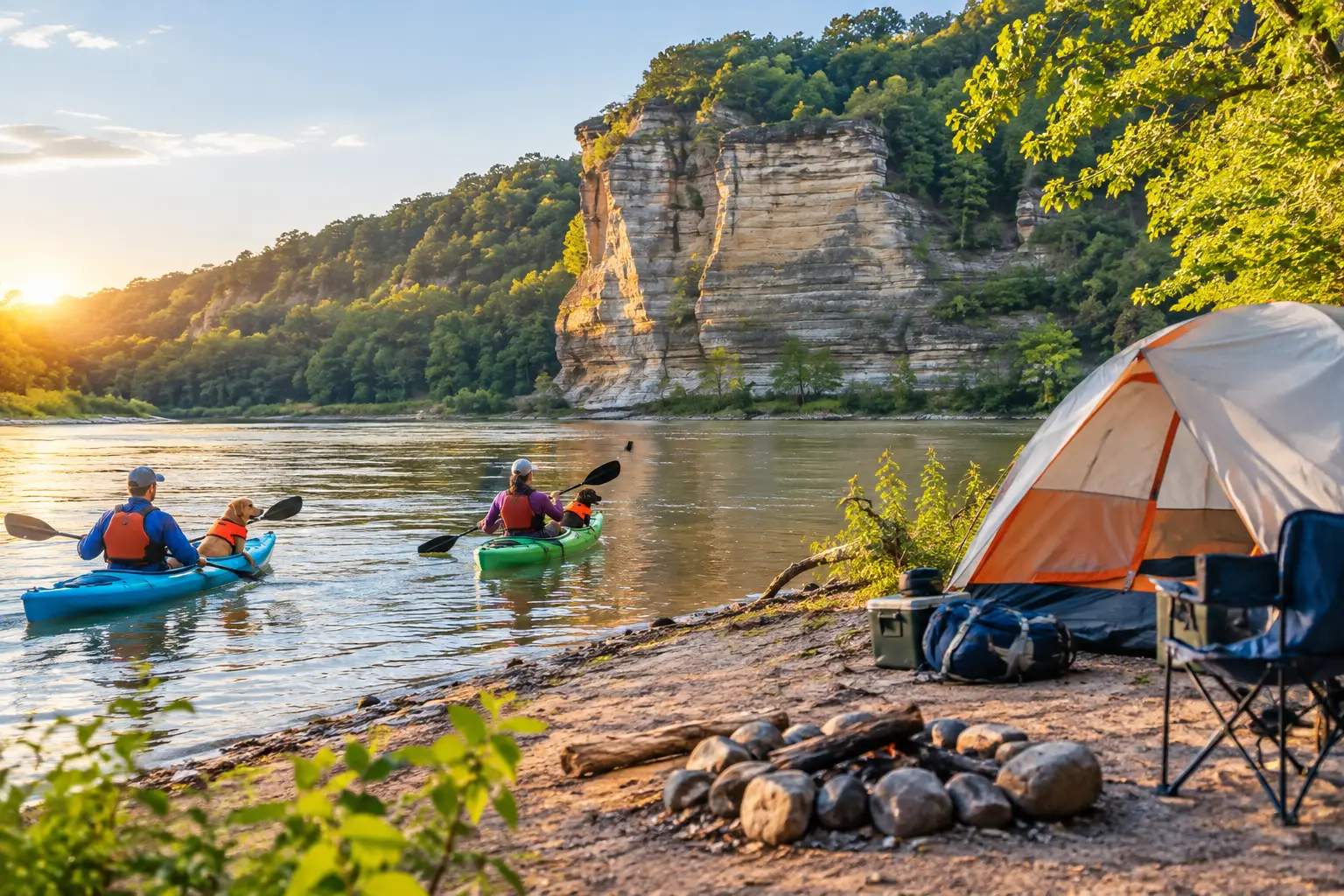
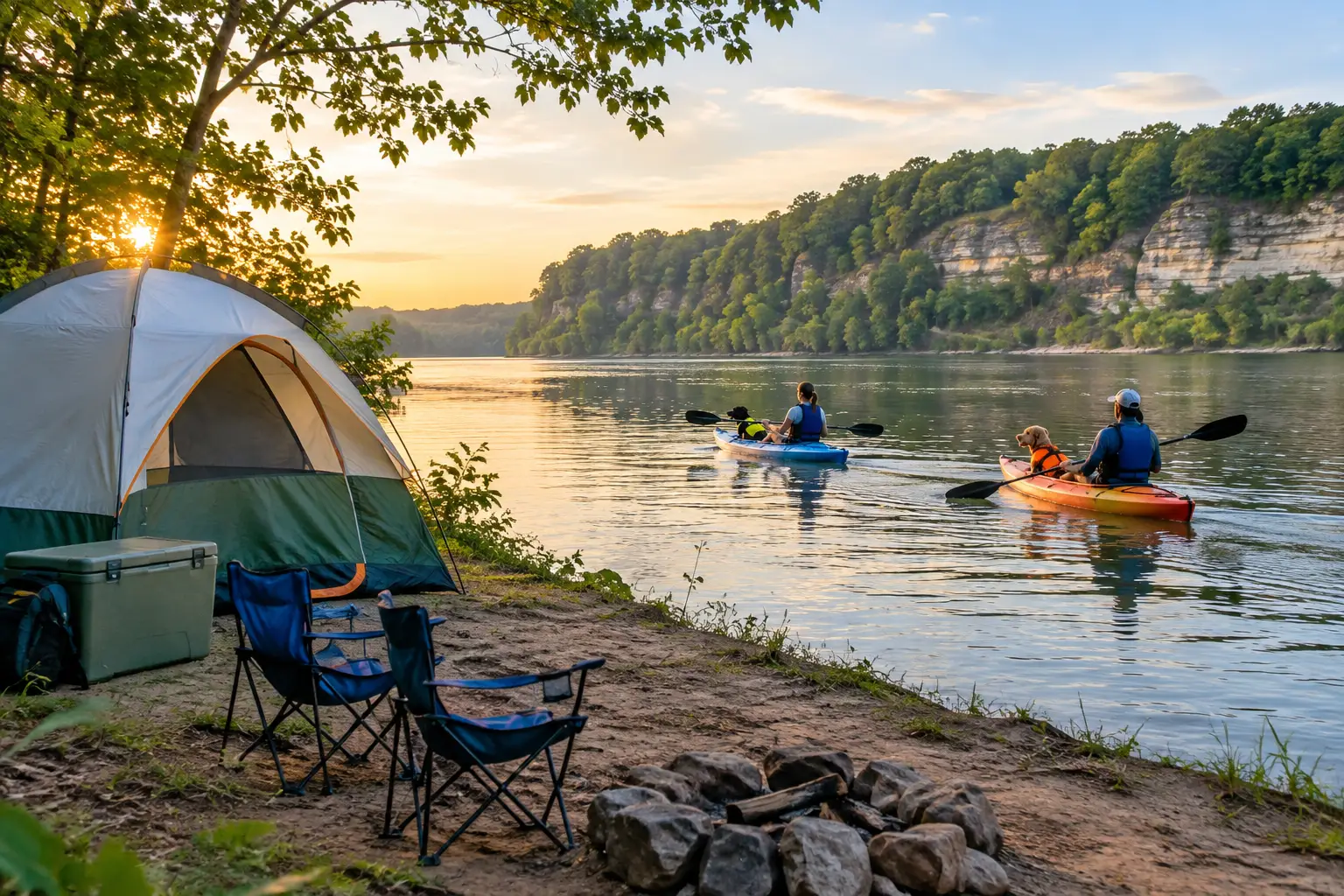
A one-day eagle outing is fun. A waterfront camping weekend gives you room to enjoy it without watching the clock. Camping near Starved Rock State Park means an early start is easier, sunset along the river feels less rushed, and your group can spend the evening swapping sightings instead of driving straight back toward Chicago.
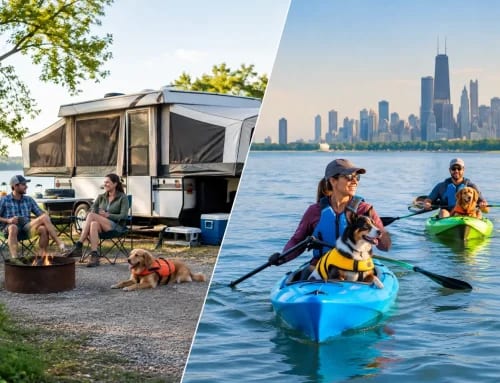
The right setup depends on how your crew likes to camp. Bring your own tent if you love a classic campfire-and-cooler weekend. A pop-up camping option can be a better fit for campers who want a straightforward setup and fewer moving parts. A tear drop camper brings a little extra comfort for couples or friends who want to sleep off the ground and wake up ready for coffee, trails, and another river view.
For visitors who want the feeling of camping without turning packing into a part-time job, glamping-style options and tent rentals can make the trip feel far more manageable. It is an especially good call for first-time campers, busy parents, or friends who own exactly zero tent stakes. The goal is not to prove how rugged you are. The goal is to spend more time outside together.
A dog-friendly weekend needs a little planning
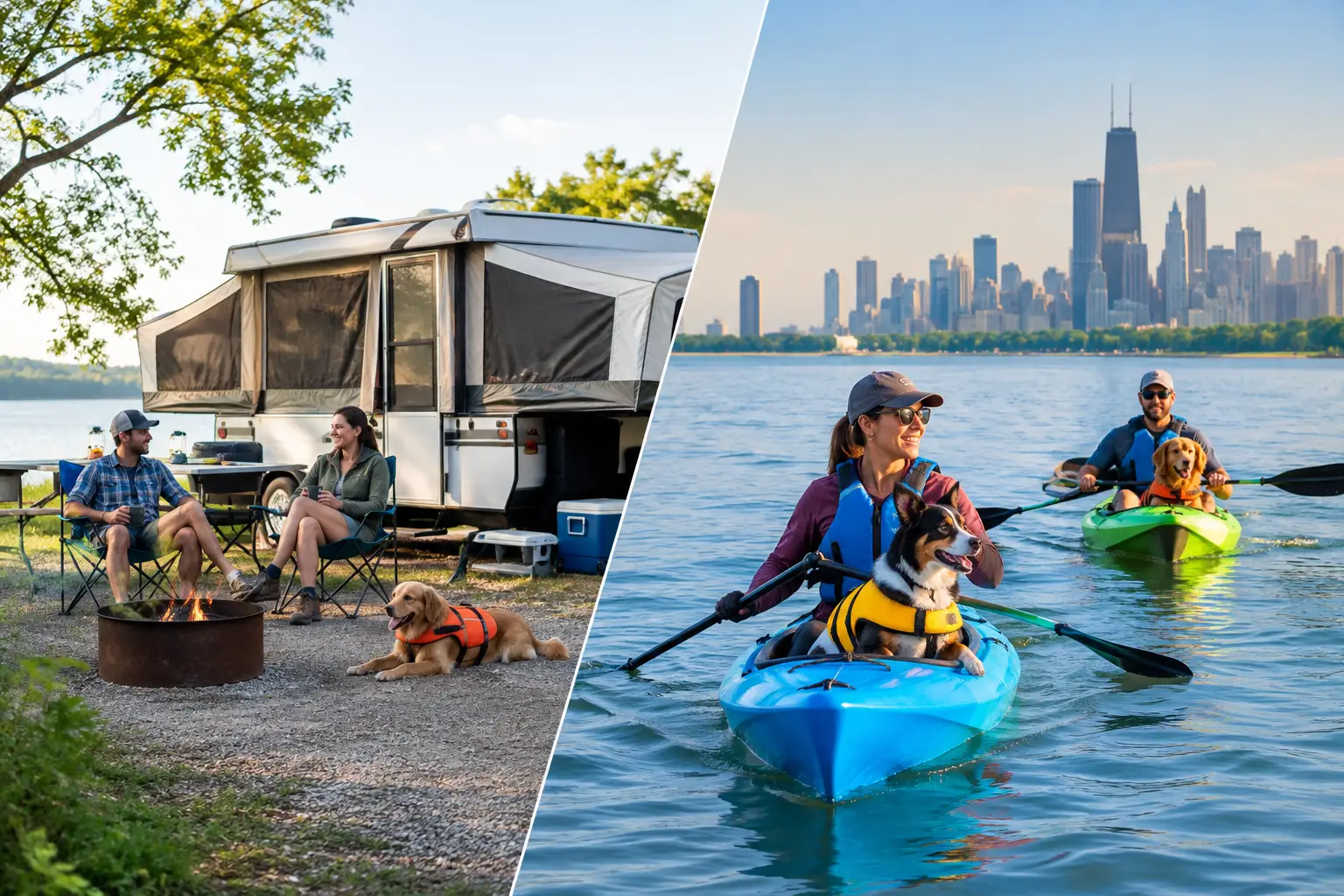
A river trip is even better when your dog gets to come along, and dog-friendly camping near Starved Rock can be a great fit for well-prepared pet owners. Bring a leash, water bowl, waste bags, bedding, and a warm coat if your dog gets chilly. Winter riverbanks are not a place for an off-leash adventure, even for the friendliest pup in Illinois.
Dogs and bald eagles need space from each other. Keep pets close, avoid letting them bark toward wildlife, and do not allow them to run along shorelines where birds may be feeding or resting. A calm dog makes the experience better for everyone, including the people trying to spot a white head in the trees.
Make the Trip Easy From Chicago
The Starved Rock area is close enough for a day trip from Chicago, but it feels meaningfully removed from city noise. That combination is why it works so well for birthdays, low-key date weekends, family getaways, and friend groups that need an excuse to put their phones down for a while.
A simple plan is usually the best plan: arrive with a warm drink, watch the river first, take a trail only if the conditions suit your group, then leave time for a relaxed lunch or campfire. If you are camping, pack for changing weather rather than the forecast’s best-case scenario. Extra socks, dry shoes, hand warmers, a waterproof outer layer, and a real sleeping pad can make a cold-weather weekend feel cozy instead of heroic.
For paddling visits during the operating season, book ahead and pay attention to launch times. A later arrival can shrink your time on the water, and daylight does not negotiate. Guided tours are a smart choice for groups who want safety instruction and local leadership built into the experience. Rentals are ideal when you want more independence but still appreciate a beginner-friendly river environment.
Let the Eagles Set the Pace
The best bald eagle trips at Starved Rock are not about collecting the perfect photo. They are about that quiet minute when the river is moving, the bluff is glowing in winter light, and someone in your group points skyward. Give yourself enough time for that minute, keep your distance, stay warm, and let the day unfold at the speed of the birds.