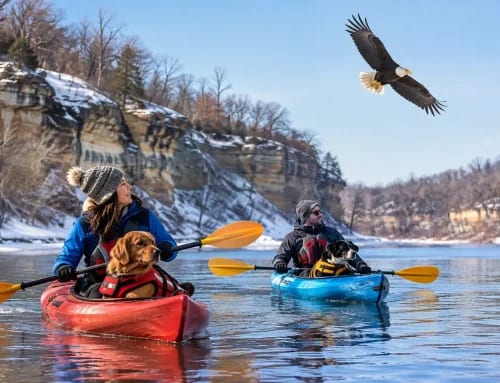
Chicago traffic has a special talent for making a two-hour drive feel like a full expedition. A bring your own boat access day near Starved Rock is the better kind of escape: load up the kayak, canoe, or paddleboard, head west, and get on the water without a complicated shuttle plan or a whitewater skill test.
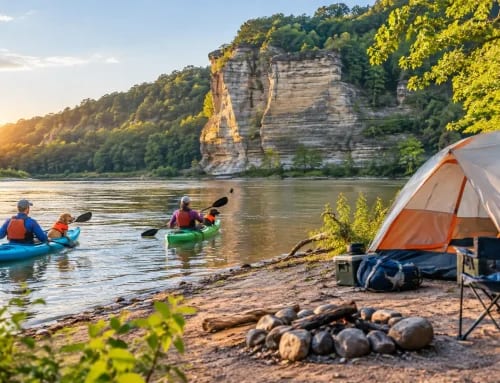
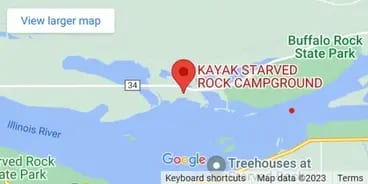
At Kayak Starved Rock Campground, the Illinois River waterfront is built for people who want more outside time and less logistical nonsense. It is a dam-controlled, flatwater setting with shallow areas and no river current at the launch area, making it an inviting option for experienced paddlers, families, couples, and first-timers bringing their own gear. The sandstone bluffs, wooded shoreline, and nearby Starved Rock State Park give the day some real scenery too. This is not just a parking lot and a boat ramp. It is a place to paddle, relax, camp, and wake up ready for another round.
What Bring Your Own Boat Access Means
Bring your own boat access is simple: you arrive with your personal watercraft, pay the applicable day-access or launch fee, follow the site’s safety and launch procedures, and enjoy the designated paddling area. You supply the boat and personal gear. The waterfront destination supplies a managed place to launch, clear direction, and the kind of beginner-friendly conditions that take the edge off planning a river day.
It is a great fit if you already own a kayak, canoe, or stand-up paddleboard and want a more relaxed place to use it than a crowded public launch. It also works well for groups where some people own boats while others would rather rent. Everyone can still share the same waterfront day, even if their equipment did not come from the same garage.
Bring-your-own access is not the same as an unguided free-for-all. Launch procedures, designated areas, weather decisions, and cutoff times are there for a reason. Check the current schedule before you leave home, especially for weekend visits, special events, and late-season paddles.
Why This Stretch of Water Works for Casual Paddlers
A lot of Illinois River paddling requires careful attention to current, changing conditions, and point-to-point transportation. That can be terrific if you are looking for a big-distance river trip. It can also be a headache if your dream day is simply paddling with your kids, floating next to your partner, or taking your dog for a calm adventure.
This waterfront experience is different. The dam-controlled environment helps maintain consistently runnable water levels, and the flatwater setting means you are not battling a downstream push or figuring out how to retrieve a vehicle miles away. You can focus on the good stuff: practicing paddle strokes, spotting birds along the shore, taking a photo with the bluffs in the background, and laughing when your friend turns in a circle instead of going straight. It happens to the best of us.
Conditions can still change with weather, wind, and water operations. Flatwater does not mean risk-free water. It means a more approachable starting point, especially when paired with good judgment and the required safety rules.
The PFD Rule Is Not Optional
Every person on the water needs to wear a properly fitted personal flotation device. Not tucked under a seat. Not clipped to the back of a kayak. Worn and secured.
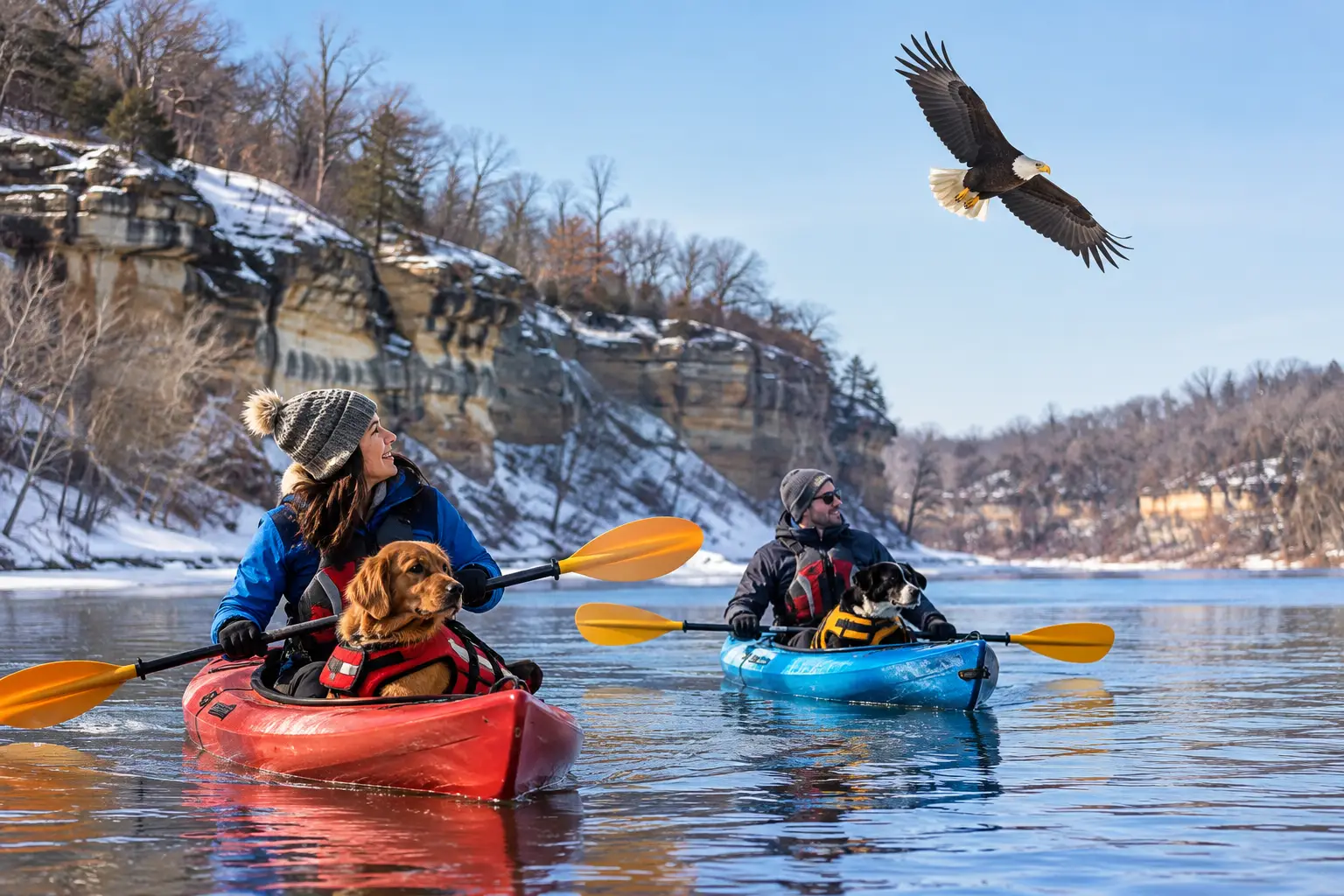
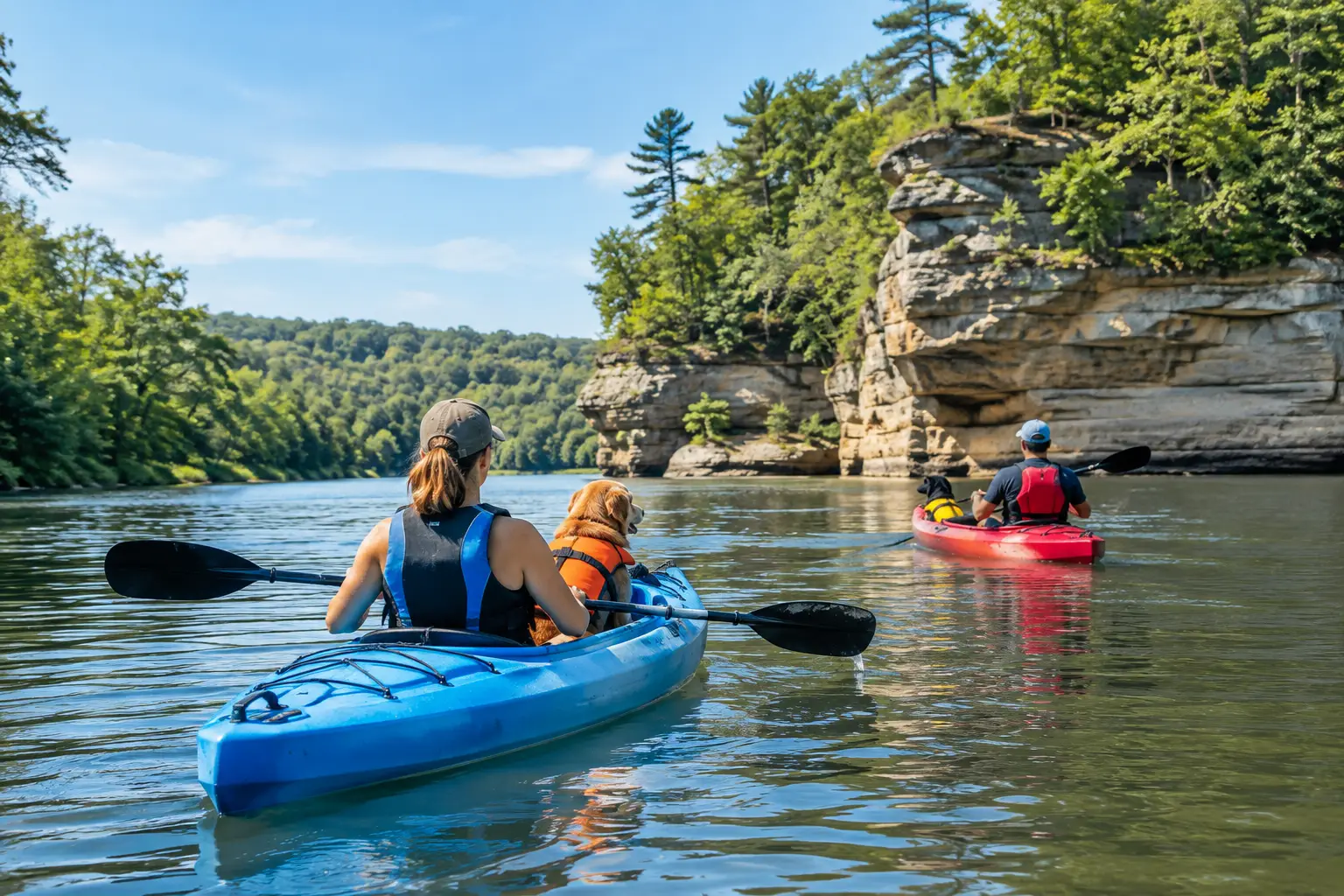
A life jacket is the easiest piece of equipment to overlook when the water looks calm, which is exactly why it needs to be non-negotiable. Kids need a PFD that fits their current size, not one they will “grow into.” Adults should test the fit before launching, and anyone paddling with a dog should remember that pet PFDs are a smart choice too. Dogs can swim, but long swims, cold water, and surprise splashes are not always part of their plan.
Plan Your Day Before You Load the Car
The best bring your own boat access days feel spontaneous because the planning happened the night before. Confirm operating dates, arrival instructions, access availability, and the last launch cutoff. A late arrival can turn a peaceful escape into a rushed loading exercise, and nobody wants their first view of the river to be from the parking area while the launch window closes.
Bring your boat, paddle, PFD, water, sunscreen, and clothing that can get wet. Closed-toe water-friendly shoes are a good call for getting in and out around the shoreline. Pack snacks for a day visit, and bring a dry bag for car keys, phones, medication, and anything else that should not take an accidental swim.
If you are bringing a paddleboard, check that it is properly inflated before you arrive. If you are bringing a canoe, make sure everyone in your group understands how they will get in, sit, and communicate. A few minutes of driveway prep saves plenty of shoreline confusion.
For a group trip, agree on the plan ahead of time. Who is carrying which boat? Who has the cooler? Which adult is watching the kids while gear is unloaded? This is not glamorous trip planning, but it prevents the classic situation where six people are standing around a car saying, “I thought you had the paddle.”
Make It a Camping Weekend, Not Just a Paddle
A day on the water is good. A day on the water followed by waterfront camping is how a normal weekend starts feeling like a proper reset.
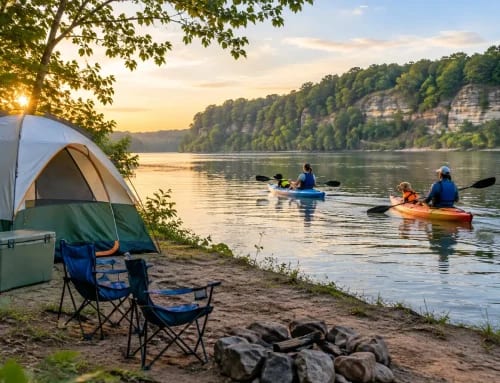
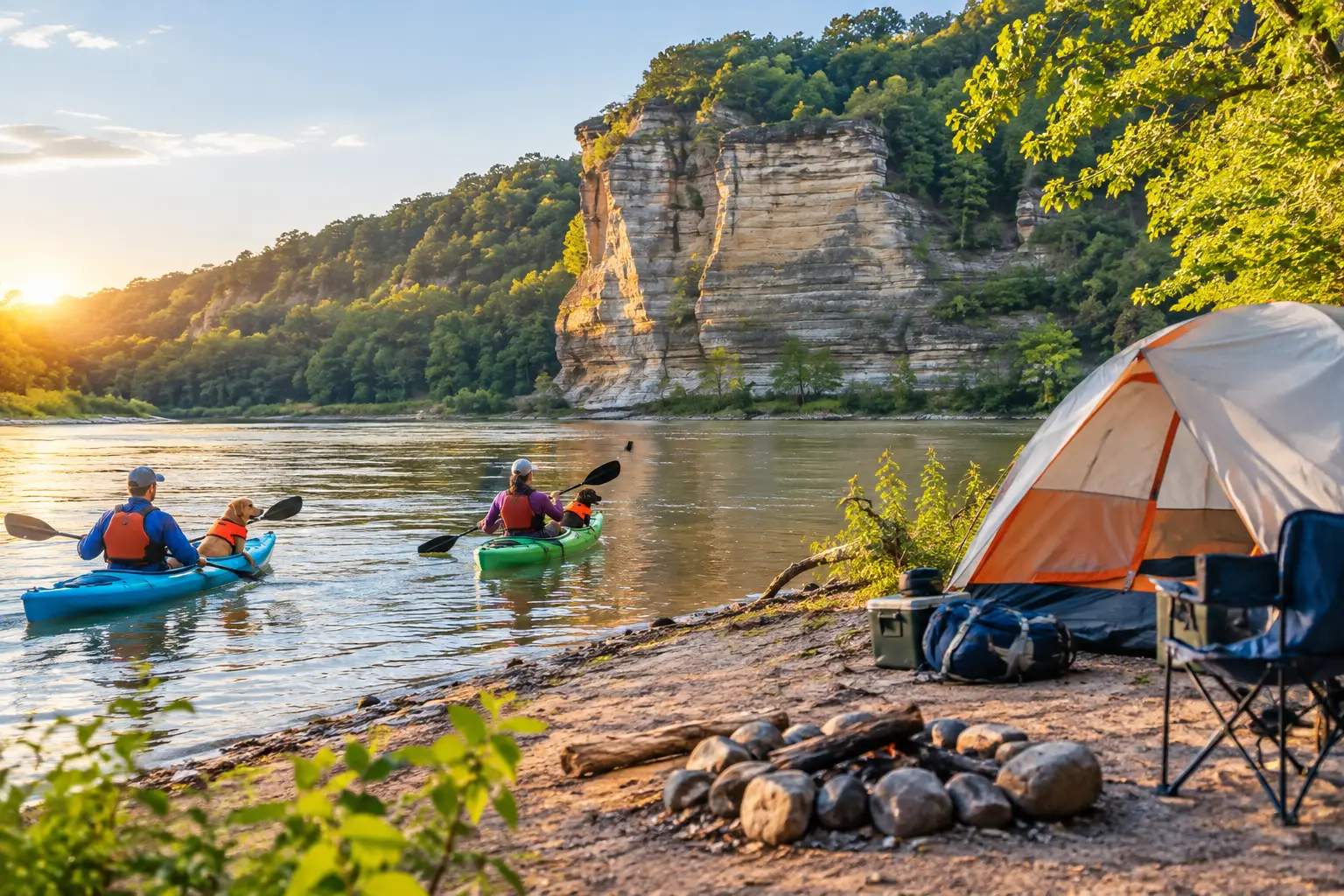
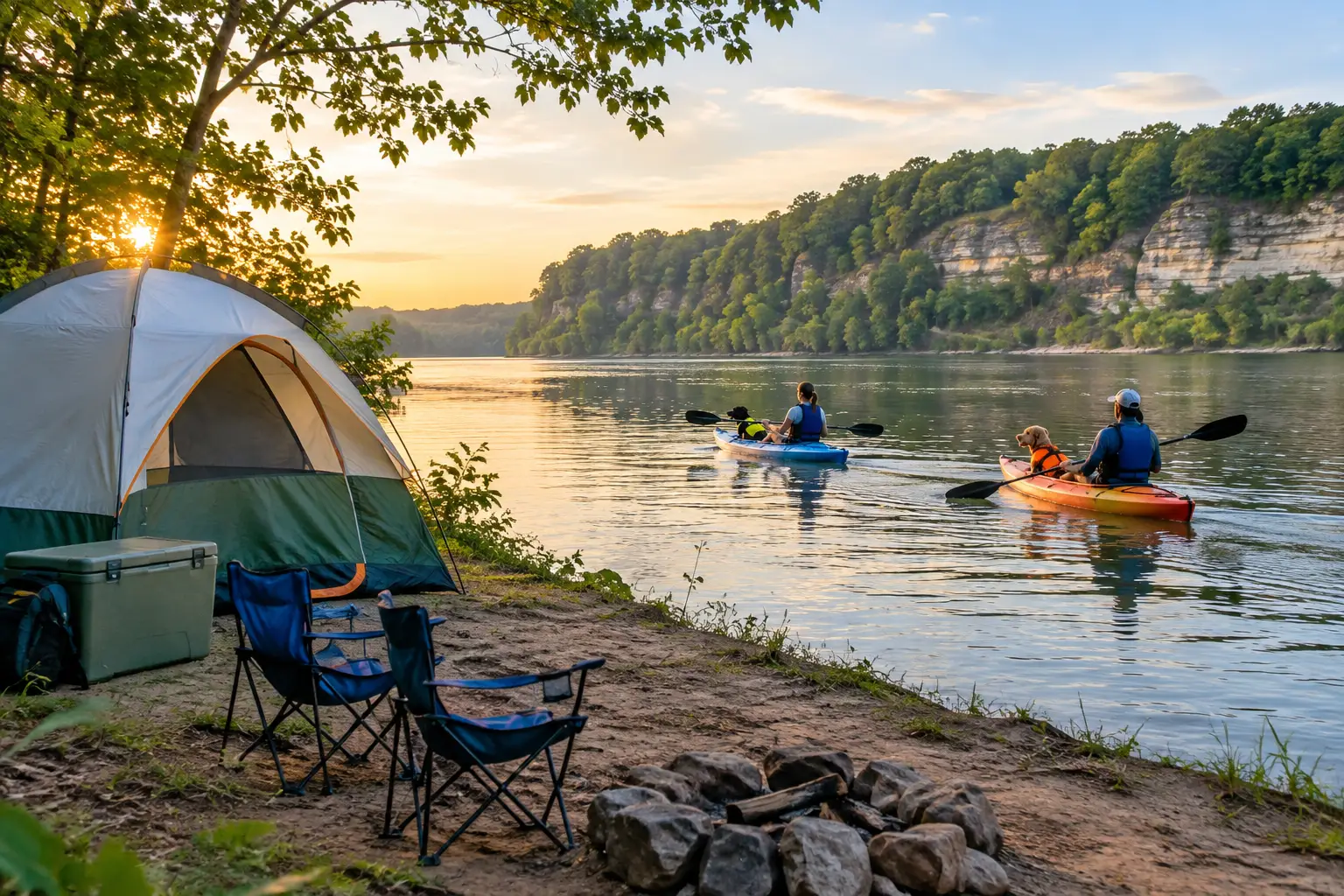
Camping near Starved Rock State Park lets you build an easy two-day itinerary around paddling and hiking. Arrive, get settled, launch your own boat, then trade the return drive for a campfire and an evening by the river. The next morning, you can take a slower paddle, explore nearby trails, or enjoy coffee outdoors before heading back toward Chicago.
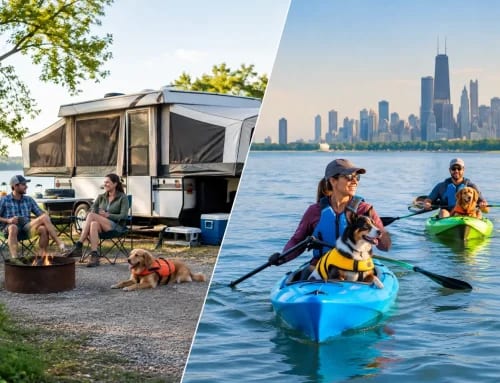
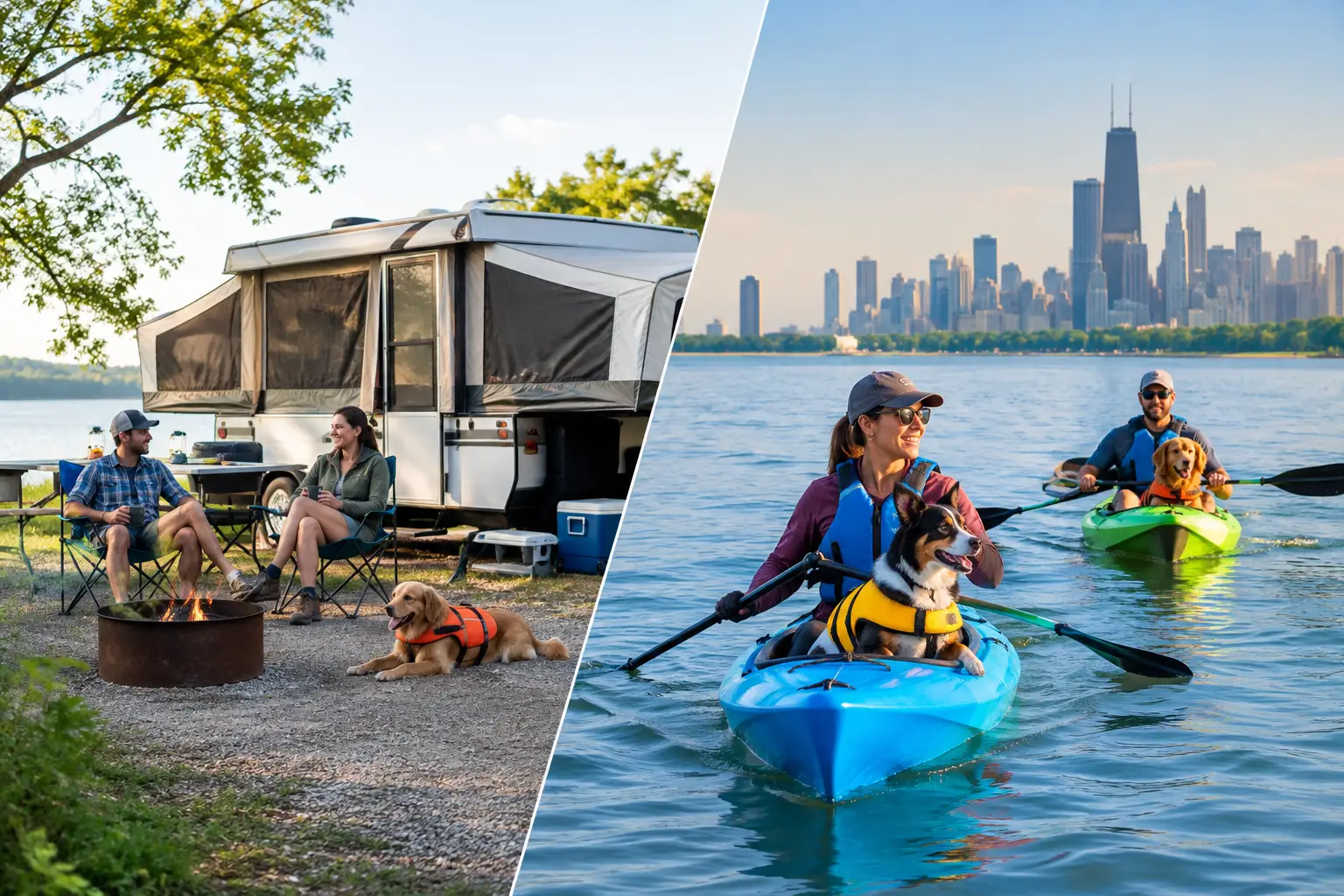
Tent camping is the classic choice for people who want the full campfire-and-sleeping-bag experience. Pop-up campers work nicely for families and friends who want a little more shelter without losing the campground feel. Teardrop campers are a fun middle ground: compact, cozy, and much easier to tow than a giant RV. Whichever setup you bring, reserve the right kind of campsite for your equipment and confirm campground rules before arrival.
Waterfront camping is especially useful for boat owners because your adventure does not need to fit into one narrow launch window. You have more time to settle in, paddle at an unhurried pace, and enjoy the destination beyond the boat ramp.
Bringing Kids and Dogs Along
A calm paddling environment can be a confidence builder for families, but kids still need structure. Start with a short outing rather than planning a marathon. Show them how to sit steady, keep hands away from the water when landing, and listen when the adult paddler says it is time to turn around. Bring extra snacks. This is not bribery. This is expedition fuel.
Dog-friendly camping and kayaking can be a blast when your pup is comfortable around water and people. Give your dog a chance to get used to the boat on land first. Bring a leash, fresh water, waste bags, a towel, and a spot where they can sit securely without shifting the boat every time they see a squirrel. Keep in mind that not every dog enjoys paddling. A nervous dog may have a better day relaxing at camp with a shaded spot and a chew toy.
When Renting or a Guided Tour May Be the Better Call
Bringing your own boat gives you familiarity and flexibility, but it is not always the easiest option. If you do not own a boat, do not want to transport one, or are unsure about basic paddling technique, a rental or guided kayak tour may be the more relaxing choice.
Guided trips are particularly helpful for first-time paddlers, families with younger kids, and groups where nobody wants to be the unofficial safety captain. You get instruction, on-water leadership, and equipment designed for the experience. Bringing your own boat access is ideal when you are ready to use your gear independently within the site’s rules. A tour is ideal when you want a knowledgeable guide to handle the details while you enjoy the views.
Either way, do not let the gear question stop the getaway. Pick the option that makes your group feel prepared, safe, and excited to get on the water.
A Better Kind of Near-Chicago Weekend
You do not need to drive across the state or become an expert paddler to have a memorable Illinois river camping trip. Bring your favorite boat, wear your PFD, respect the launch schedule, and leave enough room in the day for a slow paddle and a little riverside quiet. The bluffs will still be there. Your inbox can wait a few more hours.