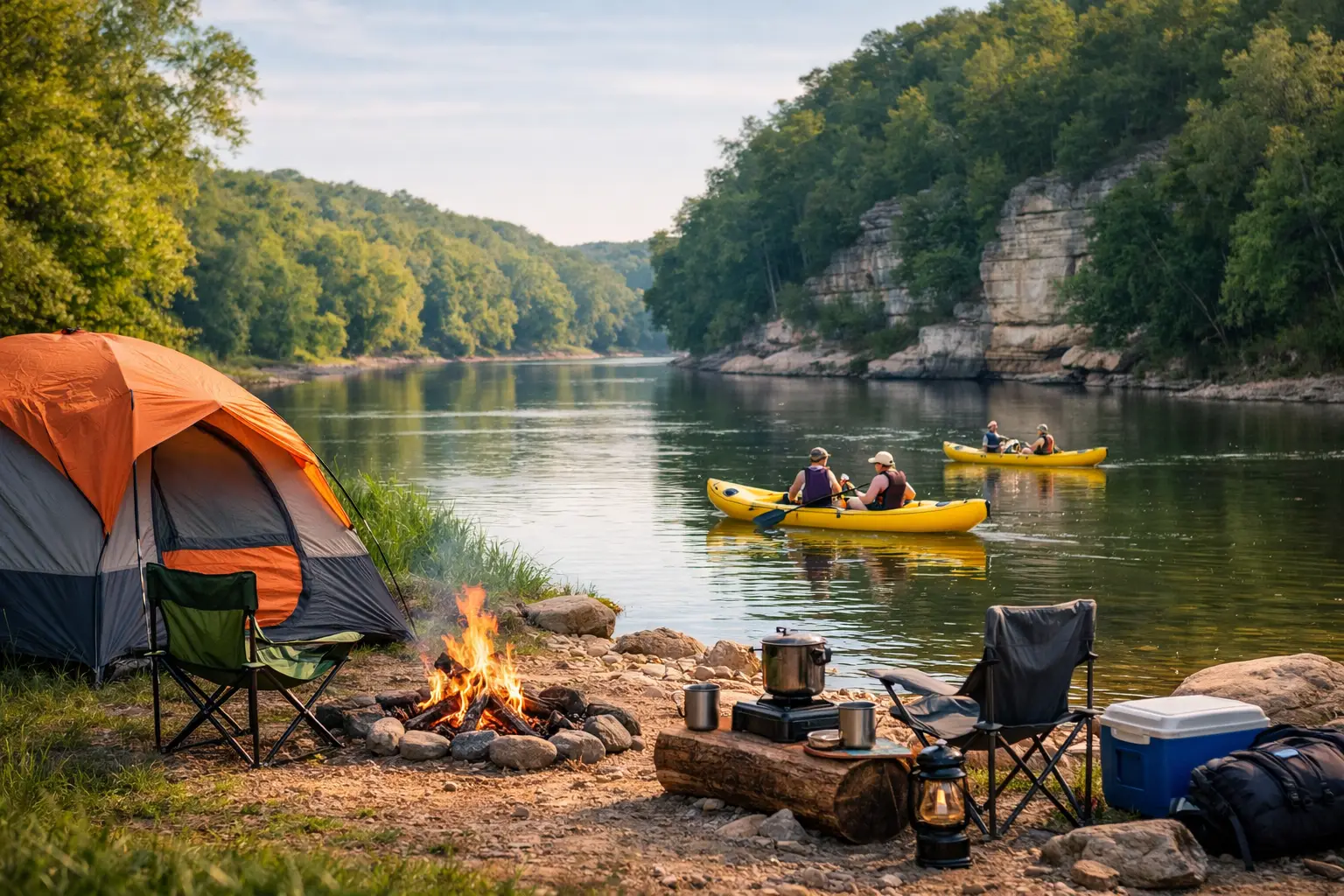
The best first kayak trip ends with a little sun on your face, a few photos on your phone, and the satisfying realization that you can absolutely do that again. It should not end with a frantic search for a lost paddle, a surprise thunderstorm, or a life jacket still sitting in the car. This beginner kayak safety checklist keeps the fun high and the stress low, whether you are planning a casual paddle near Starved Rock with friends, bringing kids along, or giving kayaking a try for the first time.
Flatwater kayaking is one of the easiest ways to trade a Chicago-area weekend for fresh air, sandstone views, and a genuinely good reset. A calm, dam-controlled section of the Illinois River can feel wonderfully approachable, but water still deserves your attention. A little preparation gives you the confidence to relax once your boat is on the water.
Your beginner kayak safety checklist before launch
Use this list before every outing, even if you have paddled the same place before. Conditions, daylight, weather, and group energy can all change from one trip to the next.
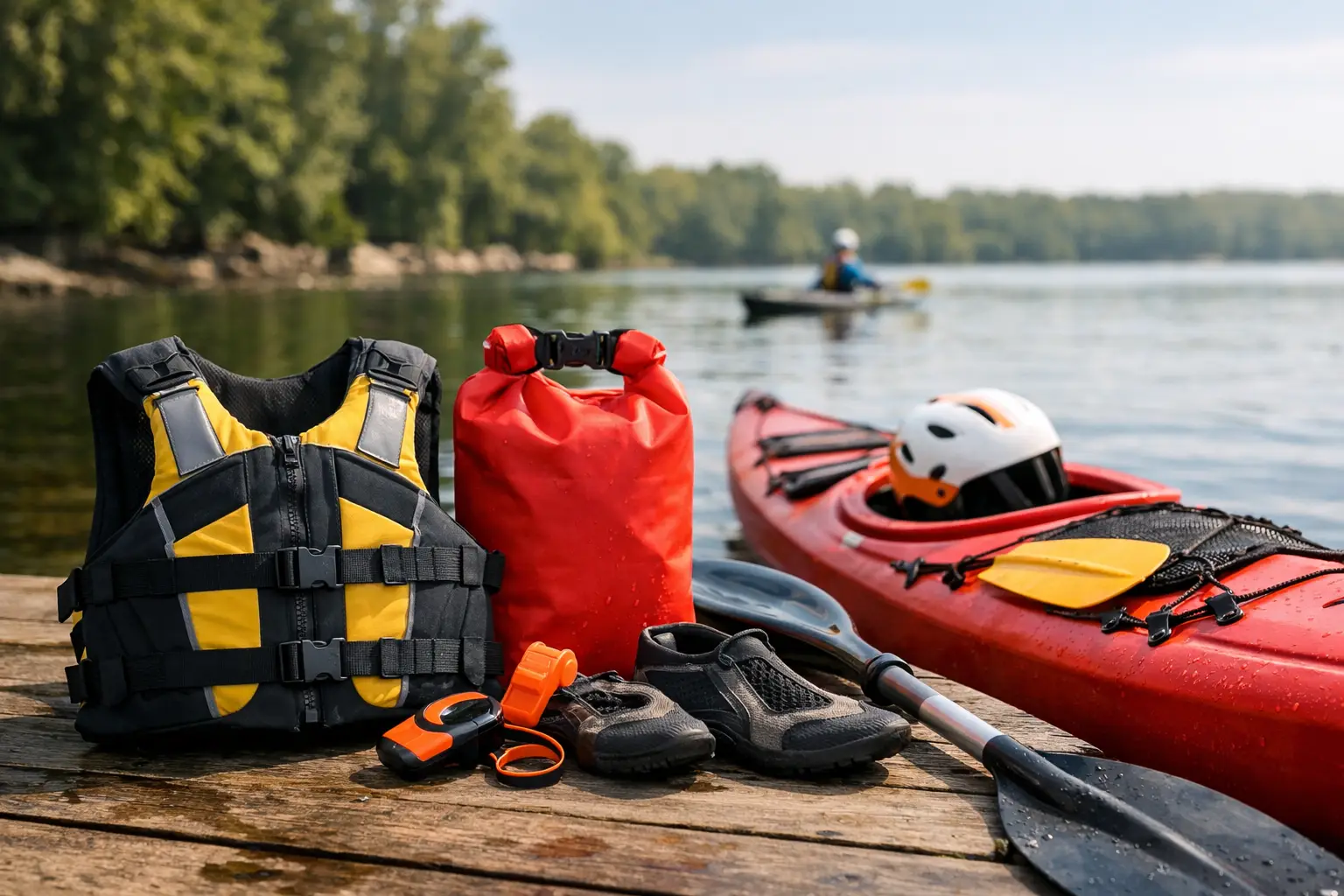
- Wear a properly fitted U.S. Coast Guard-approved PFD, also called a life jacket, at all times on the water.
- Check the forecast for wind, lightning, temperature changes, and storms, not just the chance of rain.
- Choose water that fits your experience level, and ask local staff about current conditions.
- Tell someone where you are going, when you expect to return, and who is in your group.
- Bring water, sun protection, and a secure way to keep essentials dry.
- Confirm that your paddle, seat, foot braces, and boat fit you before leaving shore.
- Know the route, turnaround point, launch rules, and the latest time you can safely return.
- Keep alcohol for after paddling, when everyone is back on land and the boats are put away.
That may sound like a lot for a peaceful afternoon outdoors. In practice, it takes a few minutes. It is the kind of small effort that lets everyone focus on the good stuff: spotting herons, laughing at the friend who paddles in circles at first, and taking in the bluffs across the river.
Start with the one piece of gear you cannot skip
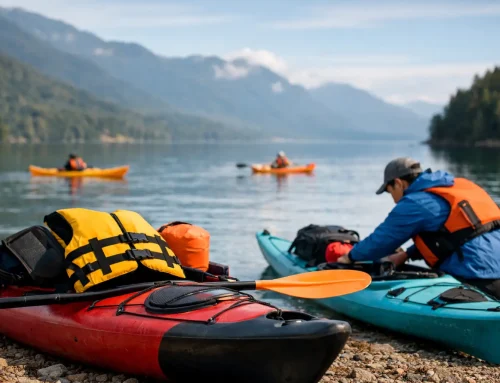
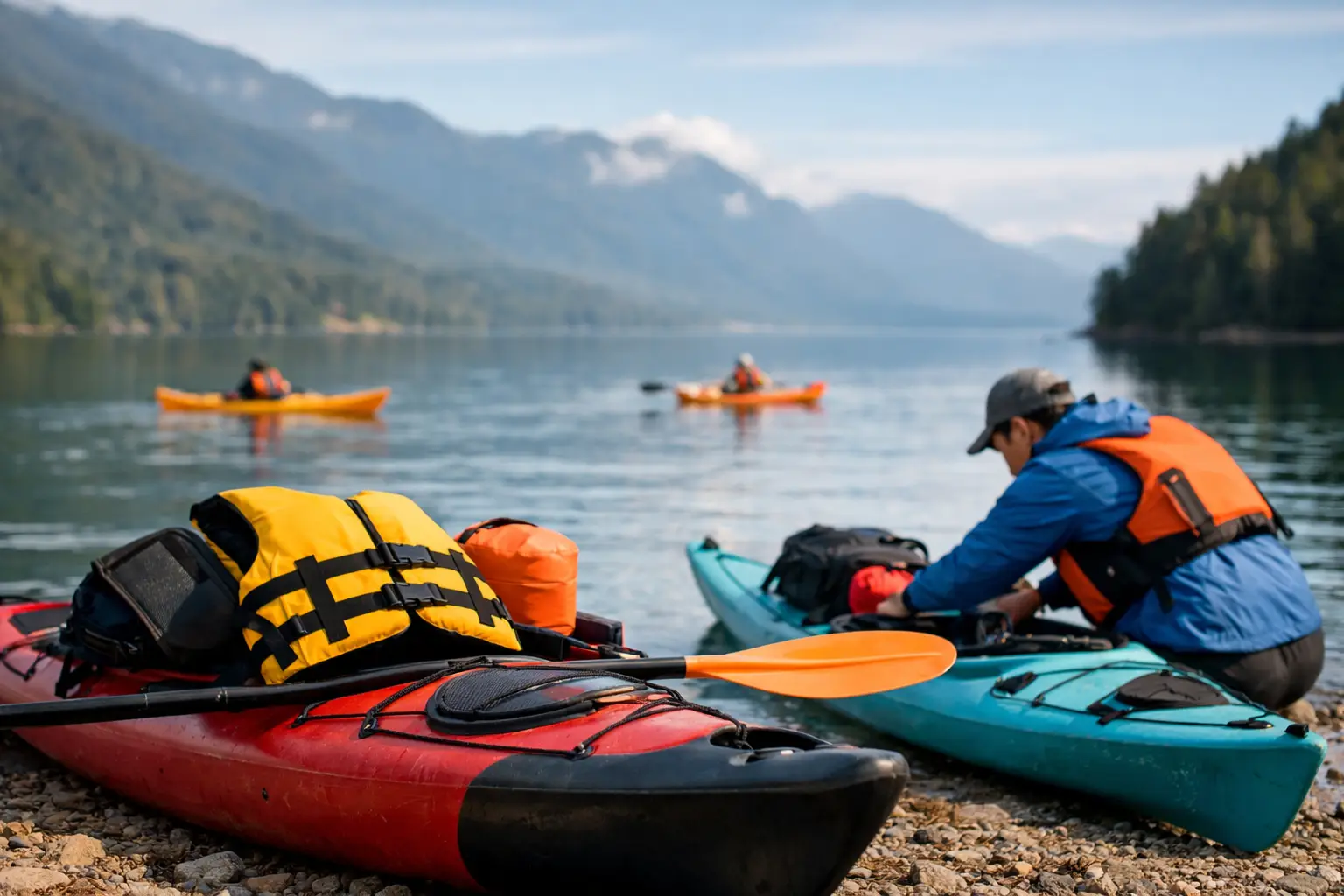
Your PFD is not an accessory and it is not cargo. Wear it, buckle it, and adjust it before launching. A PFD that rides up around your ears is too loose. Tighten the straps until it feels snug but still lets you breathe and rotate your torso to paddle.
Every person in the group needs one, including strong swimmers. Swimming ability is helpful, but it does not replace a life jacket when someone is surprised by cold water, tiredness, an awkward fall, or a drifting kayak. Children need properly sized PFDs, not an adult vest cinched down as a workaround.
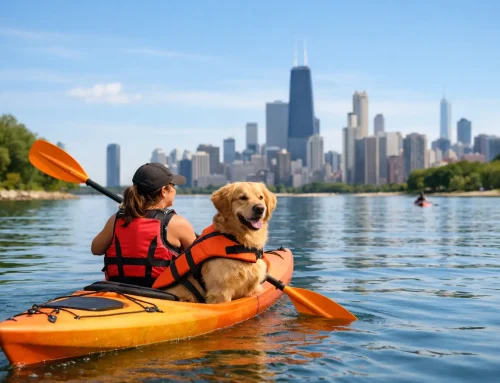
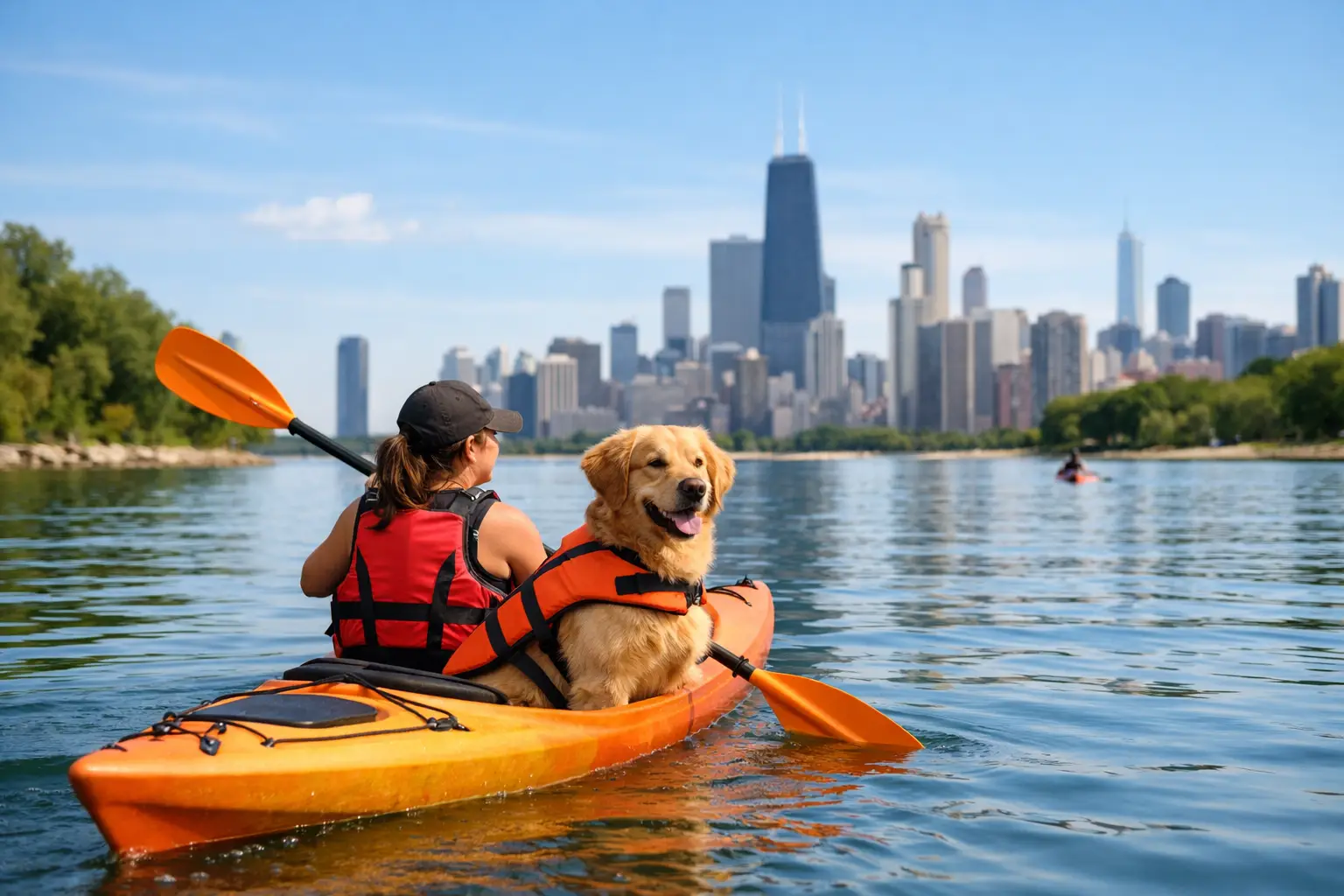
If you bring your dog, use a canine life jacket with a handle. Dogs can be excellent kayaking buddies, but they may jump after a bird, shift their weight suddenly, or get tired faster than expected. A dog PFD makes it much easier to help them back into the boat or guide them to shore.
Pick conditions that help beginners succeed
First-timers do best with calm water, a straightforward route, plenty of daylight, and an easy place to get in and out of the kayak. This is why a supported flatwater experience is such a solid first outing. You do not need to prove anything by paddling through rough wind, a busy boat channel, or water you do not understand.
Wind is often the sneaky challenge. A sunny day can still become hard work if a strong breeze blows against you on the return leg. Check the direction as well as the speed. If possible, plan your route so you are not saving the hardest paddling for when everyone is already tired.
Lightning is a no-go. If thunderstorms are in the forecast, pay attention to timing and be ready to change plans. Once you hear thunder, get off the water and move to appropriate shelter. Do not wait for rain to start. On hot days, bring more drinking water than you think you need and take breaks before anyone feels wiped out.
Water temperature matters, too. A warm afternoon does not automatically mean warm water. Early and late in the season, dress for the water as well as the air, and avoid cotton layers that stay cold when wet. If a fall swim would feel miserable, choose a guided trip, a warmer day, or another outdoor adventure.
Fit the kayak before you push off
A kayak should feel secure, not cramped. Sit upright with your back supported, place the balls of your feet on the foot braces, and bend your knees slightly. Adjust the braces so your legs have a comfortable, light connection to the boat. That contact helps you turn and stay balanced without gripping the sides for dear life.
Hold the paddle with hands a little wider than shoulder-width apart. Keep your knuckles generally lined up with the paddle blade and use a relaxed grip. New paddlers often squeeze the shaft too hard, which creates tired forearms fast. Let your torso help with each stroke instead of trying to power the whole trip with your arms.
Before heading away from shore, practice three simple moves in shallow, calm water: paddle forward, stop, and turn. To turn, take a wider sweep stroke on one side of the boat. You do not need a technical clinic to enjoy a rental, but those few minutes of practice can make the rest of the trip feel far more natural.
Pack light, then protect what comes with you
A big backpack full of loose gear is more annoying than helpful in a kayak. Bring what you will actually use: drinking water, sunscreen, sunglasses with a retainer, a hat, any needed medication, and a phone in a waterproof case or dry bag. Keep keys and valuables secured, not balanced on the seat or tucked into an open pocket.
For a day paddle, clothing should be comfortable enough to move in and okay to get splashed. Quick-drying layers, closed-toe water-friendly shoes, and a light jacket when temperatures are variable are smart choices. Skip flip-flops if you will be walking over uneven ground at the launch or carrying gear.
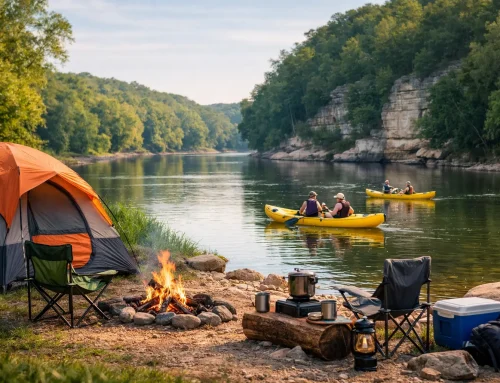
If you are camping near Starved Rock State Park after your paddle, change into dry clothes before settling into camp. That simple move makes the difference between a cozy waterfront evening and shivering through dinner. Tent campers, pop-up campers, and teardrop campers can all keep the trip easy, but dry layers and a warm sleeping setup matter more than the style of shelter.
Paddle like a good neighbor on the water
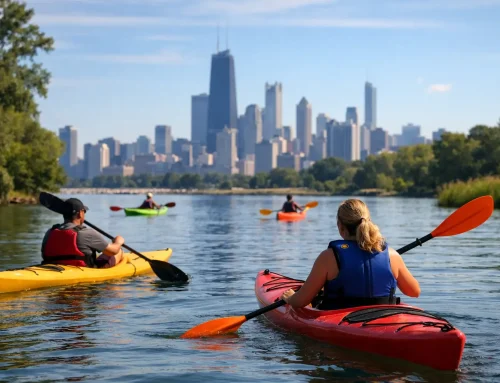
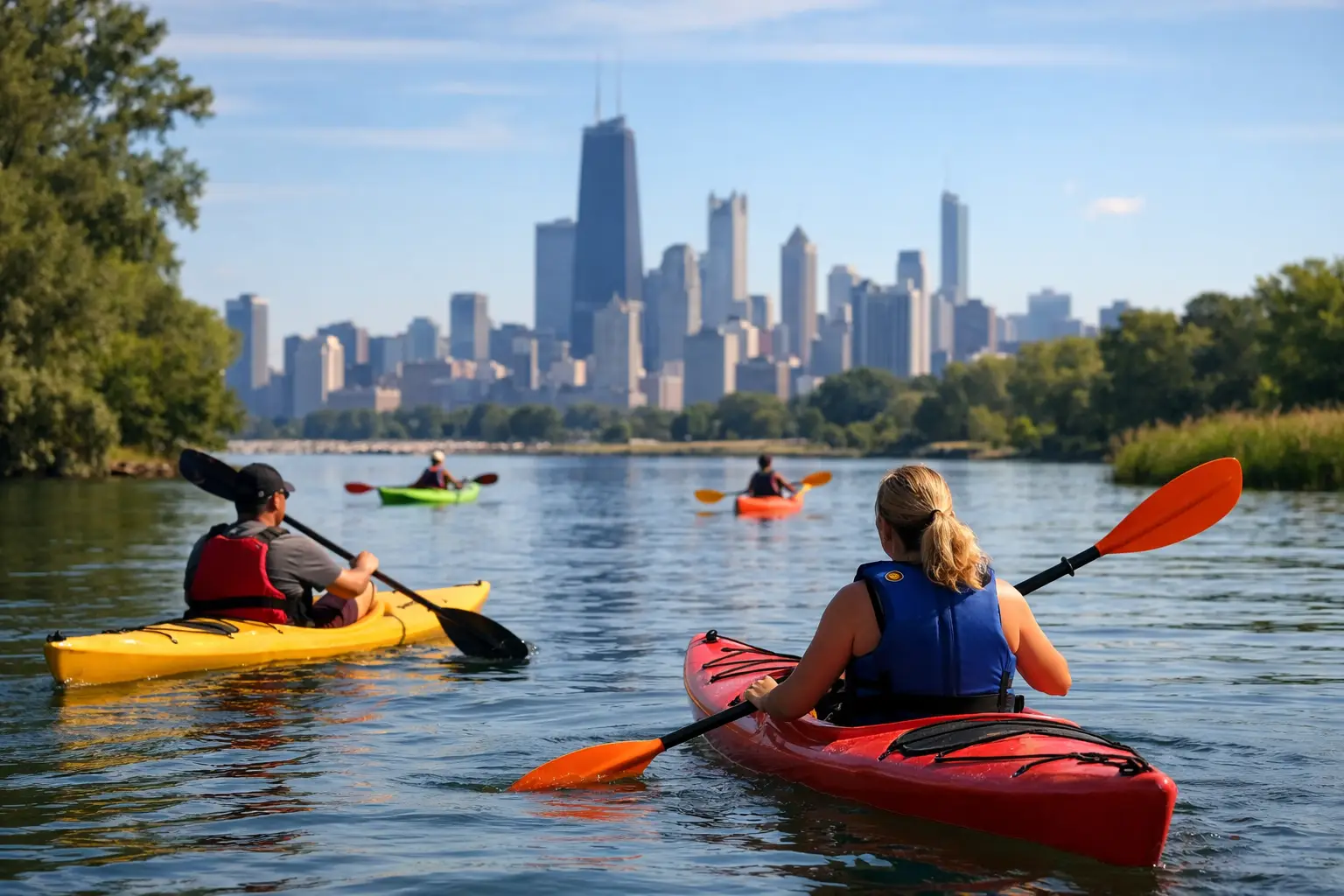
Kayaking feels peaceful partly because everyone shares the space with a little awareness. Stay together as a group, especially when kids or first-timers are along. Pick a lead boat and a sweep boat, then agree that nobody paddles beyond the lead or behind the sweep without saying something.
Give shorelines, wildlife, anglers, and other paddlers room. Do not chase animals for a closer photo, and avoid cutting across another boat’s path. If a powered boat passes, turn your kayak to face the wake rather than letting it hit broadside. Keep your paddle low, stay loose, and let the boat ride over the waves.
If you need a break, pull over only where it is safe and allowed, or raft up with your group in calm water. Do not stop in a channel, near a launch ramp, or anywhere other boaters may have trouble seeing you. A little courtesy keeps the river calm for everybody.
Know what to do if you tip over
A capsize can feel dramatic for about five seconds. Then the plan is simple: stay calm, hold onto your paddle if you can do so safely, and stay with your kayak. The boat floats and is easier for others to spot than a swimmer alone. Do not try to stand up in unknown water, where footing may be uneven or deeper than it looks.
In a beginner-friendly setting, the best next step is often to move with the kayak toward shore or wait for help from your group or guide. Your PFD keeps you afloat while you figure it out. Before launching, ask staff or your guide what the local procedure is for re-entering a kayak and where the safest exits are along your route.
This is also why paddling with a buddy is better than going solo on your first few trips. A friend can steady a boat, grab a loose paddle, or simply offer the calm reminder that you are okay.
Let local support make your first trip easier
There is no prize for arriving as a beginner and pretending you already know everything. Ask questions at check-in. Ask where the wind usually picks up, what landmarks mark the turnaround, whether there are shallow areas to avoid, and what time you need to be off the water. Clear answers are part of a safe, relaxed day.
A guided kayak tour is especially useful for families, couples, and groups who want the scenery without the mental load of route planning. Guides can cover basic strokes, PFD fit, local conditions, and on-water etiquette before the first boat launches. At Kayak Starved Rock Campground, that kind of on-site direction is built for people who want a real outdoor adventure without turning it into a complicated expedition.
Bring the checklist, listen to the safety talk, wear the PFD, and give yourself permission to paddle at your own pace. The Illinois River will still be beautiful if you take the slow route back to shore.