Spring on the Illinois River has a funny sense of humor. You can show up to the launch in sunshine, feel cocky for five minutes, then discover the wind has other plans. Or you start the day in a hoodie and end it wishing you packed shorts. If you’re figuring out what to wear kayaking spring, you’re not overthinking it – you’re planning like someone who wants 100% fun and 0% shivering.
Here’s the mindset that makes spring paddling easy: dress for the water temperature and the wind, not just the air temperature in the parking lot. On flatwater, you’re not battling rapids, but you are sitting still for stretches, splashing your hands and paddle, and catching breeze across open water. A small clothing choice can be the difference between “this is awesome” and “why are my teeth vibrating?”
What to wear kayaking spring: the simple layering rule
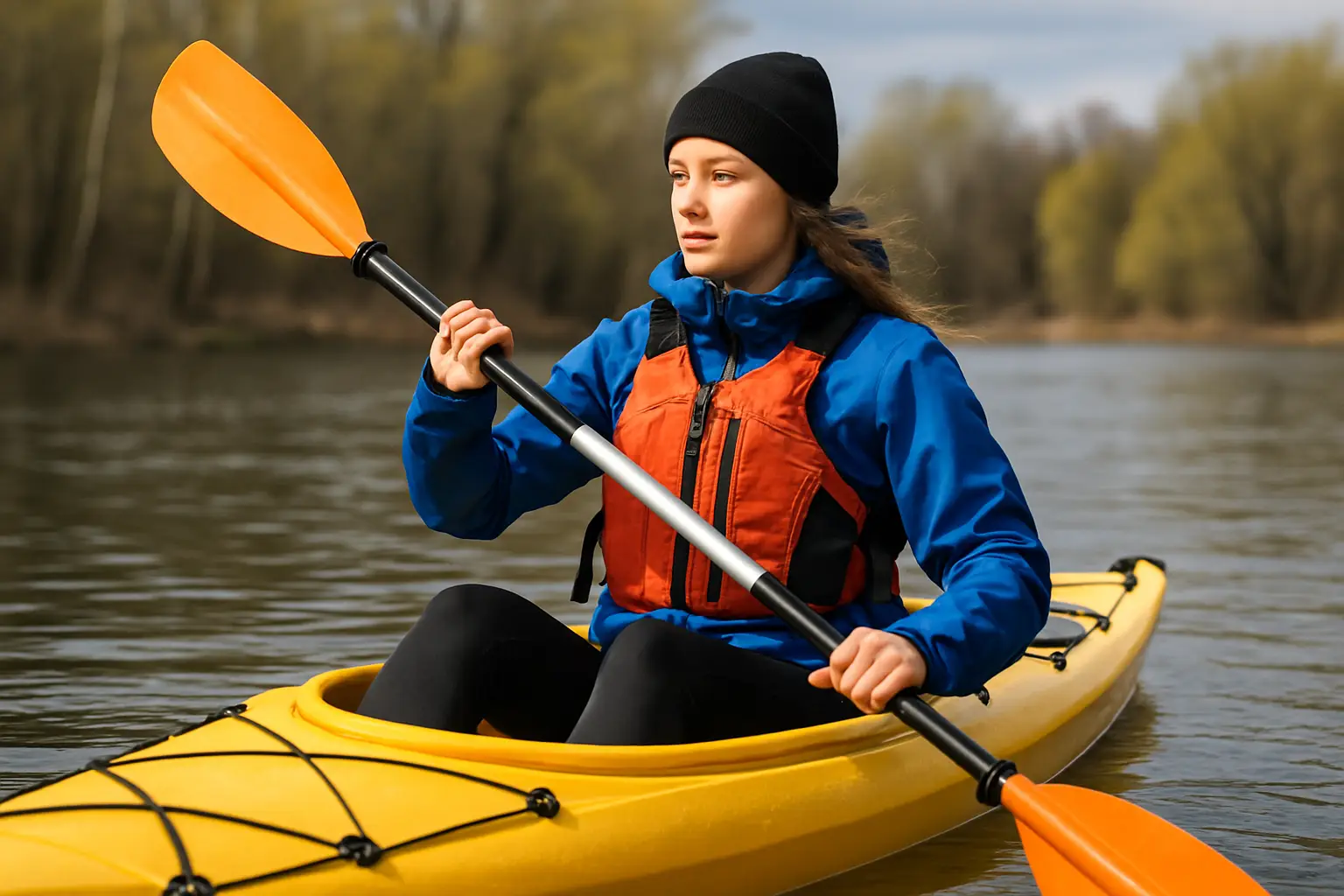
Spring kayaking is a layers game. You want a base layer that stays warm when damp, an insulating layer you can peel off, and a shell layer that blocks wind and spray. The goal is comfort without bulk – because bulky clothing can restrict your paddle stroke and make getting in and out of the kayak feel awkward.
Start with a base layer that is synthetic or wool. Cotton is the classic mistake because it holds water and gets cold fast. Even if you never flip (and on calm, beginner-friendly water that’s a reasonable expectation), you’ll still get drips from your paddle, wet hands on your sleeves, and the occasional surprise splash from a buddy who “totally didn’t mean to.”
Your insulating layer depends on how chilly the day is. Fleece is the crowd favorite because it’s warm, light, and still works if it gets a little damp. Then add an outer layer that blocks wind. A lightweight rain jacket or paddling jacket is perfect in spring because it doubles as a splash shield and a windbreaker.
If the forecast looks warm but the morning is cold, wear the layers at launch and stash one in a dry bag once you’re comfortable. Spring is basically nature’s reminder that you can’t rely on vibes.
Two outfit formulas that work for most spring days
A lot of people want a “just tell me what to wear” answer, so here are two outfits that cover most near-Chicago spring kayaking days.
For a cool spring day (chilly morning, maybe 50s-60s later), think: synthetic long-sleeve top, fleece or light puffy, and a wind-blocking shell. On the bottom, quick-dry pants or leggings beat jeans every time. You’ll move better, dry faster, and sit more comfortably.
For a milder spring day (sunny, 60s-70s, but breezy on the water), you can usually go with a synthetic short-sleeve or sun hoodie plus a light jacket you can remove. For bottoms, quick-dry shorts or lightweight pants both work – it depends on your sun tolerance and how much you hate cold wind on your knees.
The trade-off is simple: shorts feel great when it’s warm, but you’ll feel the breeze more. Pants offer warmth and sun protection, but you might peel them off later if the day heats up.
Shoes: your feet will get wet, so plan for it
In spring, your feet usually get wet during launching and landing. Even in shallow water, stepping in to stabilize the boat or pushing off the bank is common. That means your best shoe is something that can get wet and still feel stable.
Closed-toe water shoes or secure sport sandals are ideal. Sneakers can work if you don’t mind wet shoes, but avoid anything that becomes heavy, slippery, or miserable when soaked. Flip-flops are a no – they slide around, they’re easy to lose in mud, and they’re not friendly for uneven shoreline footing.
If it’s a colder day, neoprene socks can be a game changer inside water shoes. They add warmth without turning your footwear into a swampy cotton situation.
Your PFD is part of your outfit (and yes, you’ll wear it)
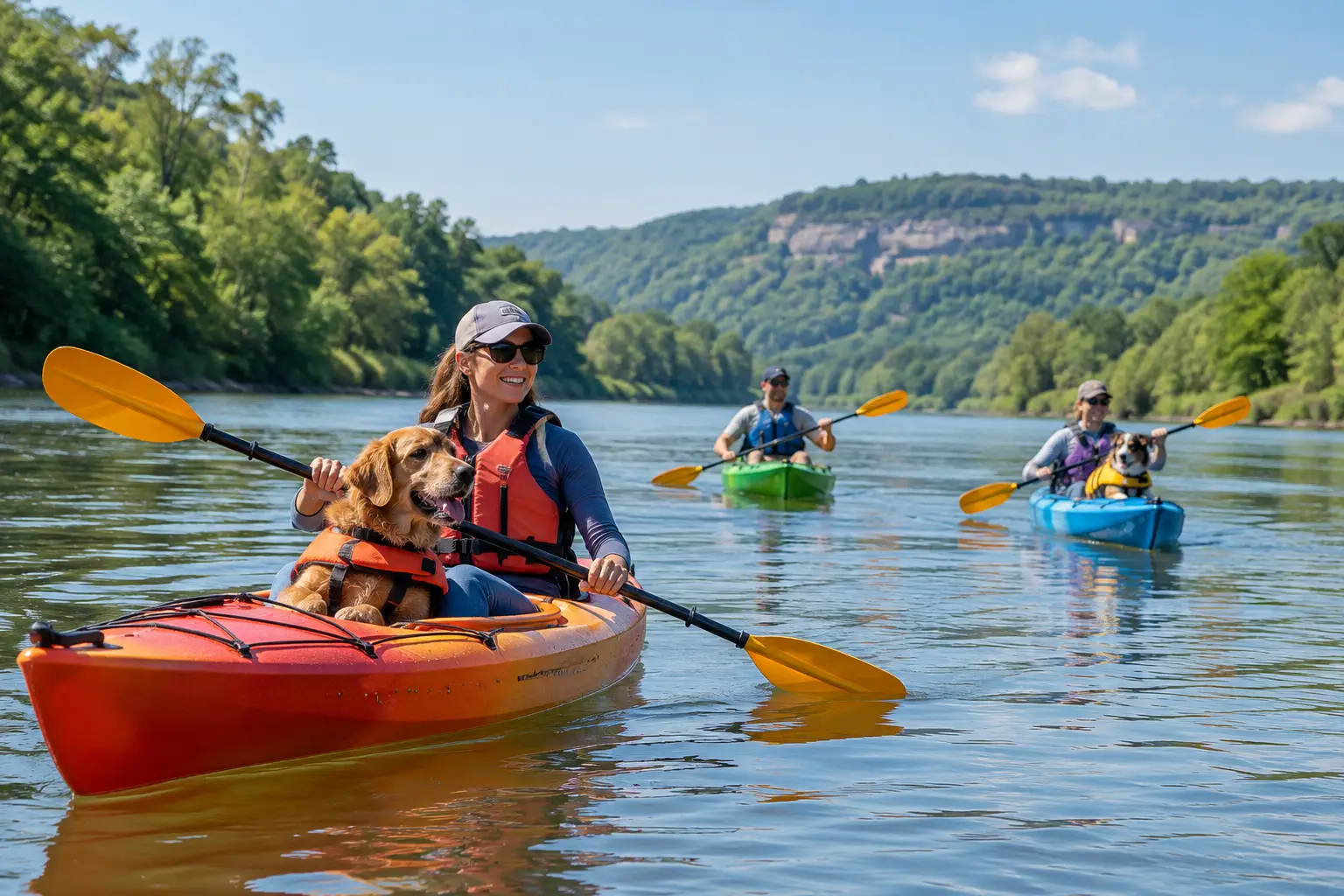
A life jacket or PFD is not an accessory you toss in the kayak “just in case.” It’s what you wear on the water, period. Spring is exactly when a PFD matters most, because cold water can sap your energy quickly if you end up swimming.
Comfort tip: wear a thinner, flexible base layer under your PFD so you don’t feel stuffed. Also, avoid bulky hoodies with thick front pockets that bunch up under the straps. If you want warmth around your neck, a neck gaiter beats a chunky hood under a life jacket.
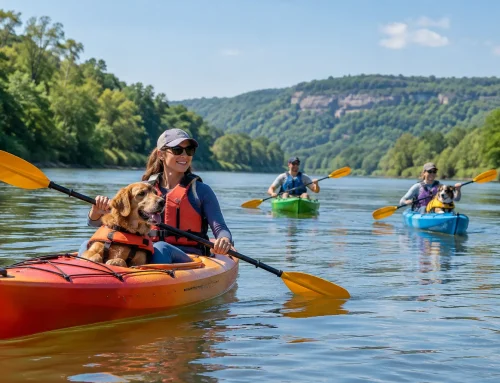
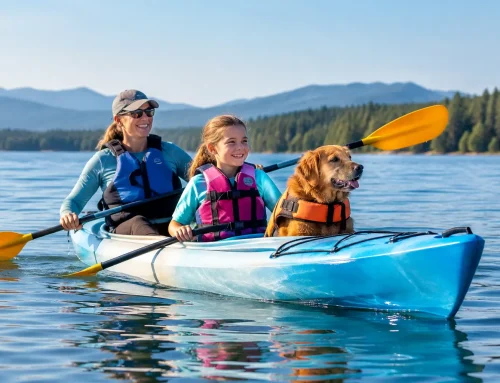
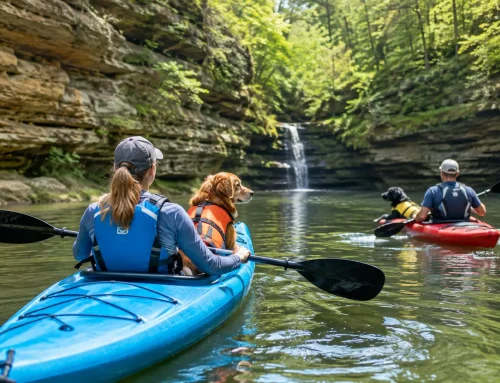
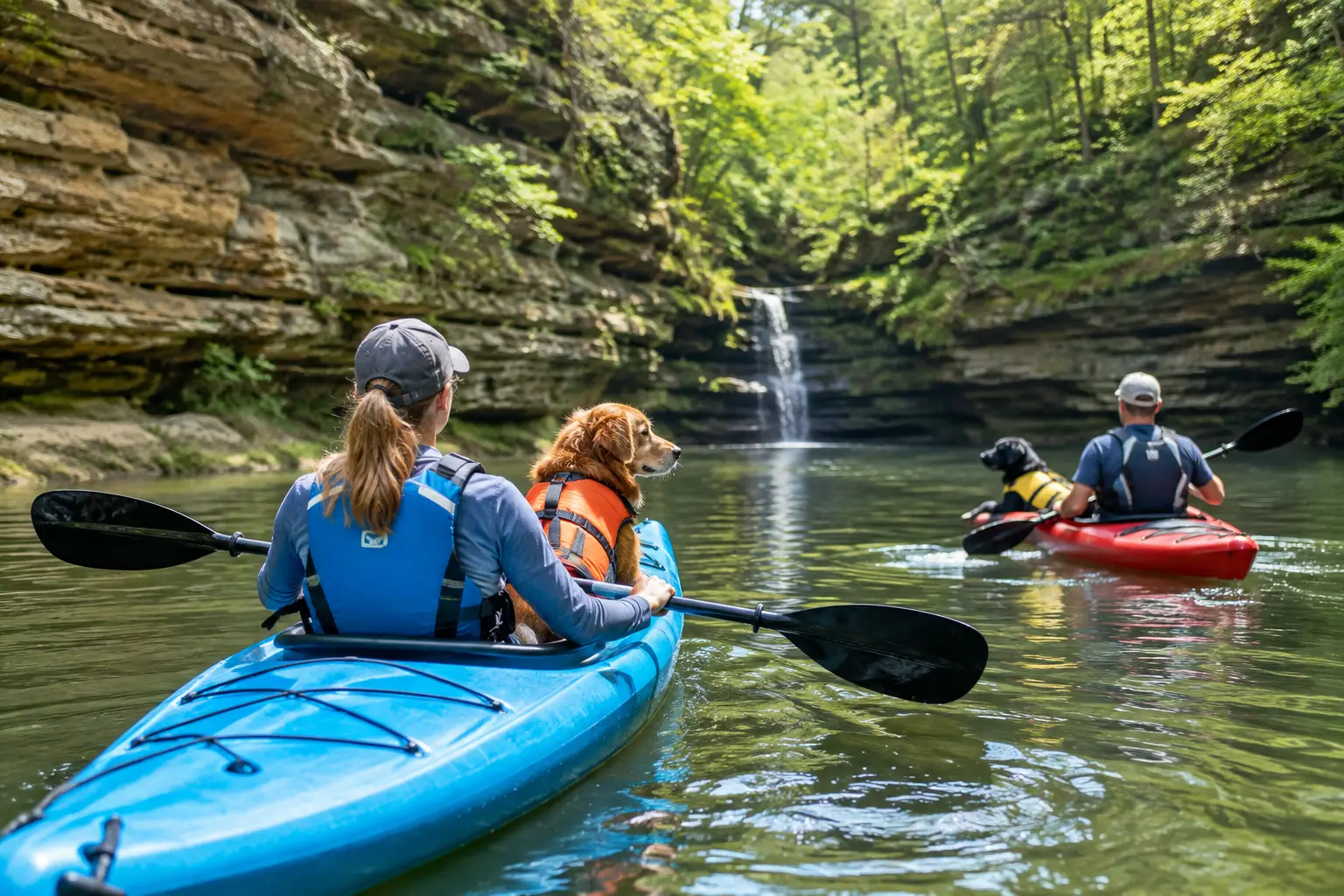
And if you’re taking photos (you will), keep it simple: all on-water photos should show paddlers wearing their PFDs. It’s not just the rules – it’s the culture we’re proud of.
Rain, wind, and “spring surprise” weather
Spring rain isn’t always the dramatic thunderstorm kind. Often it’s misty, off-and-on, and paired with wind. That combination can chill you fast because you’re sitting down and getting lightly sprayed.
If rain is possible, a waterproof or water-resistant shell is worth it, even if it lives in your dry bag most of the day. Choose one that lets your arms move freely. A stiff, heavy coat can feel like you’re paddling in a sleeping bag.
Wind is the sneaky one. A 65-degree day can feel cold on the river with a steady breeze. Windproof layers matter more than extra thickness. If you’re choosing between a warmer fleece and a better wind shell, the shell often wins.
Hands, head, and sunglasses: the small stuff that saves the day
Cold hands can ruin an otherwise perfect paddle. In early spring, consider thin paddling gloves or even lightweight waterproof gloves if you run cold. If it’s warmer, you may not need gloves at all – but having them as an option can be clutch.
For your head, a beanie is great for cool launches and can be stuffed away later. On sunny days, a hat with a brim helps with glare. Sunglasses are more than style – they reduce eye strain off the water’s reflection. A retainer strap is smart if you like keeping your sunglasses in your possession instead of donating them to the river.
What not to wear (because we’ve seen it all)
Jeans are the big one. They hold water, restrict movement, and take forever to dry. Cotton hoodies and sweatpants have the same “feels cozy until it’s damp” problem.
Also skip anything you can’t move in. Kayaking is beginner-friendly, but you still need shoulder rotation and a comfortable seated position. If your jacket is so tight you can’t reach forward, you’ll feel it within ten minutes.
And while it sounds obvious, avoid shoes that fall off easily. Spring launches can be muddy, and nobody wants to start their relaxing day trip by chasing a floating flip-flop like it’s an Olympic event.
If you’re bringing kids (or your dog), dress for splash radius
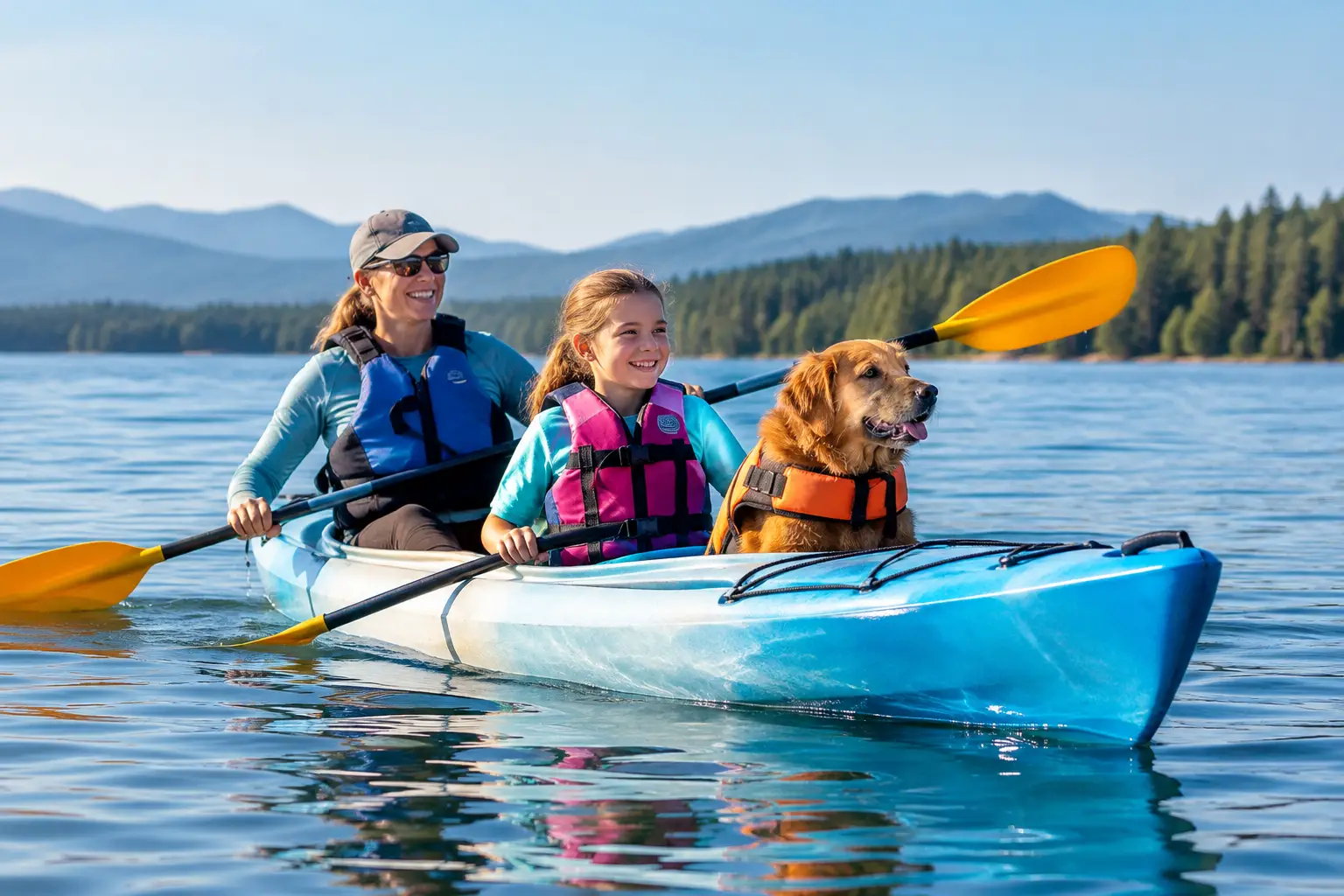
Families love spring paddles because it’s a real adventure without being a high-risk, high-skill day. But kids are splash magnets. They dip hands in the water, experiment with paddle drips, and suddenly your “mostly dry” plan is a comedy.
Dress kids in the same logic as adults: synthetic layers, quick-dry bottoms, and shoes that can get wet. Pack one warm backup layer because kids cool down fast when they stop moving.
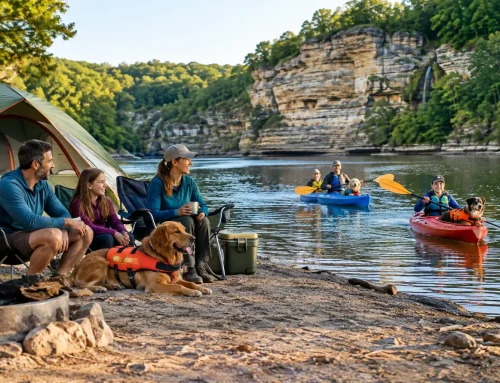
For dogs, think about their comfort too. Some dogs are thrilled by cool weather, others start shivering when they’re damp and sitting still. A simple dog life jacket helps with safety and gives you a handle if you need to assist them. Bring a towel and consider a light dog layer for cooler days, especially for smaller or short-haired pups.
Spring + camping: pack for the temperature drop
Spring kayaking is great as a day trip, but it’s also prime time for a paddle-and-camp weekend – the river is peaceful, the crowds are lighter, and the nights feel like a reset button.
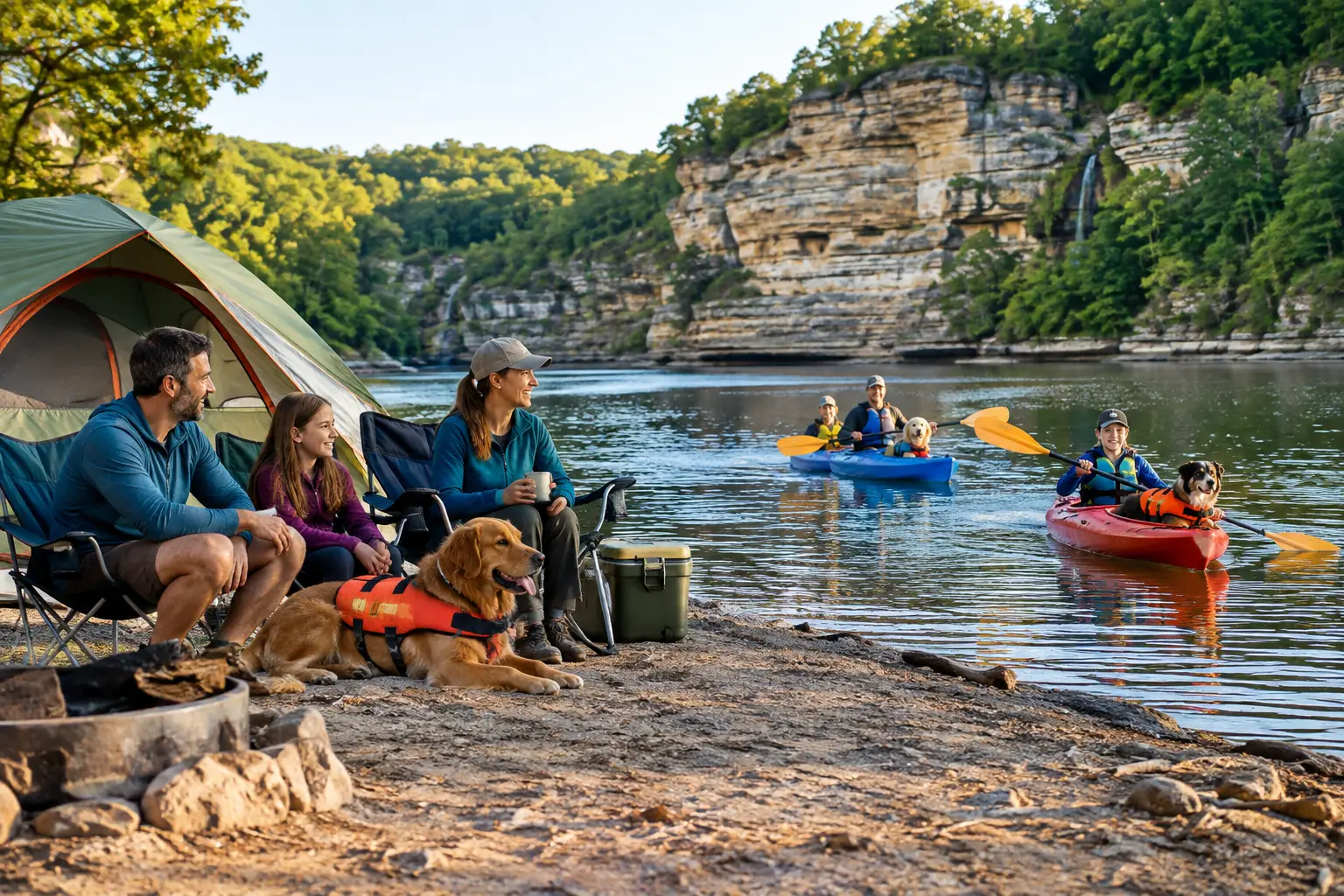
If you’re camping near Starved Rock, assume the temperature will drop after sunset, even if the afternoon felt warm. After paddling, you’ll appreciate dry clothes immediately: a warm base layer, cozy socks, and something that blocks wind around the campsite. If you’re doing a waterfront setup like tent camping, a pop up, or a teardrop-style stay, you’ll still want a dry change of clothes and a layer that’s dedicated to “not getting wet.”
One practical move is to separate your paddle clothes from your camp clothes. Paddle clothes can be slightly damp and totally fine while you’re active. Camp clothes are sacred. Protect the sacred clothes.
The easiest way to avoid spring outfit regret
If you’re torn between two options, choose the one that keeps you warm if you get wet. That’s the spring cheat code.
Bring a dry bag with one extra layer and dry socks. You might not need them, but you’ll paddle differently when you’re not worried about being cold. Confidence is comfort, and comfort is what makes beginners want to come back.
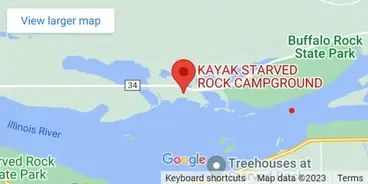
If you’re planning a near-Chicago spring paddle and want a flatwater spot that’s friendly for first-timers, families, and dogs, you can book rentals, guided tours, and even waterfront camping at Kayak Starved Rock Campground.
Spring has a way of making people feel like they’re doing something bold when it’s actually pretty simple. Dress smart, wear your PFD, and give yourself permission to enjoy the quiet parts – the moments where the river does the relaxing for you.