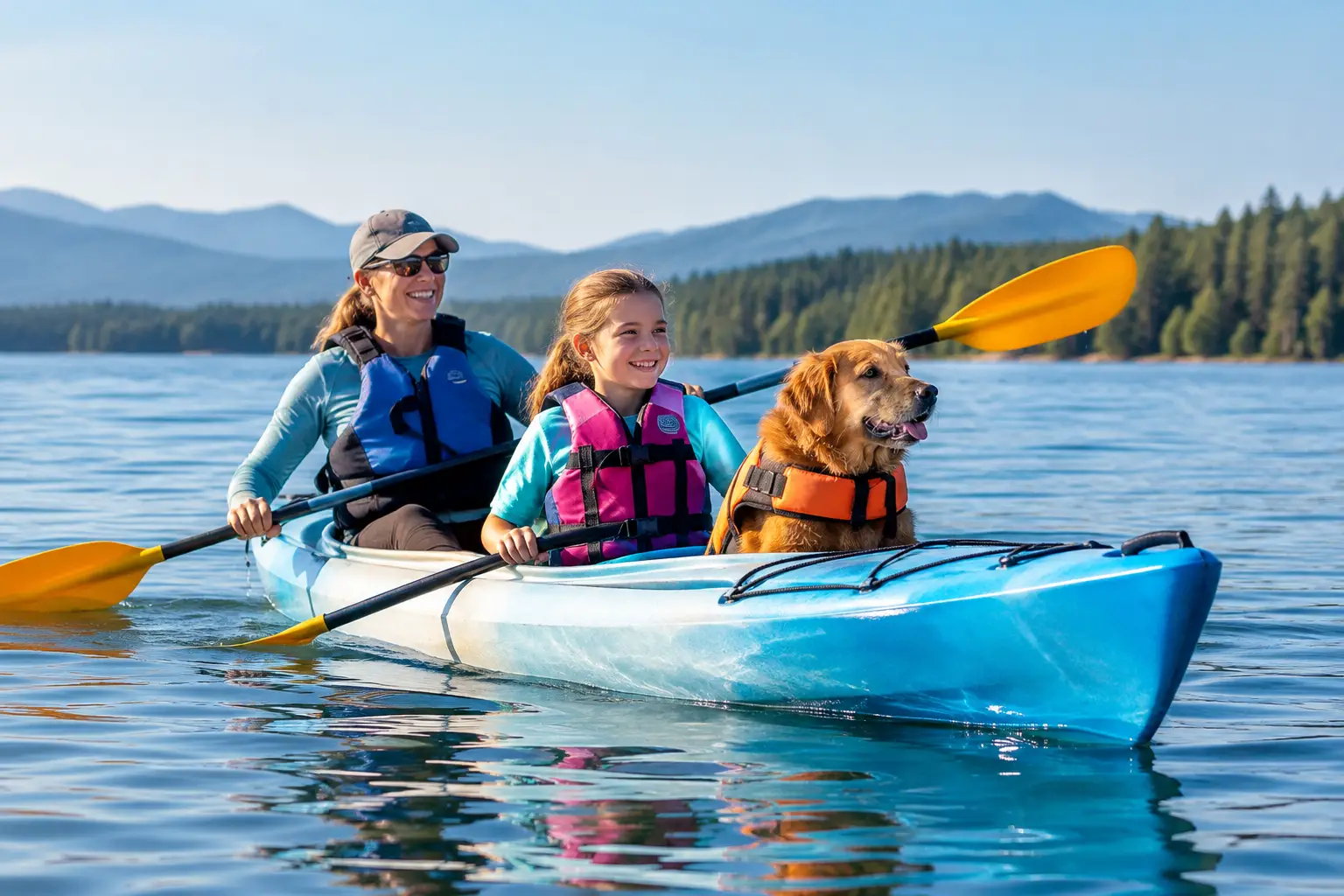
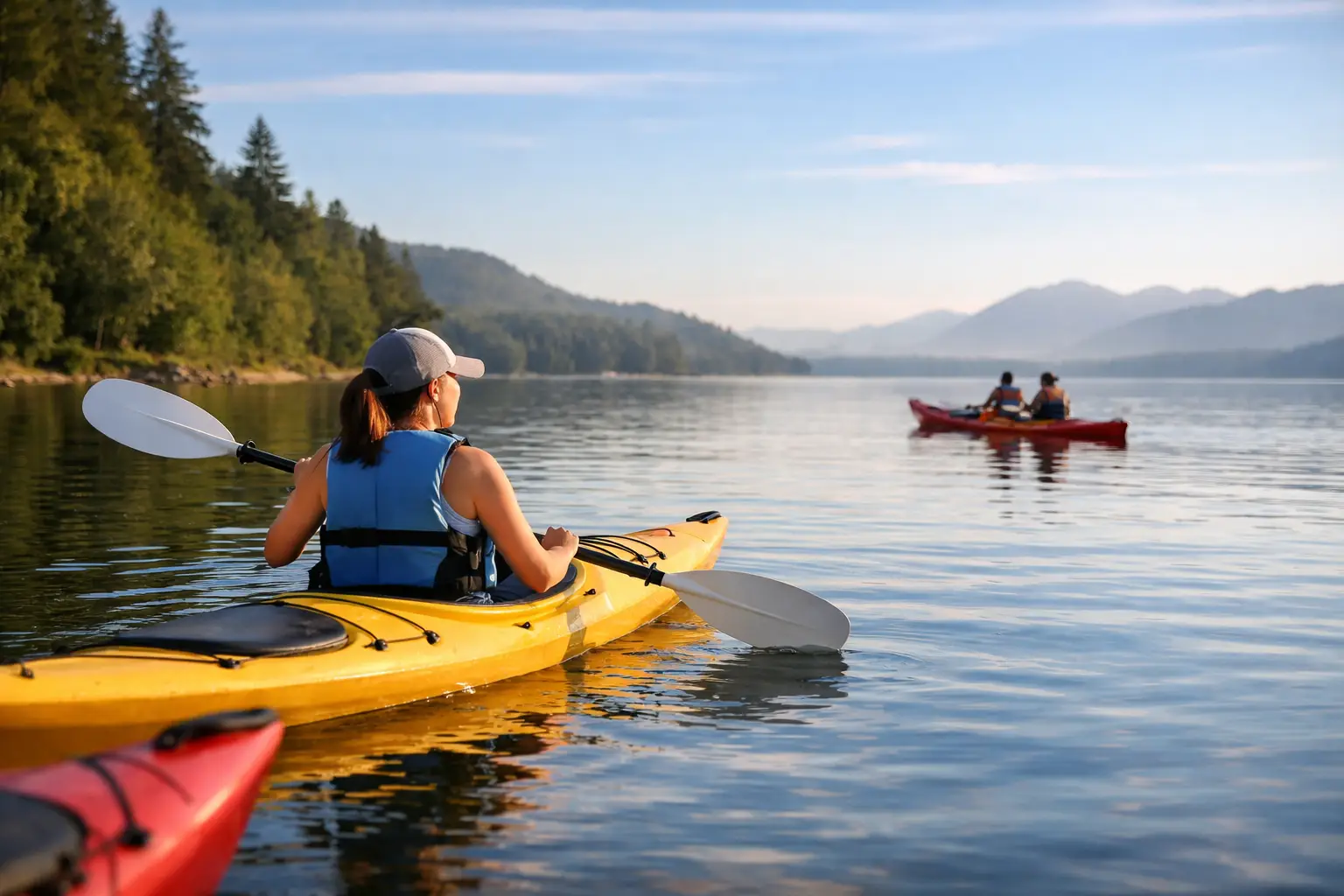
A first kayak trip should not feel like an audition for an adventure movie. It should feel like a great afternoon outside: a stable boat, calm water, a few laughs when the paddle drips on your lap, and scenery worth putting your phone away for. So, is flatwater kayaking good for beginners? Absolutely – when the setting, equipment, and safety support are right.
Flatwater gives new paddlers room to learn without fighting waves, rapids, or a rushing current. That lower-pressure environment is why it is one of the best ways for Chicago-area families, couples, friend groups, and curious first-timers to try kayaking near Starved Rock.
Why flatwater kayaking works for first-timers
On flatwater, the water is generally calm with little to no current. Instead of using all your attention to correct for moving water, you can focus on the basics: sitting comfortably, holding the paddle correctly, turning the kayak, and looking around at the sandstone bluffs and river views.
That matters more than people realize. Most beginners do not need an intense workout or a technical challenge on day one. They need enough time to get comfortable. A calm paddle lets you build confidence one easy stroke at a time.
At a well-managed flatwater location, beginners also have a straightforward route. You are not figuring out a complicated shuttle, wondering whether water levels will cooperate, or trying to guess where to launch and land. The plan is simple: check in, get fitted with the right gear, learn the essentials, paddle, and come back feeling surprisingly proud of yourself.
What makes a flatwater kayak trip beginner-friendly?
“Flatwater” is a great start, but it is not the whole story. Wind, boat traffic, distance, water temperature, and launch conditions still affect how a trip feels. The best first experience pairs calm water with thoughtful operations.
Look for a launch area where getting in and out of the kayak is manageable, boats that are selected for recreational comfort, and staff who explain the route in plain English. A quality outfitter should give every paddler a properly fitted PFD, also called a life jacket, and make wearing it non-negotiable. It is required on the water, and it is part of what keeps a fun day fun.
A short safety talk should cover how to sit, how to use the paddle, what to do if the boat wobbles, where to go, and when to return. It is not meant to make the day feel serious or intimidating. It means you spend less time worrying and more time enjoying the river.
For anyone who wants extra reassurance, a guided tour is often the easiest first move. Your guide handles on-water leadership, offers paddling tips as you go, and helps the group stay together. It is especially nice for parents, groups with mixed comfort levels, and people whose main goal is to relax and take in the view.
Is flatwater kayaking good for beginners who cannot swim?
It can be, provided the experience is designed responsibly and the paddler follows safety rules. Non-swimmers should always wear their properly fitted PFD, stay with the group or within the recommended paddling area, and be honest with staff about their comfort level before launching.
Many people assume kayaking requires strong swimming skills. In reality, your first line of safety is prevention: choosing calm conditions, using a stable kayak, wearing a PFD, listening to the safety briefing, and avoiding unnecessary risks. Still, paddlers should understand that water activities carry real risk. If someone is extremely anxious around water or unable to follow instructions, it may be better to wait, choose a guided outing, or enjoy the waterfront from shore that day.
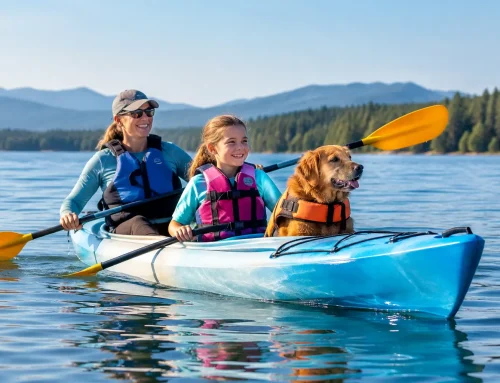
Children need the same clear expectations, plus close adult supervision. A tandem kayak can be a smart option for a younger child or a nervous beginner who would rather paddle with a confident partner. The stronger paddler can help steer while the other person gets a feel for the experience without carrying the whole job.
Your first paddle will be easier than you think
Beginners tend to picture kayaking as a balance test. The good news is that recreational kayaks are built for stability, and the key is remarkably unglamorous: sit low, keep your body relaxed, and do not make sudden dramatic movements. No standing up for a victory speech midway through the river.
Your paddle strokes do not need to be perfect. To go forward, alternate smooth strokes on each side. To turn, paddle more on the opposite side of the direction you want to go. If you drift a little, that is normal. If your kayak spins around while you laugh at your friend, that is also normal.
Start with a realistic distance. An hour or two on calm water can be plenty for a first outing, particularly on a warm day. Paddling uses your core, shoulders, and arms in ways that may surprise you. Build in time to pause, hydrate, take photos, and enjoy the fact that you chose a real outdoor adventure instead of another afternoon scrolling on the couch.
What to wear and bring for a comfortable day
Dress for the weather and the possibility of getting a little wet. Quick-drying clothes are more comfortable than heavy cotton, and shoes that can handle water are better than flip-flops that may float away without you. Bring sunscreen, water, and a secure place for your phone and keys.
A hat and sunglasses help on bright days, while a light layer can make a cooler morning or breezy evening much more pleasant. Leave valuables behind when possible. The river is a wonderful place to make memories, but it has zero interest in protecting your expensive sunglasses.
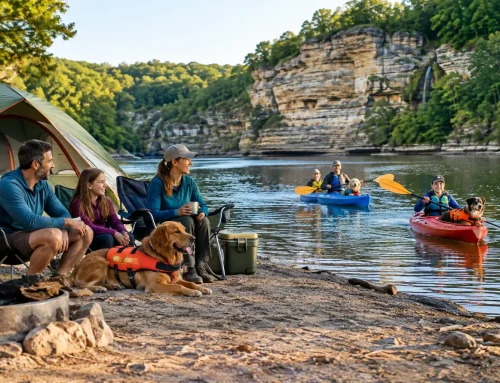
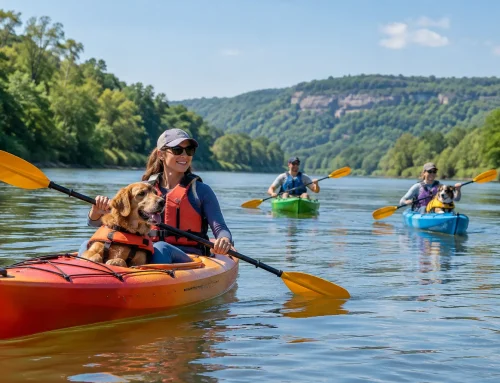
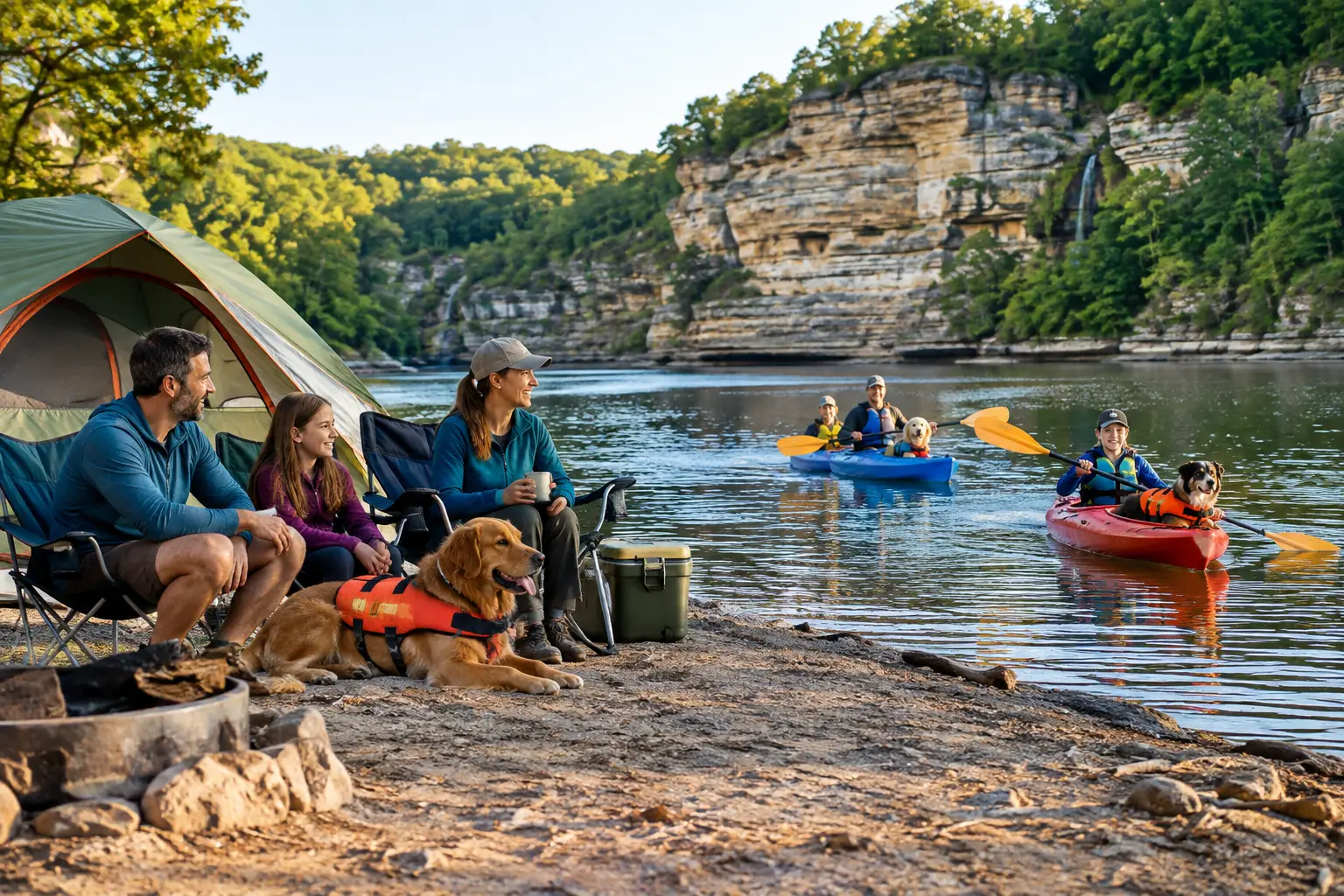
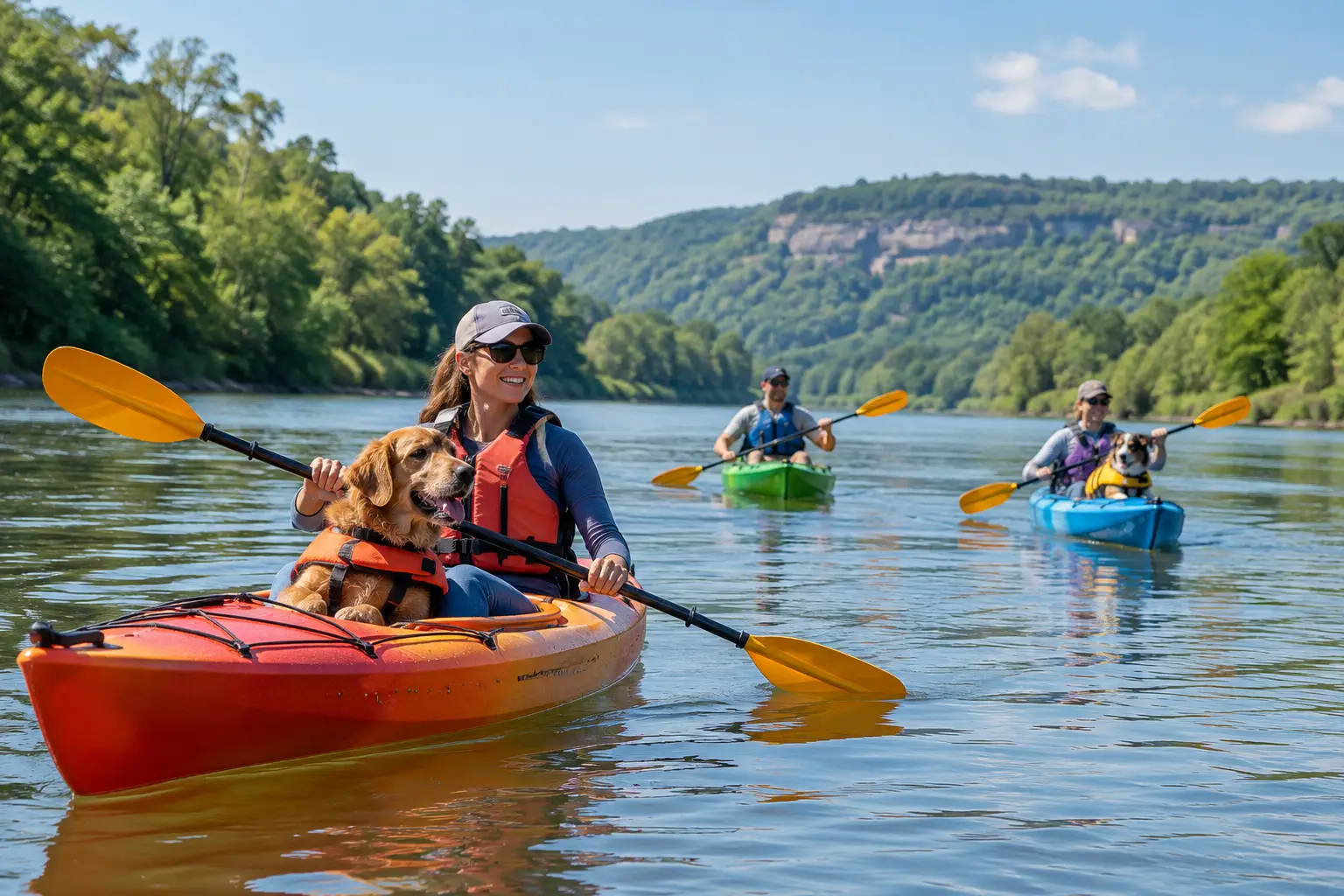
If you are bringing a dog, confirm the outing is dog-friendly in advance and think honestly about your pup’s temperament. A dog who loves car rides, strange noises, and sitting still may be ready for a kayak day. A dog who treats every squirrel sighting like a five-alarm emergency may be happier at camp. Dogs should wear a canine life jacket, too.
Flatwater is not the same as risk-free
Calm water does not mean no rules. Weather can change, wind can pick up, and every paddler needs to respect launch cutoffs and staff directions. If an outfitter advises against launching because of conditions, that is not a buzzkill. It is good judgment.
Stay aware of your surroundings, keep a comfortable distance from other boats, and never paddle under the influence of alcohol or drugs. Avoid tying kayaks together or trading seats in the middle of the water. Small choices make a big difference, especially for first-timers.
The right experience also depends on the person. Someone looking for rapids, whitewater skills, or a major endurance challenge may find flatwater too mellow. That is fine. Flatwater is not trying to be a thrill ride. It is a confidence-building, scenery-filled entry point to paddling – and for plenty of people, that is exactly the point.
Turn a first paddle into a near-Chicago getaway
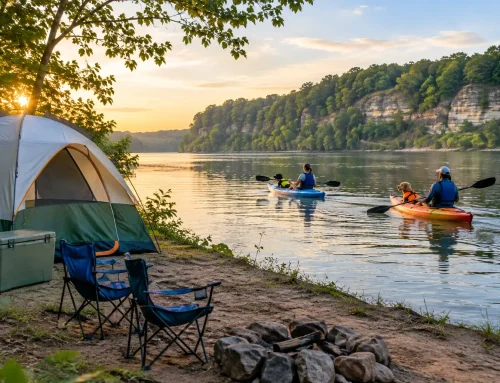
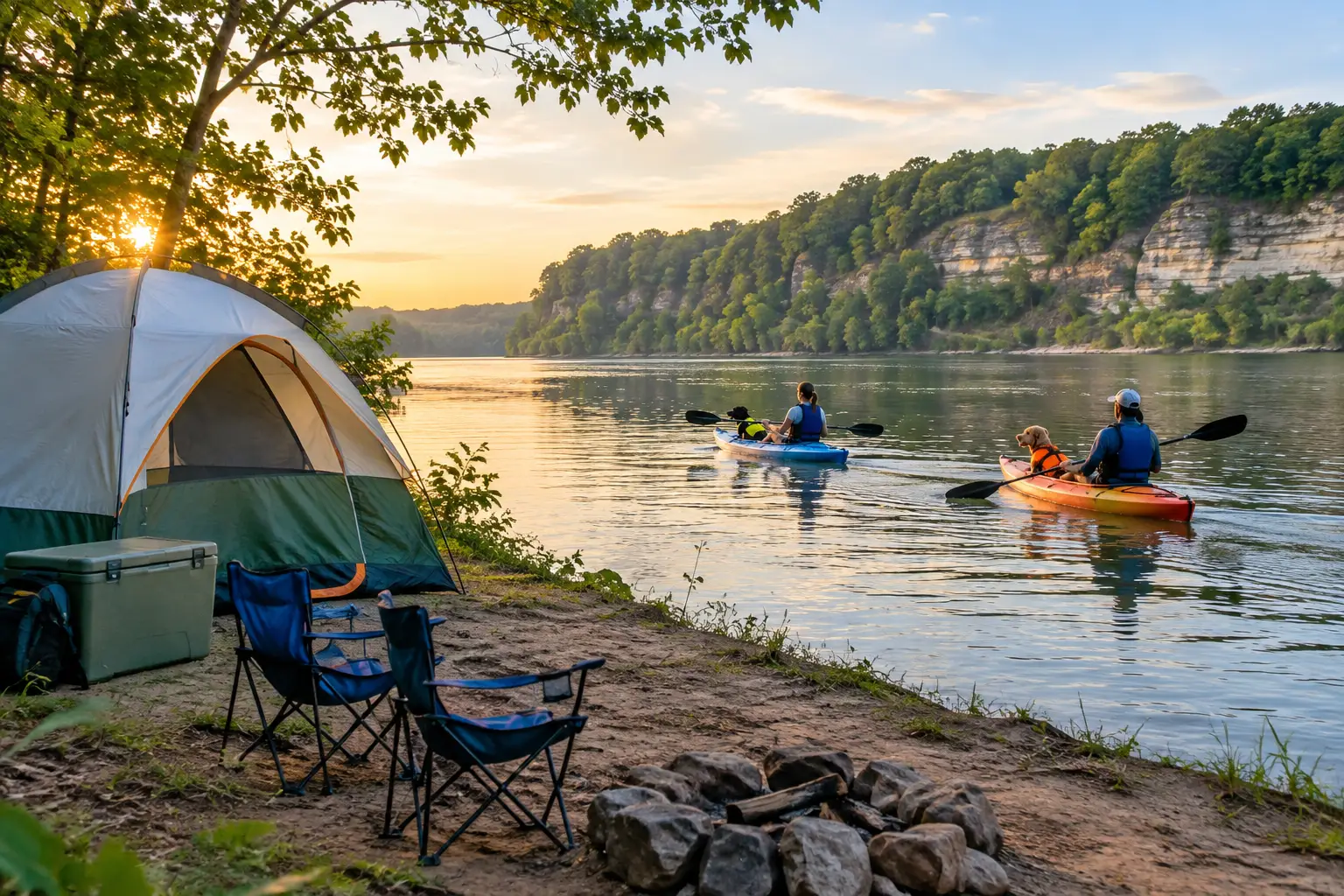
One of the best parts of kayaking near Starved Rock is that the adventure can be as simple or as full as you want it to be. Come for a day trip, paddle the Illinois River, and head home with that pleasantly tired feeling. Or stay longer and make a weekend of it with waterfront camping near Starved Rock State Park.
Camping changes the pace in the best way. After a paddle, you can trade the parking lot rush for a campfire, dinner outside, and an unhurried morning by the water. Tent camping works beautifully for classic weekend plans, while pop-up and tear-drop camping options can make the setup feel a little more polished. For groups who want outdoor time with fewer logistics, glamping near Chicago offers a comfortable middle ground.
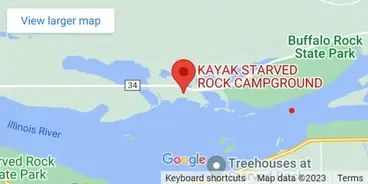
Kayak Starved Rock Campground makes that paddle-and-camp rhythm easy, with a dam-controlled river environment, beginner-friendly flatwater, rentals, guided options, and waterfront camping in one place. That means less coordinating and more time actually being outside together.
Your first kayak trip does not have to be epic to be memorable. Pick calm water, wear your PFD, listen to the safety briefing, and give yourself permission to be new at something. A quiet paddle, a good crew, and a river view can do a lot for a regular weekend.