A first kayak rental should feel like the start of a great day, not a test you forgot to study for. If you are wondering how to choose beginner kayak rental options near Chicago, look for the experience around the boat: calm water, a clear safety briefing, quality gear, and people who can point you in the right direction before you launch.
The kayak matters, of course. But for first-timers, the right setting and support matter just as much. A stable boat on flatwater with a properly fitted PFD can turn “I’m not sure about this” into “Can we go around one more time?”
Start With Beginner-Friendly Water, Not Just a Pretty View
A dramatic river view is great for photos. It does not automatically mean it is a great place to learn. Beginners should prioritize protected, predictable water where they can practice paddling, turning, and stopping without fighting a strong current or navigating boat traffic.
Look for flatwater conditions, shallow areas, and an operation that is upfront about what the water is like on the day of your rental. A dam-controlled stretch of the Illinois River can offer a more reliable, low-stress outing than a route that depends on changing flow, complicated shuttles, or a long one-way paddle.
The best first outing gives you room to make small mistakes. You might paddle harder on one side and spin in a circle. You may need a minute to get comfortable entering the kayak. That is normal. Calm water lets you laugh, reset, and keep going.
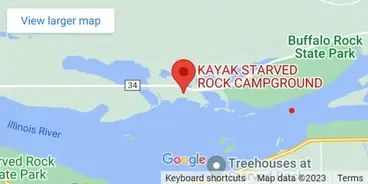
For Chicago-area day trippers, the area across from Starved Rock State Park makes an especially easy escape. You get sandstone bluffs, open river scenery, and a real change of pace without committing to an all-day drive or technical whitewater adventure.
How to Choose a Beginner Kayak Rental That Fits You
The first question is not always “single or tandem?” It is “What will help me feel comfortable enough to enjoy the trip?” A good rental team should ask about your group, experience level, and plans for the day before handing over a paddle.
Pick a stable, comfortable boat
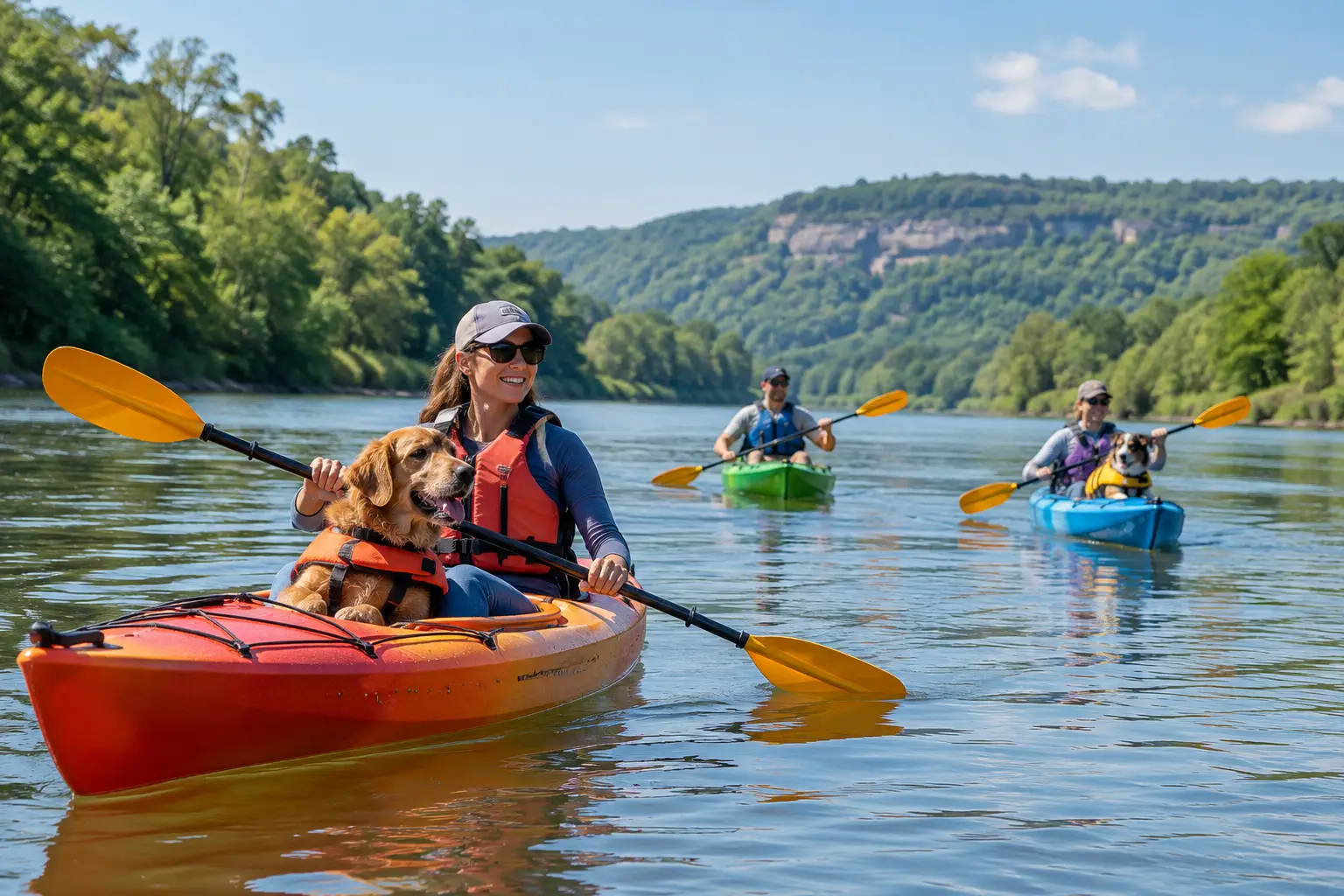
Beginners usually do best in a recreational or touring kayak designed for calm water. These boats tend to have a wider, more forgiving feel than narrow performance kayaks. A larger cockpit also makes getting in and out less intimidating, especially if you have never sat in a kayak before.
Premium touring kayaks can be a nice upgrade because they track well and provide a comfortable seat for a longer paddle. Still, the fanciest boat is not necessarily the best choice if you feel squeezed, unsteady, or rushed. Ask the outfitter to match the boat to your size and comfort level.
A properly adjusted footrest is a small detail with a big payoff. Your knees should be slightly bent, your feet should have a firm place to press, and you should not be sliding around in the seat. This gives you more control without requiring upper-body strength.
Decide whether a tandem makes sense
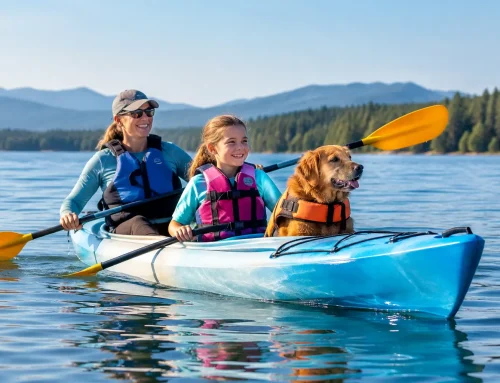
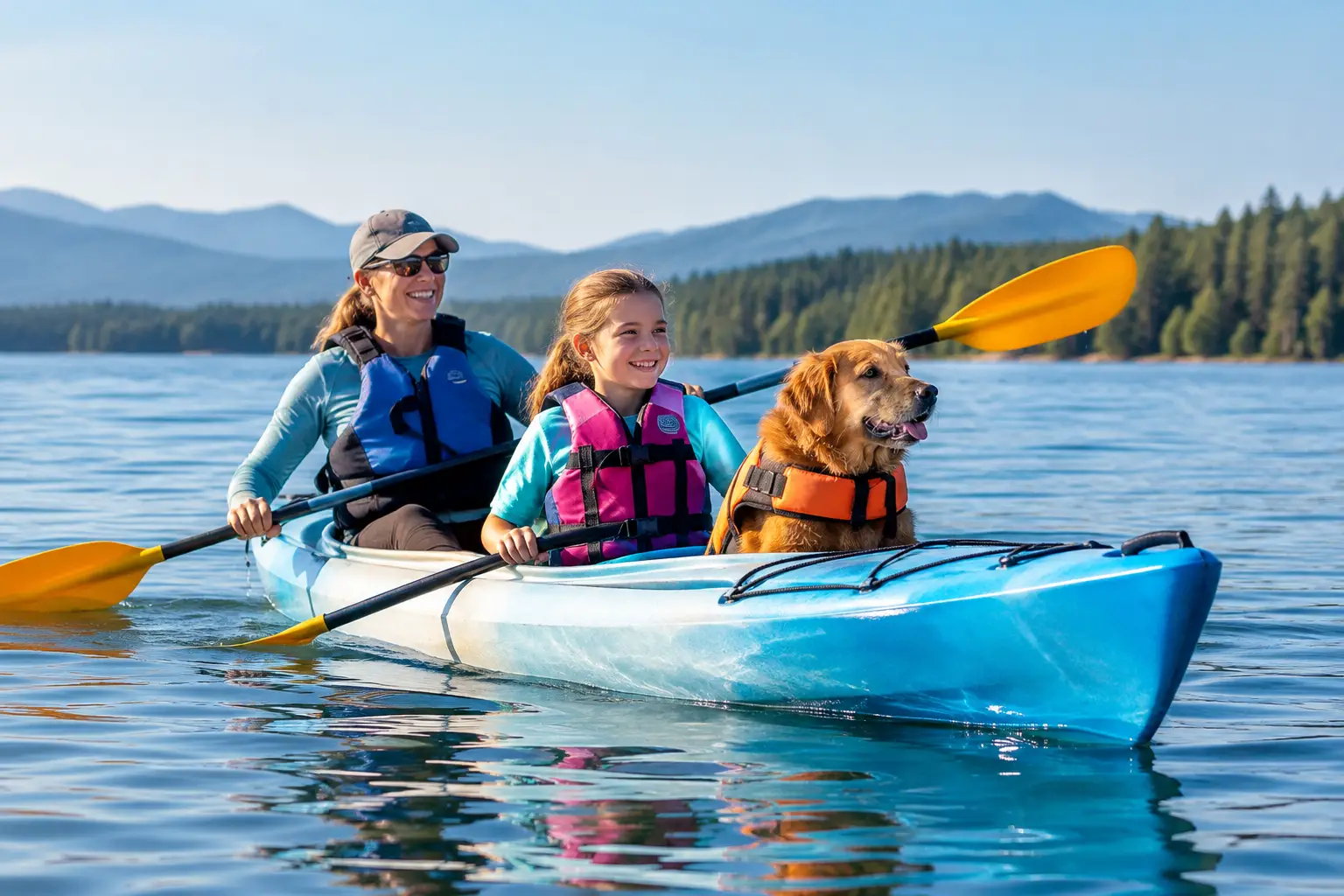
A tandem kayak is a fun choice for couples, parents with kids, or friends who want to share the experience. It can also help a nervous first-timer feel more confident with an experienced paddler nearby.
The trade-off is teamwork. Tandem kayaks are not difficult, but they do reward communication. Agree on a simple rhythm, keep your paddles out of each other’s way, and avoid both paddling hard in opposite directions. If one person wants to set the pace and the other wants to relax and take photos, a tandem can be perfect.
A single kayak is often better when both people want their own space, their own speed, and the freedom to zigzag toward whatever catches their eye. Families should ask about age, size, and seating guidelines rather than guessing what will work for a child.
Make the PFD non-negotiable
Every paddler should wear a properly fitted personal flotation device, or PFD, from launch to landing. Not tucked behind the seat. Not clipped to the boat. Worn.
A good PFD should feel snug but let you breathe and move your arms comfortably. Rental staff should help with fit if you are unsure. The same rule applies to kids, and it applies to experienced swimmers too. Swimming ability is valuable, but it is not a substitute for a PFD on the water.
Choose Instruction Over Guesswork
A beginner-friendly rental should include more than a kayak, paddle, and a hopeful wave from the dock. Before you launch, you should know how to get in and out safely, hold the paddle, move forward, turn, stop, and what to do if you get turned around.
A short on-shore safety talk can prevent most first-time frustrations. Ask whether the rental includes basic instruction, a map, and a clear explanation of where to paddle. You should also know the boundaries of your route, how long it typically takes, and when you need to be back.
Guided tours are worth considering if you want extra confidence. You will have a leader on the water, built-in instruction, and someone who knows the route, scenery, and conditions. This is an especially smart option for families, larger friend groups, or anyone whose main goal is to relax instead of figuring out navigation.
Self-guided rentals are great when you want flexibility. The key is choosing a location where support is still nearby and directions are simple. No beginner should feel like they are being sent on a scavenger hunt with a paddle.
Read the Fine Print Before You Plan the Picnic
The little logistical details decide whether your outing feels easy or chaotic. Check the rental length, arrival time, last-launch cutoff, weather policy, age requirements, and what is included. If you are coming from Chicago after work or trying to fit in a hike, those launch times matter.
Bring water, sunscreen, and clothes that can get splashed. Secure your phone in a waterproof case or dry bag, and leave valuables in the car unless you truly need them. Sandals with a heel strap or water shoes are usually more practical than flip-flops that disappear at the first muddy shoreline.
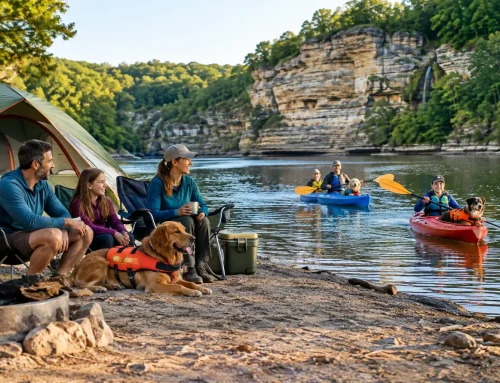
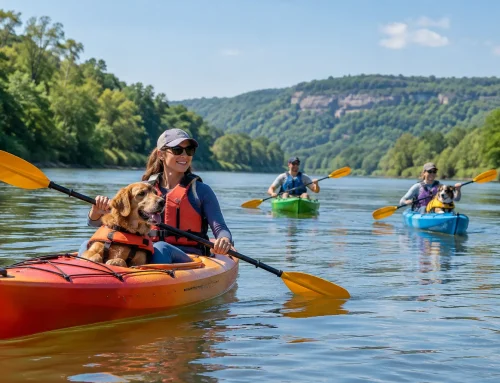
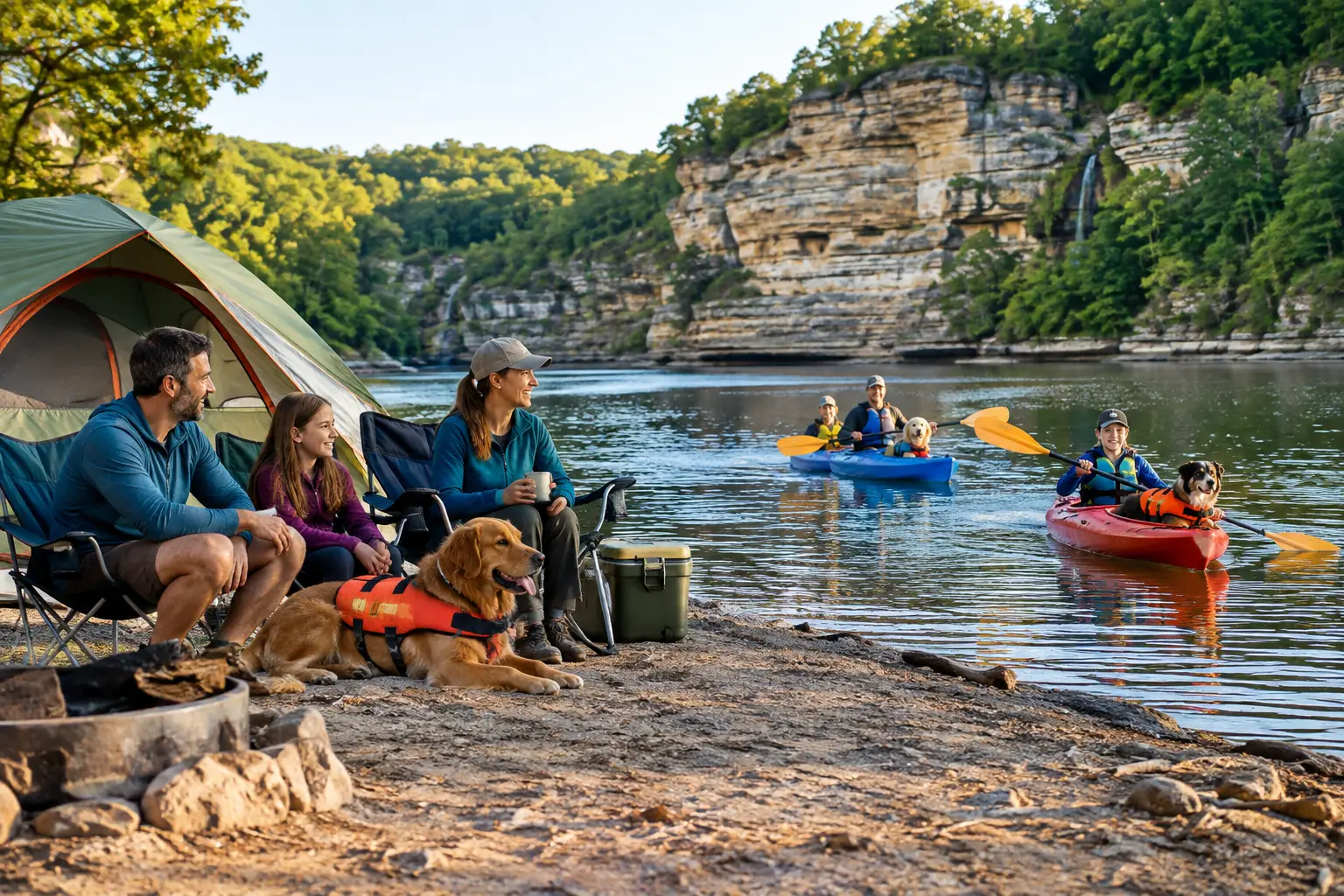
If you are bringing a dog, confirm that the rental and campground are dog-friendly and ask about pet expectations. A dog who is comfortable around water, has a pet PFD, and can settle in a kayak makes a much happier paddle partner than one who treats the bow like a launching pad.
Weather also deserves a real plan. Light rain may be manageable depending on the operator’s policy, but lightning, high winds, and unsafe conditions are a different story. Choose a business that makes conservative calls when needed. Rescheduling an outing is always better than trying to prove you are tougher than the forecast.
Turn a Rental Into a Real Weekend Escape
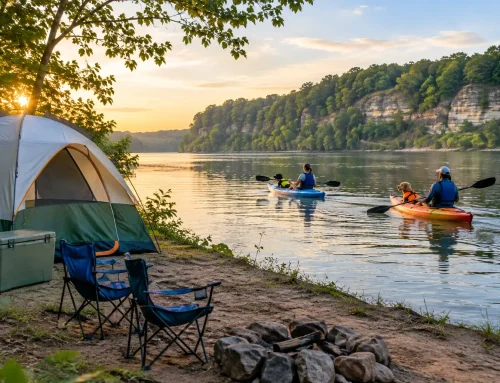
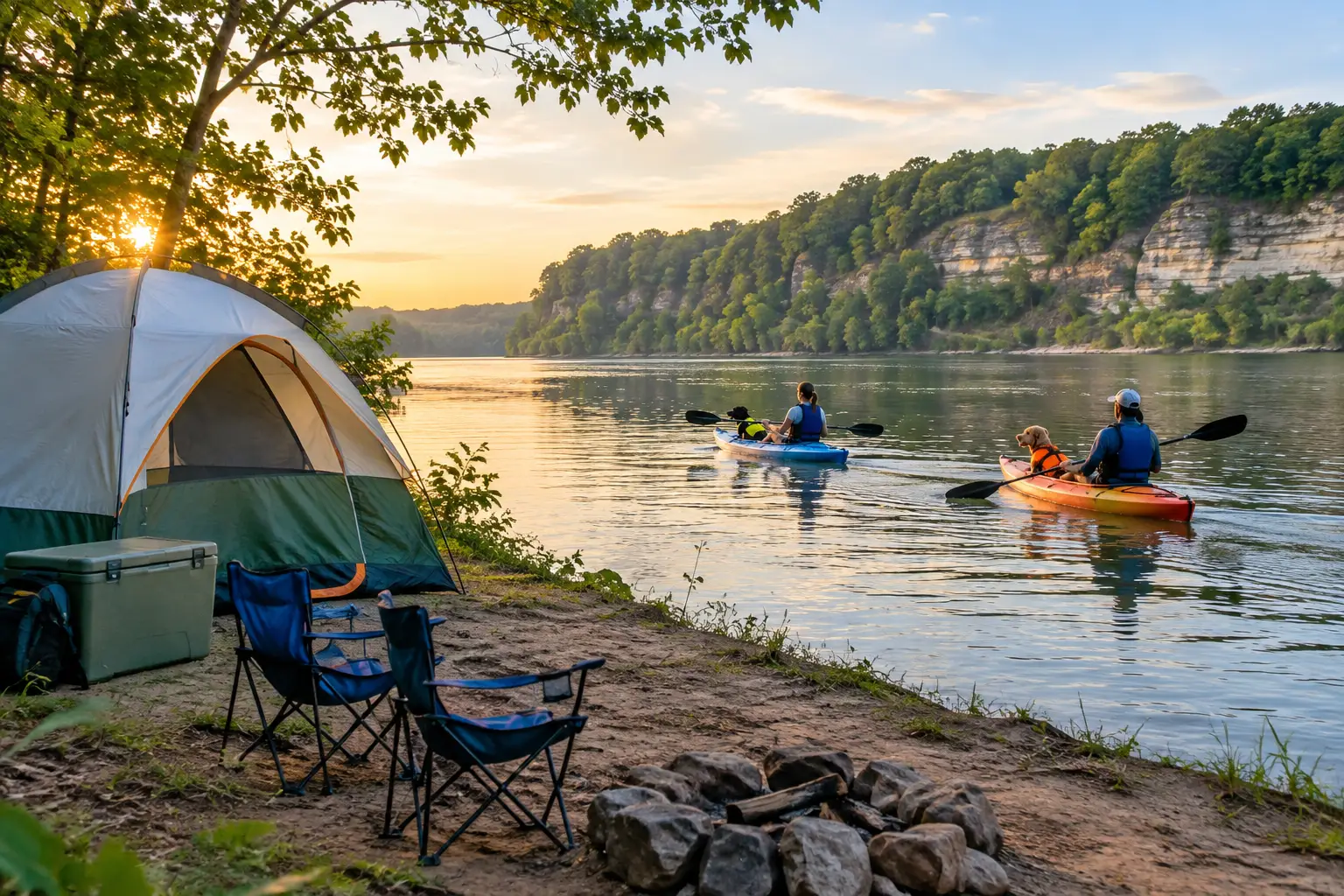
A few hours on the water can be the whole plan, but it can also be the highlight of a low-key camping weekend. Waterfront camping near Starved Rock gives you time to paddle without watching the clock, then trade the parking lot exit for a campfire, dinner, and a quieter night outside.
This is where simple packages can make a difference. If you do not own gear or do not feel like wrestling with tent poles after a drive from the city, tent rentals, pop-up camping, and teardrop camping options can keep the trip easy. Glamping-style setups near Chicago are a good fit for couples or first-time campers who want the outdoors without turning preparation into a second job.
Kayak Starved Rock Campground is built around that kind of no-fuss adventure: flatwater paddling, on-site direction, and a waterfront place to stay when one afternoon does not feel like enough. Whether you come with a family, a dog, or a few friends who all claim they “have never kayaked,” the goal is the same – get outside, feel capable, and head home with a better story than your usual weekend.
Choose the rental that gives you enough support to relax, enough time to look around, and a route that leaves you wanting another lap. Your first paddle does not need to be epic. It just needs to be safe, comfortable, and fun enough that the river starts calling you back.