A good paddle tour experience should leave you with sandy shoes, a camera roll full of bluffs, and zero stories about fighting the current. That is the appeal of a weekend on the Illinois River across from Starved Rock State Park: you can trade Chicago traffic for flatwater, sandstone scenery, and a campsite by the water without needing to become an outdoor logistics manager first.
For first-time kayakers, couples planning a low-key escape, families with kids, and friend groups that want more than dinner and drinks, paddling plus camping makes the trip feel bigger without making it harder. Show up, get fitted with a required PFD, learn the basics, and spend the rest of the day doing the fun part.
What Makes a Paddle Tour Experience Feel Easy
Not all kayaking trips are built for the same kind of day. A winding river with strong current, complicated shuttles, and unpredictable water levels can be a great challenge for experienced paddlers. It is not always the move when one person in the group has never held a paddle or when your eight-year-old is asking whether the kayak can tip over every five minutes.
The Illinois River near Starved Rock offers a more forgiving setup. The dam-controlled environment helps maintain runnable water levels, while the protected flatwater conditions mean there is no current pulling your boat downstream. The water is generally shallow, and there is no shuttle puzzle at the end of the route. Those details matter because they free up your attention for the views, the wildlife, and your people.
A guided tour adds another layer of calm. Before launch, guides cover how to wear and adjust your PFD, hold the paddle, steer, stop, and stay comfortable on the water. Then they lead the route, share the area’s stories, and keep the group moving at an easy pace. You do not need to pretend you know kayaking language. You just need to listen, paddle, laugh when your friend spins in a circle, and ask questions.
For a self-guided rental, the same beginner-friendly setting still does a lot of heavy lifting. Clear directions, maps, quality touring kayaks, and on-site support give you room to explore without feeling dropped into the wilderness with a vague wave toward the river.
Turn a Day Paddle Into Illinois River Camping
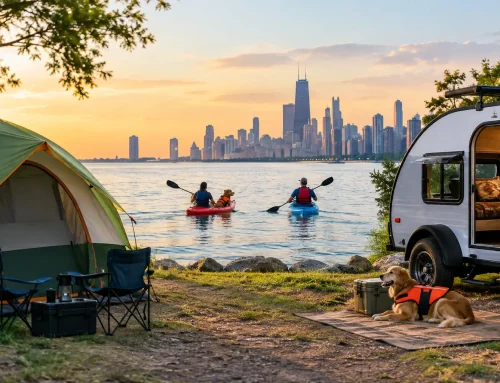
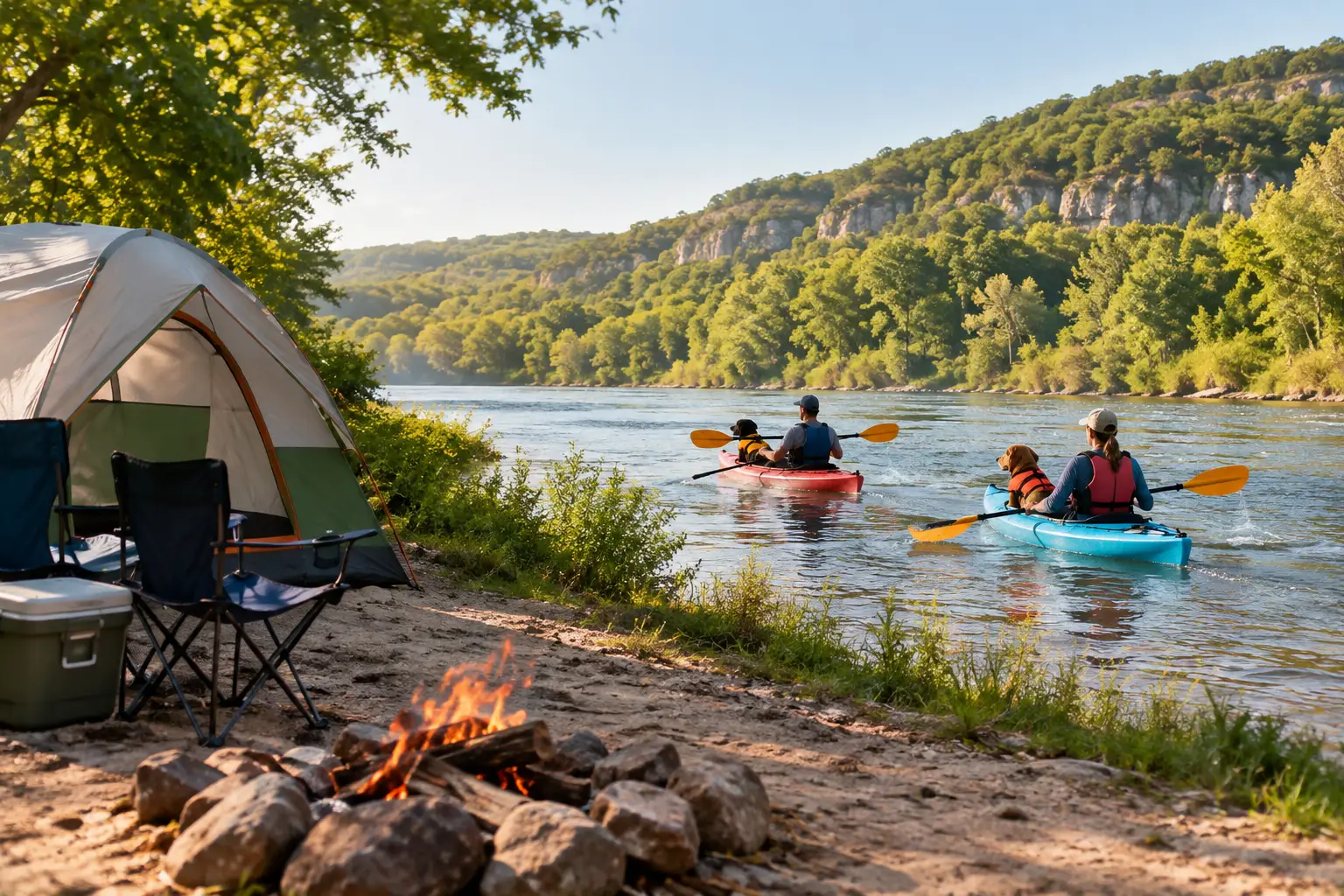
The smartest part of an overnight paddle plan is simple: you do not have to rush home just as everyone finally relaxes. After an afternoon on the water, a waterfront campsite turns the trip into a real reset. Make dinner, watch the last light hit the river, listen for nighttime sounds, and wake up close enough to start the next morning slowly.
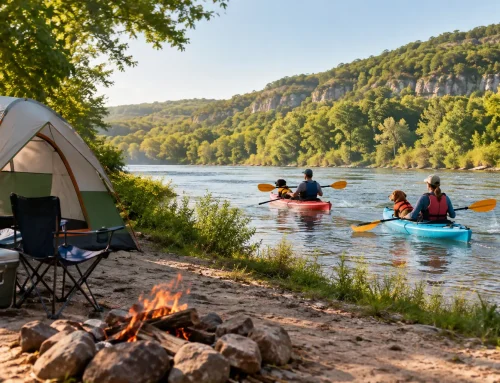
Camping near Starved Rock State Park also gives your group options. You can build a weekend around kayaking and leave plenty of unplanned time for the kind of things that make a trip memorable: coffee outside the tent, cards at the picnic table, a sunset walk, or telling the same campfire story badly for the third time. The park’s canyons, trails, and overlooks are nearby when you want to stretch your legs on dry land.
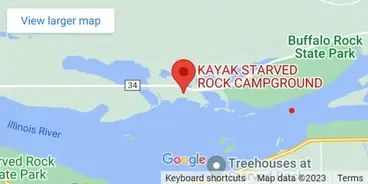
Kayak Starved Rock Campground makes this combination especially straightforward because the launch and waterfront camping are in the same destination. Instead of packing up wet gear, driving somewhere else, checking in again, and trying to remember where you put the tent stakes, you can let the day unfold in one place.
Choose the camping setup that fits your crew
Tent camping is the classic option for people who want the full outdoors feel. Bring your own gear, claim your spot, and enjoy the satisfaction of making a camp home from a few bags and some questionable tent-pole instructions. It is a great fit for families, scouting groups, and friends who do not mind a little setup in exchange for more flexibility.
A pop-up camping setup works well when convenience is the priority. It cuts down on the pre-trip shopping list and lets you spend less time sorting gear, especially if you are coming straight from the city after work. For a first camping night, that lower barrier can be the difference between “we should try this someday” and actually going.
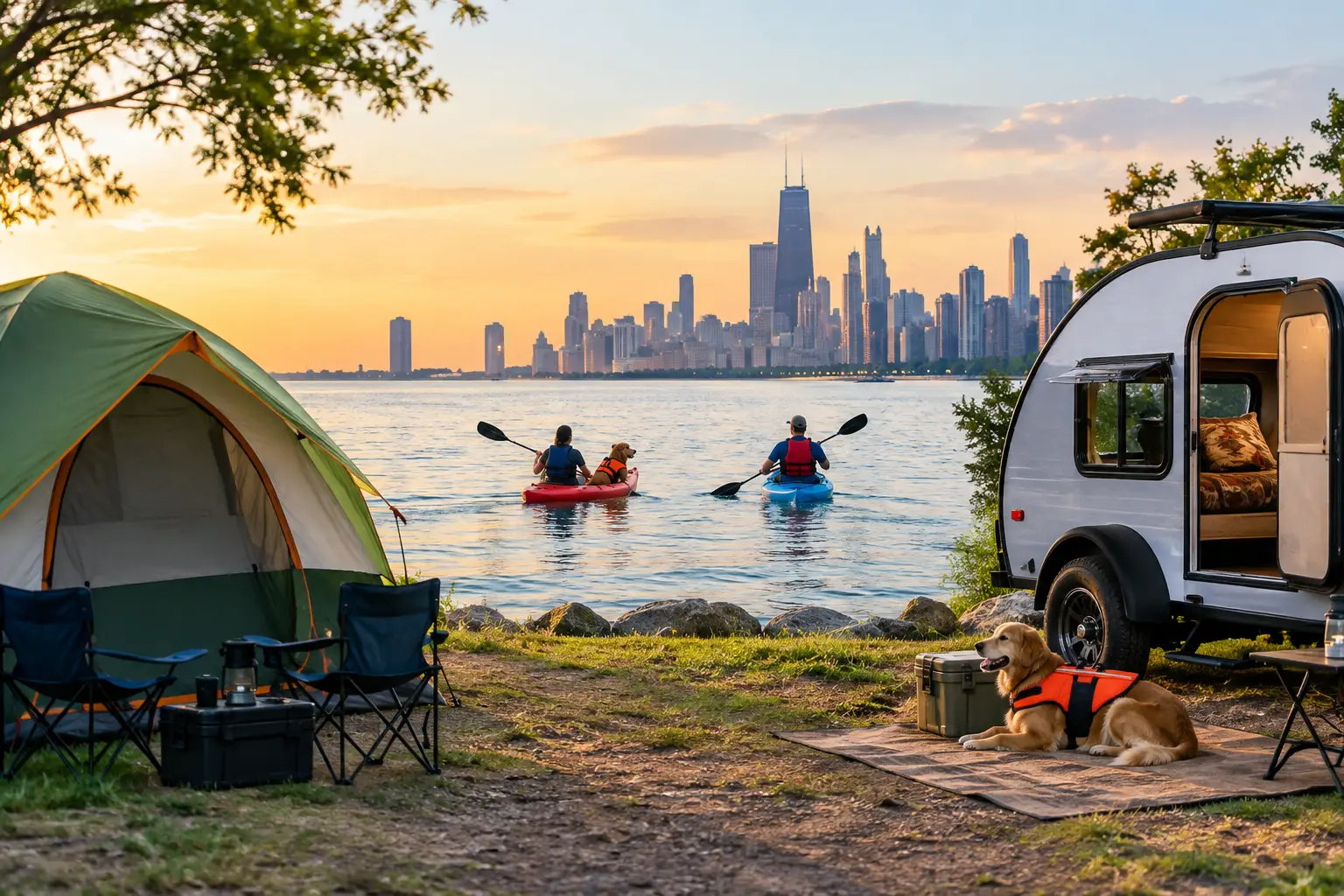
A teardrop camper brings a little more comfort to the riverbank. It is a strong choice for couples, glampers, or anyone who loves the campfire but would also love a proper mattress after a few miles of hiking or an afternoon of paddling. It still feels like camping – you are outside, close to the water, and making breakfast in the fresh air – but with fewer compromises.
There is no single best choice. A tent may feel more adventurous for one group, while a teardrop is the reason another group will happily stay two nights. The point is to pick a setup that lets everyone relax rather than proving who can pack the lightest.
Planning Your Paddle Tour Experience Near Chicago
From the Chicago area, this is the kind of escape that does not require using half your vacation days. It is close enough for a day trip, but camping makes it easy to turn a single free weekend into something that feels farther away. That is the sweet spot for young professionals who need a break from screens, parents looking for a manageable family adventure, and couples trying to replace another couch-and-streaming Saturday.
Book your kayak tour, rental, and campsite in advance, especially for popular weekends and special events. A guided option is often the best first pick if your group has mixed experience levels. Everyone starts with the same instruction, and the guide handles the route leadership. If your group already feels comfortable paddling and wants a more independent schedule, a rental lets you set your own pace within the day’s operating rules.
Pay attention to launch times and last-launch cutoffs. These are not buzzkill details. They help make sure every group has enough daylight and enough time on the water to enjoy the outing safely. Arriving early also gives you breathing room to park, use the restroom, get fitted for gear, and start the day without the classic “where is everybody?” group-text chaos.
Bring clothes that can get wet, secure footwear, sunscreen, water, and a dry bag for your phone and keys. For an overnight stay, add layers for the evening, easy meals, a flashlight, and whatever helps you sleep comfortably. Keep your packing practical. You are camping near Chicago, not filming a survival show.
Dog-Friendly Camping and Kayaking: A Few Smart Moves
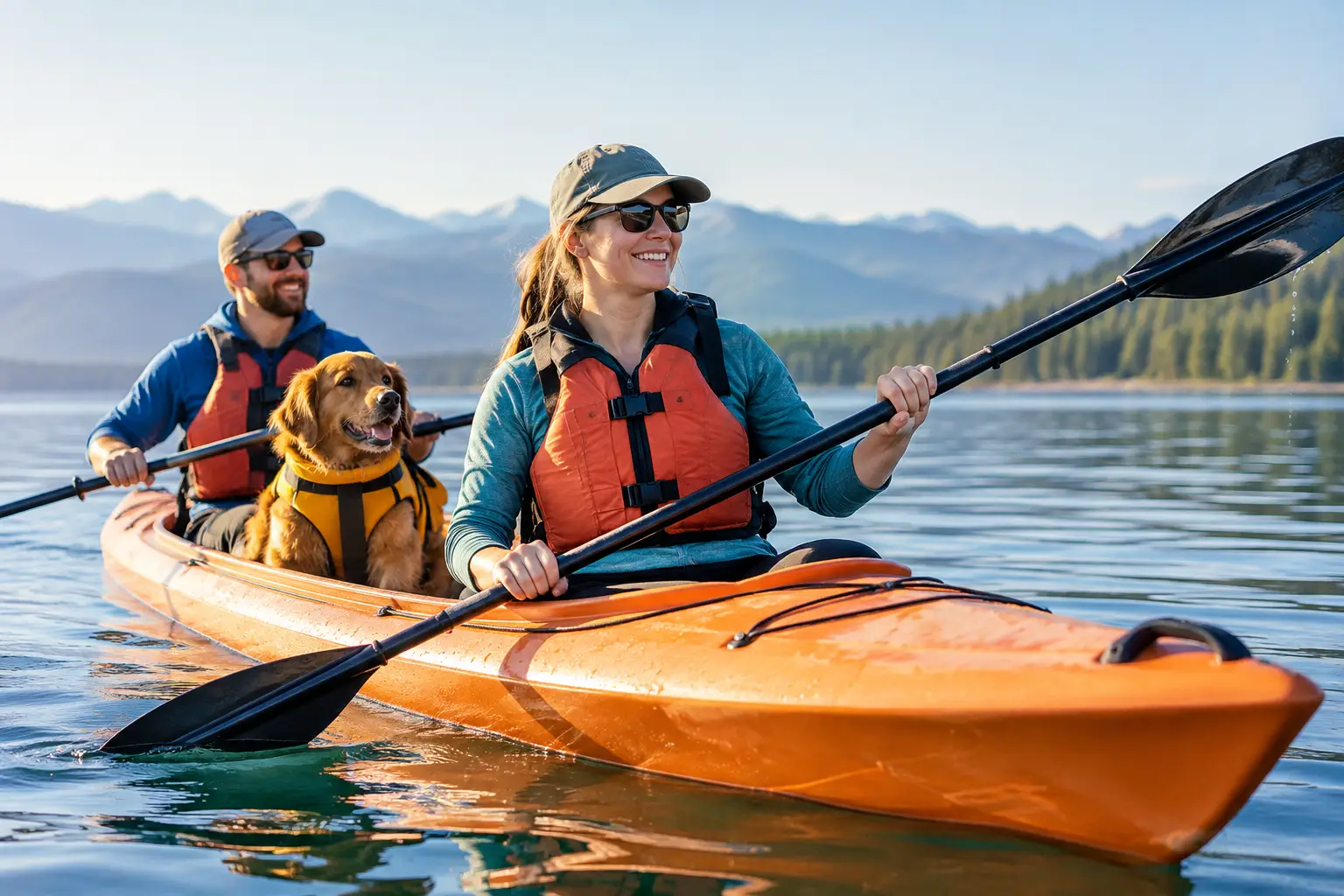
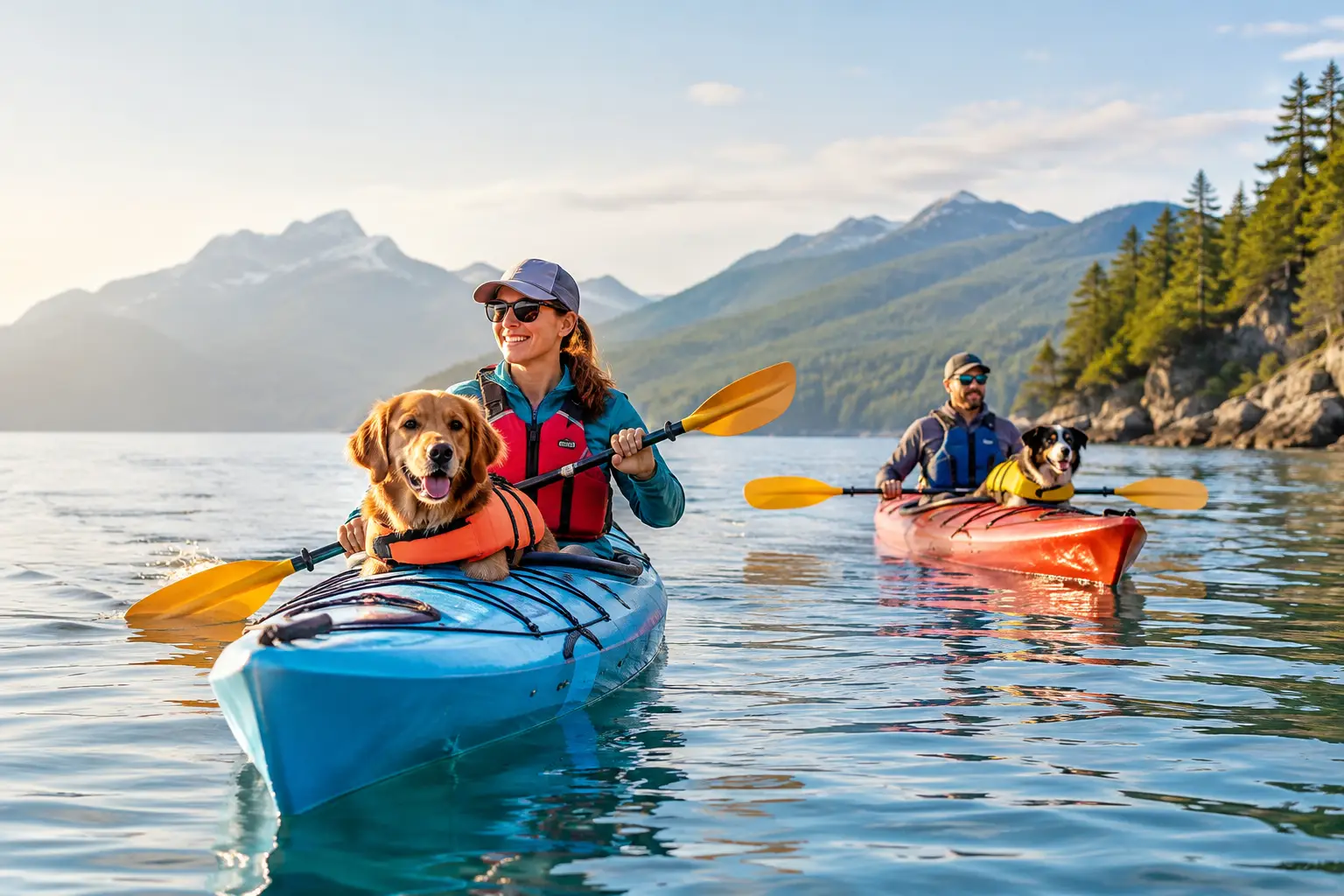
A river weekend is better when the whole family can come along, including the one with four legs and a talent for finding mud. Dog-friendly camping and kayaking can be a great match, but it works best when you plan around your dog’s temperament rather than assuming every pup will love a kayak immediately.
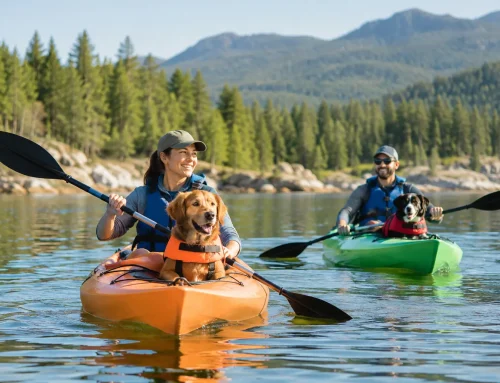
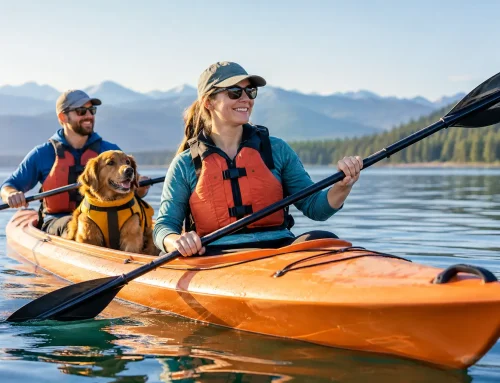
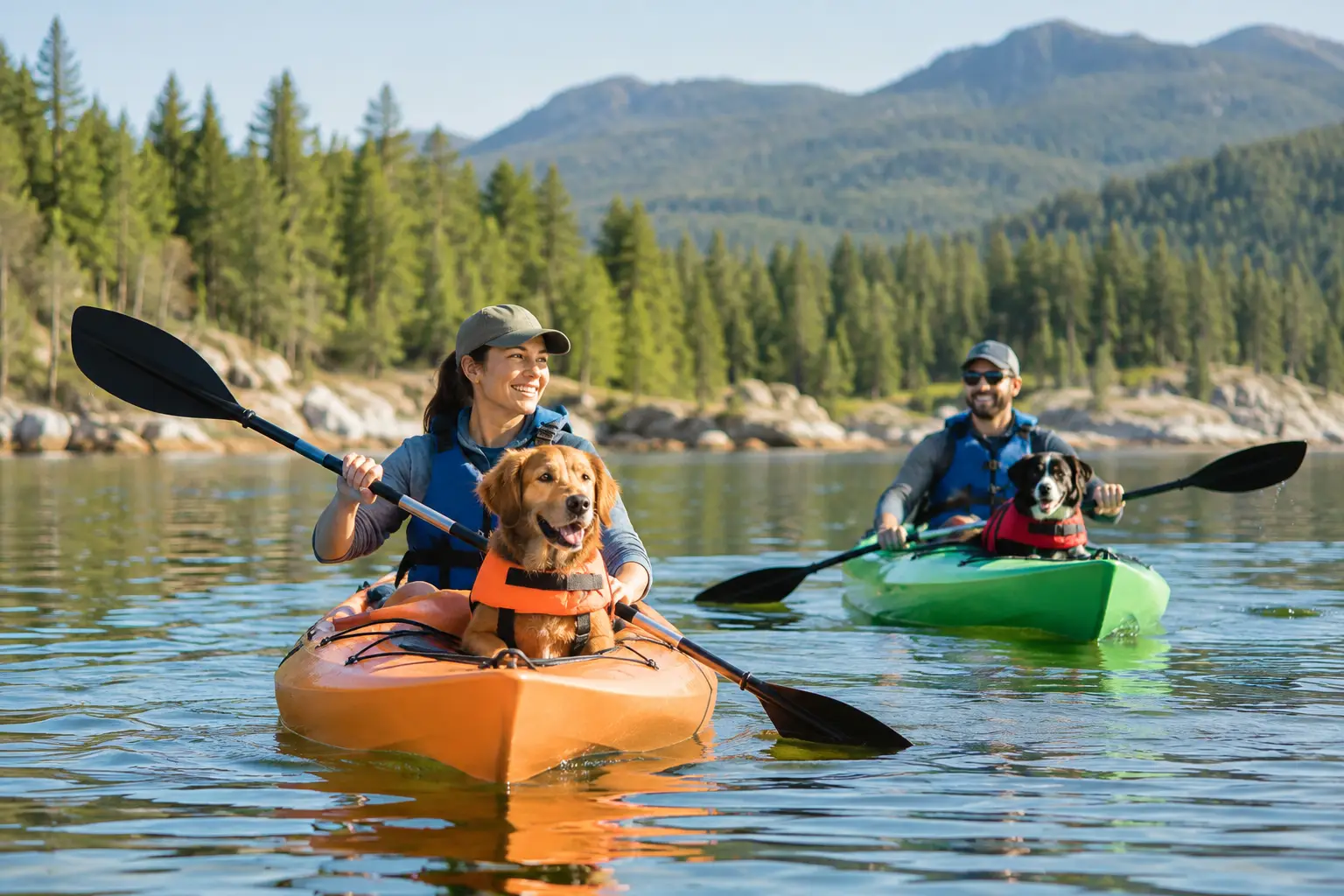
Bring a well-fitting dog PFD, even for strong swimmers. It adds visibility, gives you a handle if you need to help your dog back into the boat, and supports safer time around the water. Let your dog get familiar with the kayak on land first, then keep the first outing calm and short. A tandem kayak can offer more room when paddling with a dog, though the right choice depends on your dog’s size and how well they can settle.
At camp, keep your dog leashed where required, bring water and shade, and be thoughtful about neighboring campers. A tired dog after a paddle and a walk is usually a very happy camp dog. A stressed dog who has been asked to sit still through a crowded weekend is not having the vacation you imagined.
The Little Details That Make the Trip Better
The best paddle-and-camp weekends have a loose plan, not a minute-by-minute schedule. Set the anchor points: your launch time, your campsite, dinner, and any nearby hiking you do not want to miss. Then leave space for the unexpected good stuff, like spotting a heron, taking a longer lunch by the shore, or staying by the fire because no one is ready to call it a night.
If you are bringing kids, make the first paddle about fun, not distance. Let them help choose snacks, look for wildlife, and learn a few simple paddle strokes. If you are traveling with friends, assign one person to handle food and another to organize shared gear. Tiny bit of coordination, huge reduction in “I thought you packed it” energy.
Most of all, keep the safety basics non-negotiable. Wear the required PFD on the water, follow guide instructions, respect launch cutoffs, and ask for help when you need it. Confidence on the river does not come from acting like an expert. It comes from having the right support, knowing the plan, and realizing you can do more outside than you thought.
Bring the people who need a break, choose the camping style that makes them say yes, and give yourselves one full weekend where the only urgent decision is whether to paddle before breakfast or after it.