A weekend near Starved Rock should not begin with a wrestling match against tent poles in a dark parking lot – unless that is genuinely your idea of fun. When deciding between tent camping versus teardrop camping, the better choice comes down to how you want to spend your limited getaway time: setting up camp, or getting on the Illinois River, spotting bluffs, and settling in by the water with your favorite people.
For Chicago-area campers, both options make a lot of sense. Tent camping brings the classic outdoorsy feel and leaves room in the budget for snacks, paddles, and spontaneous plans. A teardrop offers a more ready-to-go home base with a dry sleeping space and a little more comfort after a full day outside. Neither is automatically better. The best fit depends on your group, your weather tolerance, and whether you want your camp setup to feel rugged, cozy, or pleasantly low-effort.
Tent Camping Versus Teardrop Camping: The Big Difference
Tent camping puts you close to the sounds of the campground: birds waking up, a breeze moving through the trees, and maybe your friend unsuccessfully trying to start the camp stove before coffee. It is flexible, social, and wonderfully simple when the weather cooperates. You can choose a compact setup for two or bring a larger tent that gives the family, dog, and gear some breathing room.
Teardrop camping is built for campers who want nature without making every basic comfort a project. Instead of unpacking a full sleep system and building your bedroom from the ground up, you arrive to a compact trailer with a solid roof, an elevated sleeping area, and a more protected place to recharge. It still feels like camping, just with fewer moving parts.
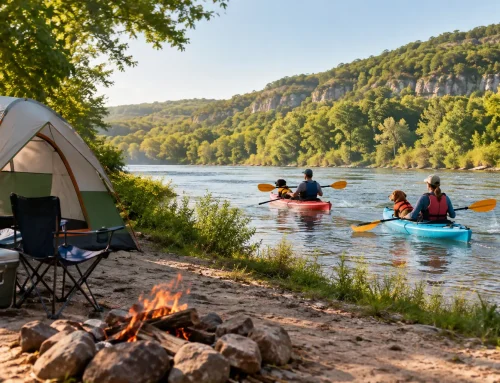
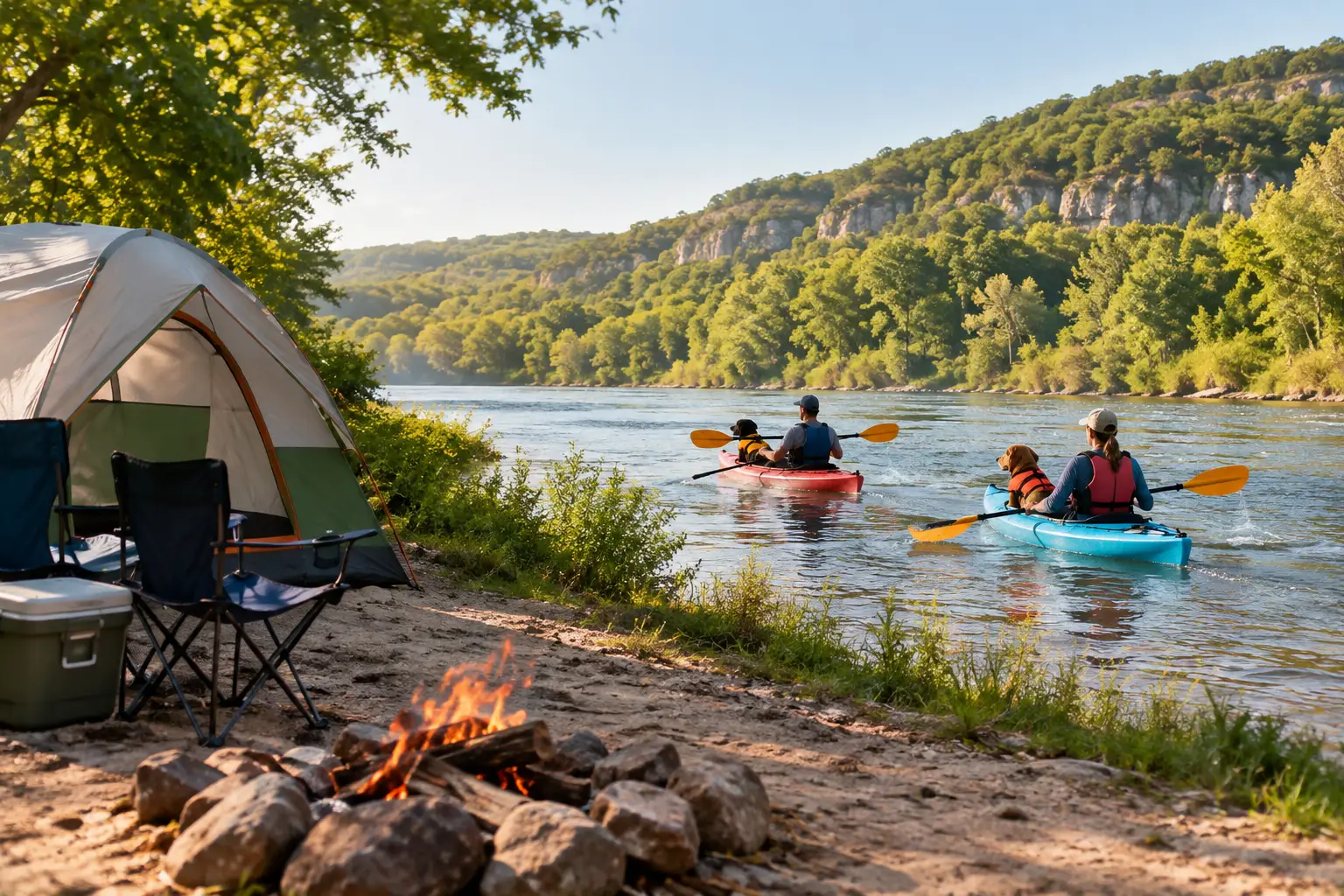
At a waterfront campground near Starved Rock State Park, that distinction matters. A day on the river can mean wet sandals, tired kids, sandy dogs, and the kind of happy exhaustion that makes an easy bedtime sound excellent. A teardrop can make that end-of-day transition smoother. A tent can make it feel more immersive and more affordable. Pick the version that makes you say, “Yes, we can do this again next weekend.”
Choose a Tent If You Want the Classic Campground Feel
Tent camping is often the right call for first-time campers, groups with varying budgets, and anyone who likes making the campsite part of the experience. You get more freedom to spread out, set up chairs, organize a shared food station, and make your little patch of campground feel like home.
It is also a great match for families. Kids tend to love the novelty of sleeping in a tent, and a larger tent can keep everyone together without requiring separate accommodations. For dog-friendly camping, a tent can work beautifully too, especially when your pup is used to being close to the family at night. Bring a familiar blanket or bed, keep a leash handy around camp, and make sure your tent is roomy enough that nobody is sleeping nose-to-tail.
Tent camping can also be a smart way to try a camping near Chicago weekend without committing to lots of gear. If you are using a tent rental or a pre-arranged camping package, much of the guesswork disappears. That means less time wondering whether you packed the right stakes and more time making a paddle plan for the next morning.
The trade-off is weather and setup. Rain, high winds, humid nights, and a poor sleeping pad can make a tent feel less charming. A quality tent and a realistic setup plan help a lot, but tent camping asks you to be a little more comfortable with the outdoors doing what the outdoors does.
Tent camping is a strong fit for
Couples who want a simple, lower-cost escape, families who enjoy a shared campsite, social groups planning a lively weekend, and campers who like the hands-on ritual of building camp. It is especially good when your priority is spending the day outside and treating your sleeping space as exactly that: a place to sleep.
Choose a Teardrop If Comfort Is Part of the Adventure
Teardrop camping is for the person who wants to wake up near nature but would also like a real mattress-height bed, walls between them and a surprise rain shower, and fewer items to unpack. There is no shame in that game. A getaway is supposed to feel restorative.
For couples, teardrops are especially appealing. They create a compact, cozy base camp that feels a little like glamping near Chicago while still keeping you close to the campground atmosphere. You can spend your afternoon kayaking, hiking nearby trails, or exploring the Starved Rock area, then return to a sleeping setup that is already handled.
They can also be a practical choice for campers who are new to overnight trips. Traditional tent camping comes with a learning curve: airflow, rainflies, sleeping pads, storage, campsite layout, and the eternal question of where the flashlight went. A teardrop removes much of that friction. You still need to pack clothing, food, and essentials, but your sleep shelter does not need to be assembled from scratch.
The trade-off is space and flexibility. Teardrops are compact by design, so they are usually best for one or two people rather than a whole crew. If you are bringing children, friends, or a larger dog, think honestly about sleeping arrangements before booking. You may prefer a tent, a pop-up camper, or a mixed setup where some campers sleep in the trailer and others use a tent nearby.
Teardrop camping is a strong fit for
Couples who want a comfortable weekend base, campers who prefer a faster setup, and anyone watching the forecast with suspicion. It is also a great option if the goal is to combine an active river day with an easy, dry place to land afterward.
What About Pop-Up Camping?
A pop-up camper lands nicely between the two. It offers more structure and off-the-ground comfort than a tent, while still delivering that open-air campground feeling. For families and small groups, a pop-up can be the sweet spot when a teardrop feels too compact but a tent feels like too much setup.
Think about your priorities rather than getting caught up in camping labels. If your group wants room to sleep, hang out, and store gear, a pop-up may be the answer. If you want a fast, cozy couples’ escape, a teardrop may win. If you want maximum flexibility and the classic camping experience, bring the tent.
Plan Your Illinois River Camping Weekend Around the Fun Part
The biggest mistake campers make is treating lodging as the entire trip. Your campsite is the launchpad. Around Starved Rock, that can mean a morning kayak outing, time along the water, hikes through sandstone canyons, a picnic lunch, and a campfire evening that does not involve staring at your phone.
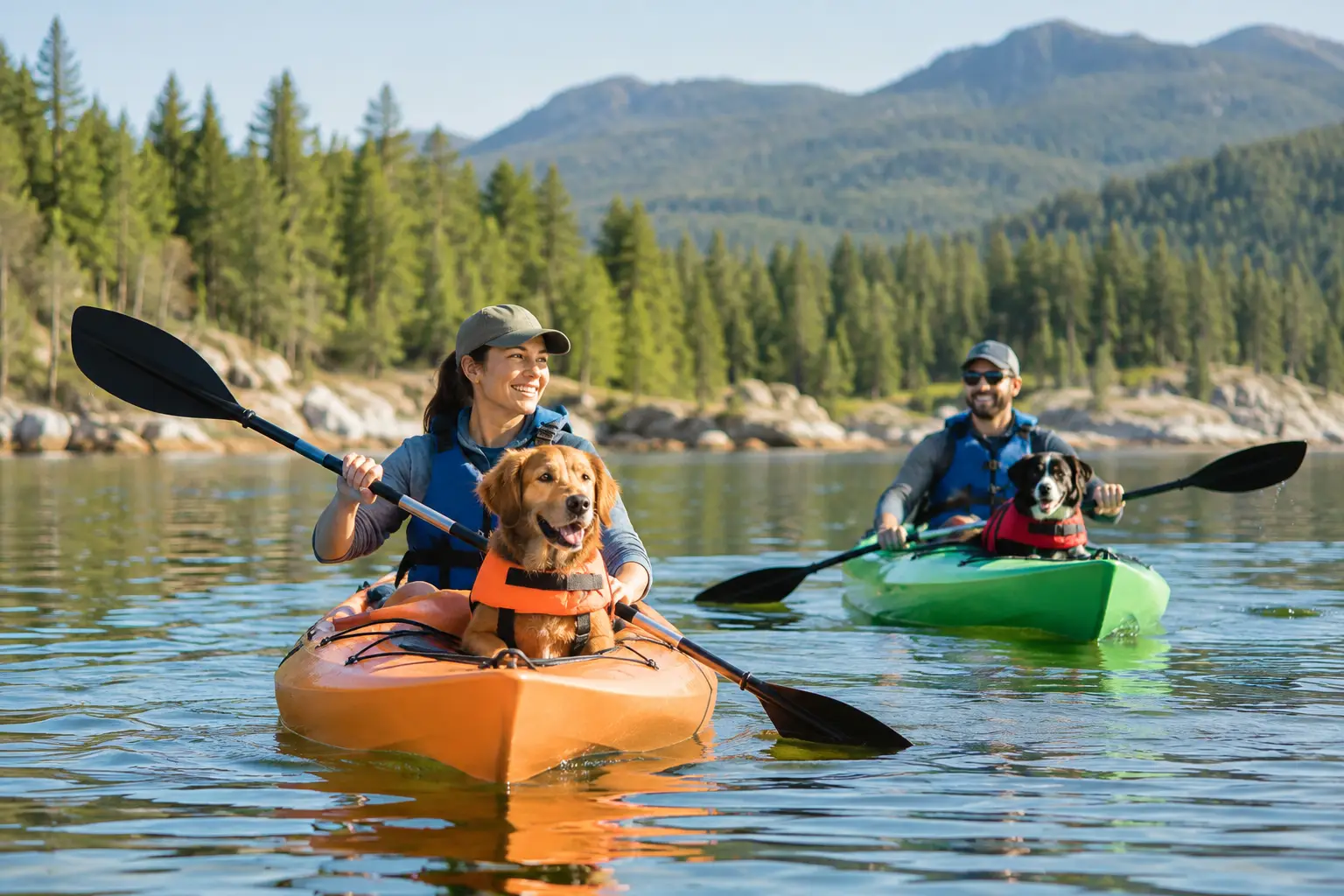
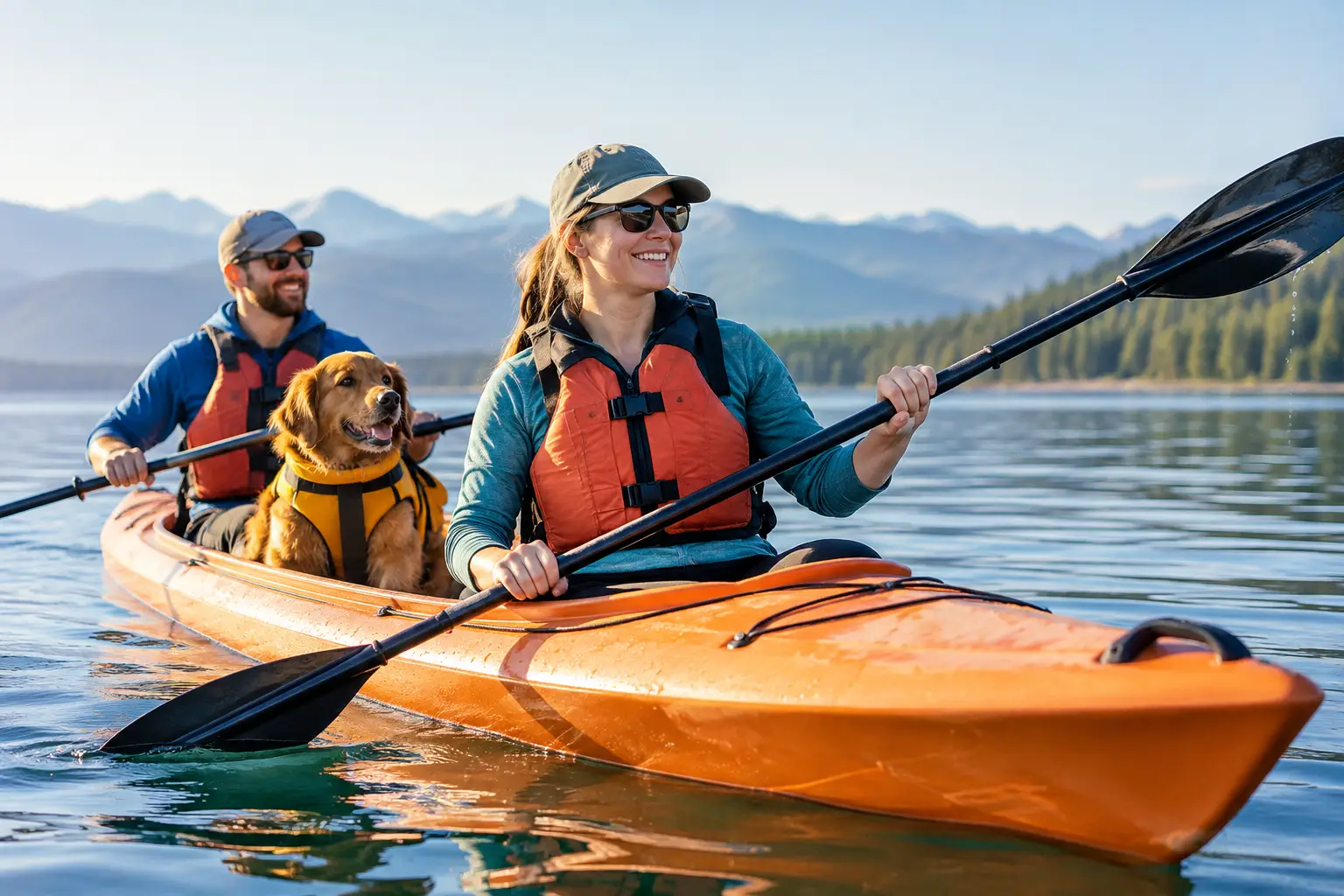
If kayaking is on your agenda, plan for comfort after paddling. Pack quick-dry layers, a towel, water shoes or secure sandals, sunscreen, and a change of clothes. Every paddler should wear a properly fitted life jacket or PFD on the water, whether it is their first time in a kayak or their fiftieth. Beginner-friendly flatwater can be relaxing, but a PFD is still non-negotiable.
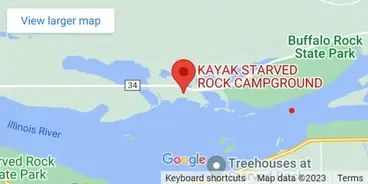
This is where a waterfront camping package can make a weekend feel easy instead of overplanned. At Kayak Starved Rock Campground, campers can pair an overnight stay with an on-water experience without turning the trip into a multi-stop logistics puzzle. The river conditions are designed to feel approachable for beginners, and the campground makes it possible to keep the adventure close to your sleeping setup.
For families, build in more downtime than you think you need. Kids may be ready for another activity right after breakfast, then suddenly need snacks, shade, and a reset. For couples, avoid cramming every hour with an itinerary. Leave time for a slow coffee, a short walk by the water, and an unhurried campfire. That is usually where the best memories happen.
A Quick Reality Check Before You Book
Tent or teardrop, check the practical details before loading the car. Confirm the number of sleepers, whether pets are allowed with your selected site or package, what equipment is included, and what you need to bring yourself. If you have a dog, consider how they sleep, whether they get anxious around neighboring campsites, and how they handle warm afternoons.
Also be honest about your group’s camping personality. The friend who says, “I do not need much,” may mean they need a sleeping pad, a battery fan, two pillows, and a coffee plan by 7 a.m. There is no wrong answer. The right camping setup is the one that lets everyone enjoy the river, the scenery, and each other without becoming grumpy by bedtime.
Whether you zip into a tent or climb into a teardrop, make your campsite a reason to stay for one more campfire, one more laugh, and maybe one more easy paddle before heading back to Chicago.