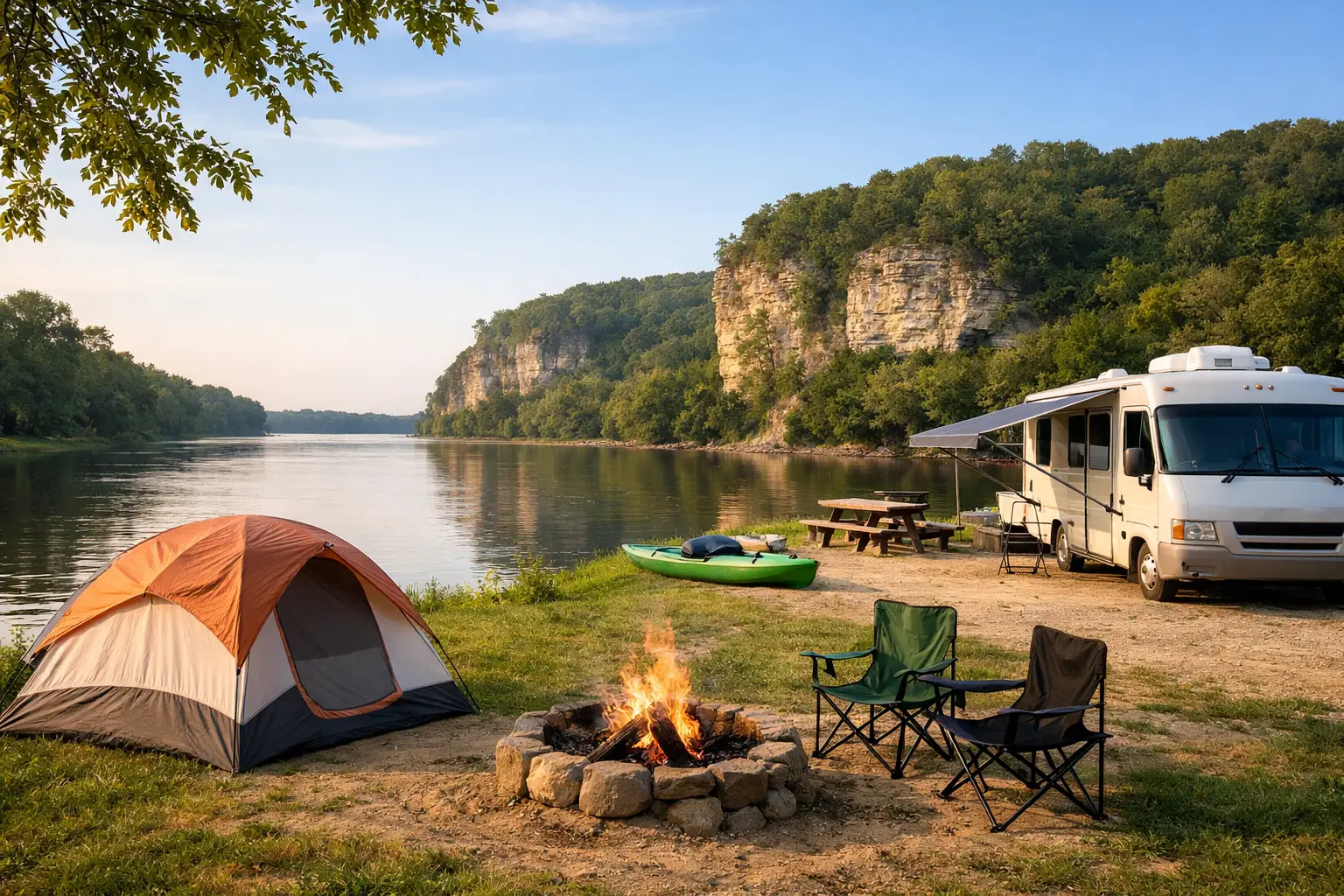
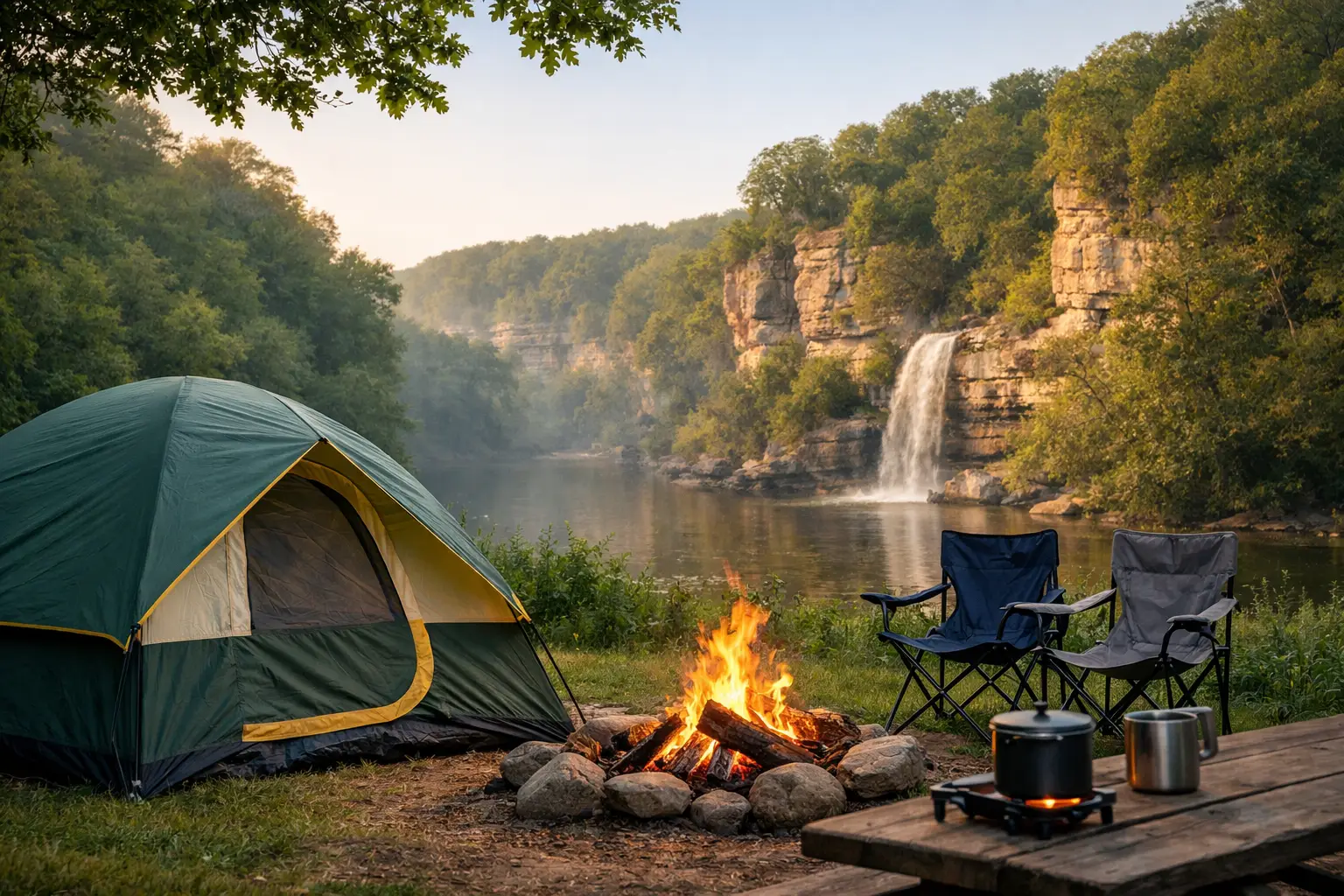
A Friday afternoon outside Chicago can disappear fast: traffic, takeout, laundry, another weekend spent saying you should get outside more. Tent camping changes the script. Pack the car, point it toward the Illinois River, and a regular weekend starts looking a lot more like campfire stories, sandstone bluffs, and a morning paddle with coffee still on your mind.
For couples, families, friend groups, and first-time campers, camping near Starved Rock is one of the easiest ways to trade city noise for fresh air without committing to a complicated expedition. You can keep it simple with a tent site, make it extra easy with a pop-up setup, or bring a teardrop camper for a little more comfort. Add a kayak day, and you have a full-strength prescription for stress relief.
Why camp near Starved Rock instead of driving farther?
The best weekend getaway is often the one you will actually take. Starved Rock State Park is close enough to Chicago and Northern Illinois for a day trip, but it feels far removed from packed schedules and glowing screens. The sandstone canyons, wooded trails, river views, and big Midwestern sky do a lot of heavy lifting.
Illinois River camping puts you close to the action without making you choose between a hike and a water day. Spend a morning exploring the park, come back to camp for lunch, then head out in a kayak when the afternoon warms up. There is no need to pack up, drive to a separate outfitter, search for another parking lot, or coordinate a shuttle.
That convenience matters most when you are camping with kids, dogs, or friends who have different definitions of roughing it. One person may want to chase overlooks. Another may want to sit in a camp chair and read. Someone else may be here solely for the s’mores. A waterfront campground gives everyone room to build their own ideal weekend.
Tent camping near Starved Rock: keep the plan simple
Tent camping does not need to mean arriving with a car full of mystery gear and realizing your tent has 47 poles that all look exactly alike. The right setup depends on your group, weather comfort level, and how much time you want to spend setting up before the fun begins.
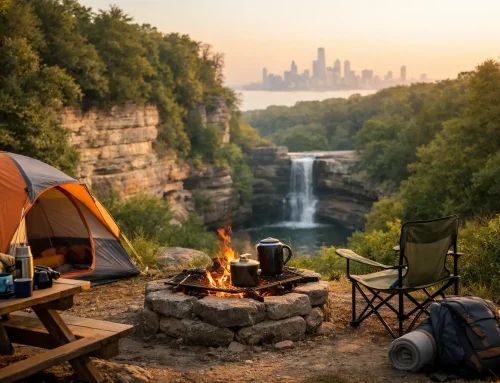
A traditional tent is a great fit for campers who enjoy the classic experience: sleeping close to the outdoors, hearing the river at night, and waking up ready for a trail or paddle. Bring a tent that fits your group with a little extra space, especially if you are bringing bags, a dog bed, or a rainy-day card game.
Pop-up camping is a smart choice for people who want less setup and more weekend. It is especially helpful for first-time campers, busy parents, and groups arriving after work. You still get the campfire-and-stars feeling, just with fewer instructions spread across the picnic table.
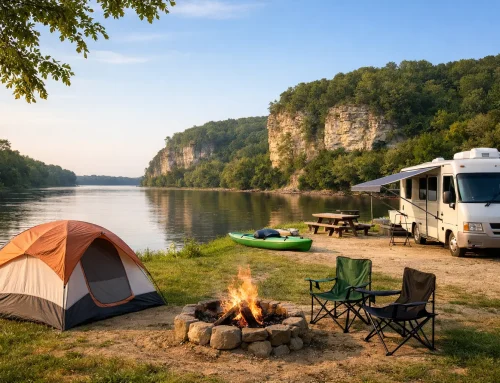
Teardrop camping lands in the comfortable middle ground. It is not the same as pulling a giant RV into a resort, and that is part of the appeal. A teardrop camper can offer a cozy sleeping space and a more protected setup while keeping the trip connected to the outdoors. It works well for couples, friends who prefer a real mattress, and campers who want a little extra weather backup.
Whichever style you choose, check current campground details before arrival. Site layouts, vehicle needs, quiet hours, pet expectations, fire guidance, and seasonal availability can vary. A little planning up front means less time solving problems after dark with a phone flashlight held between your teeth.
Pick your campsite personality
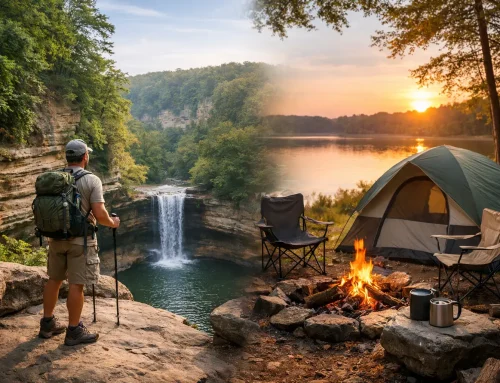
Waterfront camping has a different feel from a deep-woods campground. You are near open sky, river views, and the easy buzz of paddlers heading out for the day. That can be perfect for social groups and families who want an active basecamp.
If you prefer a quieter experience, plan your schedule around it. Early morning and later evening are often the best times to enjoy the stillness. Make coffee before the campground wakes up, take a sunset walk, and let the busy part of the day happen while you are out hiking or kayaking.
Make kayaking part of the camping trip
A campground near the Illinois River becomes even better when you can get on the water without turning the outing into a technical sport. The river environment near Starved Rock is dam-controlled, with consistently runnable conditions designed to feel approachable for beginners. The water is flat, shallow, and has no current, so new paddlers can focus on having fun instead of worrying about whitewater skills.
That does not mean skipping the basics. Every paddler needs a properly fitted PFD, and it should be worn on the water, not stashed in the kayak for decoration. Listen to the safety instruction, respect launch cutoffs, and ask questions before heading out. Confidence is the goal, and confidence comes from knowing what to do.
A guided kayak tour is a great choice if this is your first time or if your group would rather follow a friendly expert than stare at a map and debate which way is north. Guided trips combine instruction, on-water leadership, and local scenery, so you can settle into the experience quickly. If you have paddled before, a rental can offer more freedom to explore at your own pace.
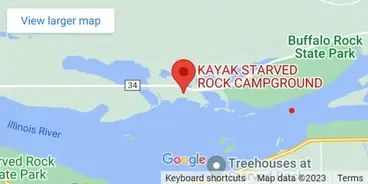
At Kayak Starved Rock Campground, the best kind of paddle-and-camp weekend is the one that feels easy from start to finish: premium boats, practical direction, helpful staff, and no unnecessary drama. Bring the snacks. We will leave the river adventure part to the river.
Dog-friendly camping and kayaking with fewer headaches
A dog-friendly camping trip can be wonderful, but your dog probably has strong opinions about the itinerary. Build in shade, water breaks, leash time, and downtime at the campsite. A tired dog after a hike and a calm evening by the fire is usually a happy camping dog.
Before bringing your pup, confirm current pet rules and make sure your dog is comfortable around other campers, unfamiliar sounds, and water. Pack a long leash if allowed, waste bags, a secure water bowl, food, towels, and a familiar blanket or bed. A familiar sleeping setup can make the first night in a tent much easier for everyone.
For kayaking, temperament matters more than enthusiasm. Some dogs love sitting calmly in a stable tandem kayak; others would rather supervise from shore. Do not force the experience. If your dog goes on the water, they need a properly fitted dog flotation device, and you should be realistic about their ability to sit still while the boat moves.
What to pack for an Illinois River camping weekend
Weather near the river can shift quickly, particularly in spring and fall. Pack for warm afternoons, cooler evenings, and the possibility of rain, even when the forecast looks friendly. You do not need a wilderness-store shopping spree, but a few useful items make a major difference.
Bring these essentials for a more comfortable trip:
- A weather-ready tent, ground tarp, sleeping bag, pillow, and sleeping pad
- Layers for cool nights, rain protection, sturdy walking shoes, and a change of dry clothes
- Refillable water bottles, simple camp meals, snacks, a cooler, and basic cooking supplies if your site allows them
- Sunscreen, bug spray, a first-aid kit, flashlights or headlamps, and a portable phone battery
- For paddling: quick-dry clothing, secure footwear, sunglasses with a strap, and clothes you do not mind getting splashed
Leave fragile valuables and elaborate meal plans at home if they will make the trip feel like work. Camp food tastes better when it is easy. Think breakfast burritos, sandwiches, fruit, grilled favorites, and something sweet for the fire.
Build a weekend that does not feel overplanned
The sweet spot for camping near Chicago is having enough structure to avoid wasting time, but not so much that the schedule becomes another job. Arrive, set up camp, and let the first evening be simple. Take a short river walk, cook an easy dinner, and enjoy the fact that nobody has asked you to join a video call.
The next day, pair a Starved Rock hike with a kayak outing. If you are bringing children or new paddlers, choose the time of day when everyone is rested and fed. Hungry campers are not known for their navigation skills. Save the afternoon for swimming-free river views, camp games, naps, or a relaxed second paddle.
On the final morning, do not rush out before you have enjoyed the payoff. Brew coffee, listen for birds along the water, and take one last look at the river. The gear will still need to be packed, but the reset tends to linger well beyond the drive back to Chicago.