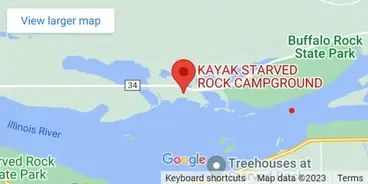
You already have a kayak, a paddle, and a plan to trade Chicago traffic for sandstone bluffs and river air. So, can I bring my own kayak to Starved Rock? Yes – bringing your own boat can be a great way to enjoy a low-stress paddle near Starved Rock State Park, especially when you know the launch expectations before you arrive.
At Kayak Starved Rock Campground, visitors may bring their own kayak for day access and launching, subject to the current launch schedule and access fee. That means you can paddle your familiar boat while still getting the easy logistics that make this stretch of the Illinois River such a favorite for first-timers, families, couples, and weekend campers.
Can I Bring My Own Kayak? Yes, With a Simple Plan
Your own kayak is welcome, but a good day on the water starts before the boat touches the shoreline. Check the current operating hours, launch availability, and final launch cutoff before making the drive. These details matter because the campground operates with structured water access designed to keep paddlers safe, supported, and off the water with plenty of daylight left.
The Illinois River here is dam-controlled, with flatwater conditions that are far less intimidating than a moving river trip. There is no current to fight and no shuttle to coordinate. You can launch, explore at your own pace, and return to the same waterfront area. It is a confidence-building setup for a newer paddler and a refreshingly easy option for someone who owns a kayak but does not want to plan a complicated expedition.
Bringing your own boat does not mean skipping the basics. Every person on the water needs a properly fitting life jacket, also called a PFD. Wear it, do not just clip it to the seat. The water may look calm and welcoming, but a PFD is non-negotiable for a reason.
What to Bring With Your Own Kayak
A little preparation keeps the day focused on bluffs, birds, laughs, and that deeply satisfying feeling of being outside instead of staring at a screen. Your kayak, paddle, and wearable PFD are the essentials. Bring drinking water, sunscreen, a hat, and a dry bag for your phone, keys, and an extra layer.
If you are paddling with kids, make sure each child has a PFD that fits their current size, not one they will “grow into.” A loose life jacket is not a life jacket doing its job. It is also smart to bring a whistle and a simple tow line if you are an experienced paddler traveling with a group, though most casual outings will not need either.
Leave fragile valuables in the car whenever possible. Even shallow, calm water has a sense of humor when it comes to phones. Secure everything that comes into the kayak, and give yourself permission to pack light.
Know Your Boat Before You Go
Most recreational kayaks are a natural fit for a relaxed flatwater paddle. Sit-inside kayaks, sit-on-top kayaks, and many stable recreational canoes can all work well when they are in good condition and sized appropriately for the paddler.
The trade-off is comfort and control. A tiny youth kayak may be fun near shore but tiring for a longer outing. A narrow touring kayak may feel speedy, yet it is less forgiving for a brand-new paddler. If your goal is a no-pressure day with friends or family, choose the boat you feel most stable in.
Not sure whether your setup is right for the trip? Renting can be the easier answer. Rental boats are selected for comfort and beginner-friendly stability, and the team can provide the equipment and on-water orientation that takes the guesswork out of the day. Owning a kayak is great. So is letting someone else handle the gear when you want to arrive, paddle, and relax.
Launch Etiquette Makes the Day Better
A waterfront launch is shared space, not a race to the water. Arrive with enough time to unload calmly, carry your gear to the designated area, and move your vehicle once your boat is staged. Keep the launch clear for other paddlers, especially families wrangling small humans, paddles, snacks, and the occasional overly enthusiastic dog.
Before launching, take a minute to check your PFD, secure your dry bag, and make sure your paddle is within reach. Enter the kayak carefully from shallow water or the designated launch point. A wobbly entrance is practically a kayaking tradition, but it is far more fun when everyone stays dry.
Respect staff direction, posted boundaries, weather updates, and the last-launch cutoff. Those guidelines are there to protect the experience for everyone, not to turn a fun day into a rulebook. Wind, storms, and late-day timing can change what makes sense on the water. Flexibility is part of outdoor fun.
Bringing a Dog in Your Kayak
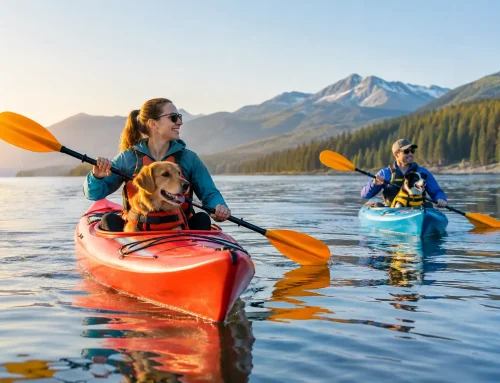
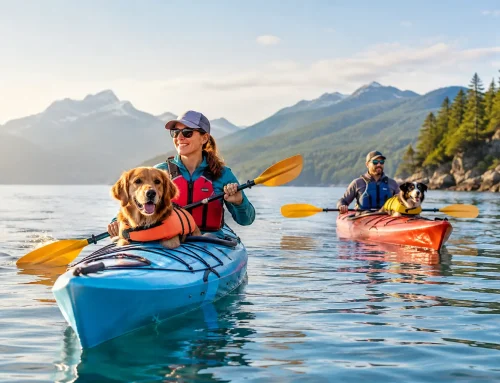
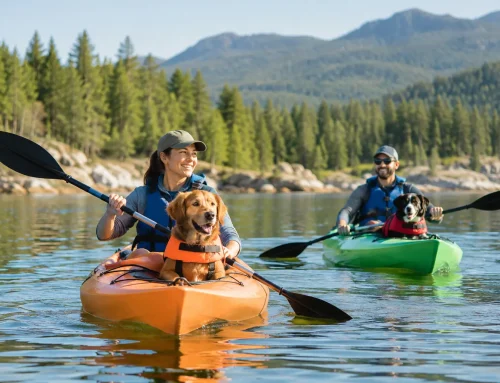
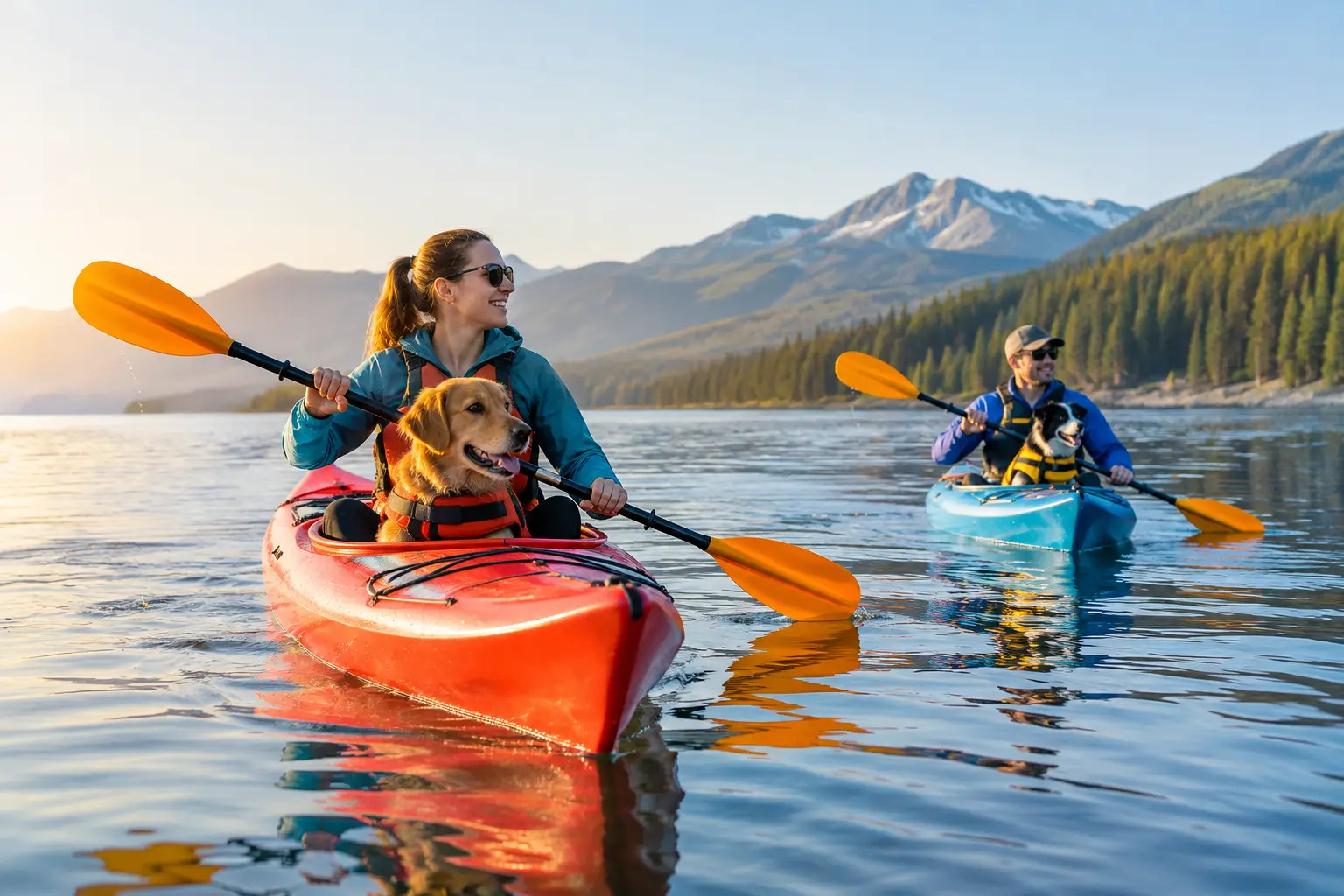
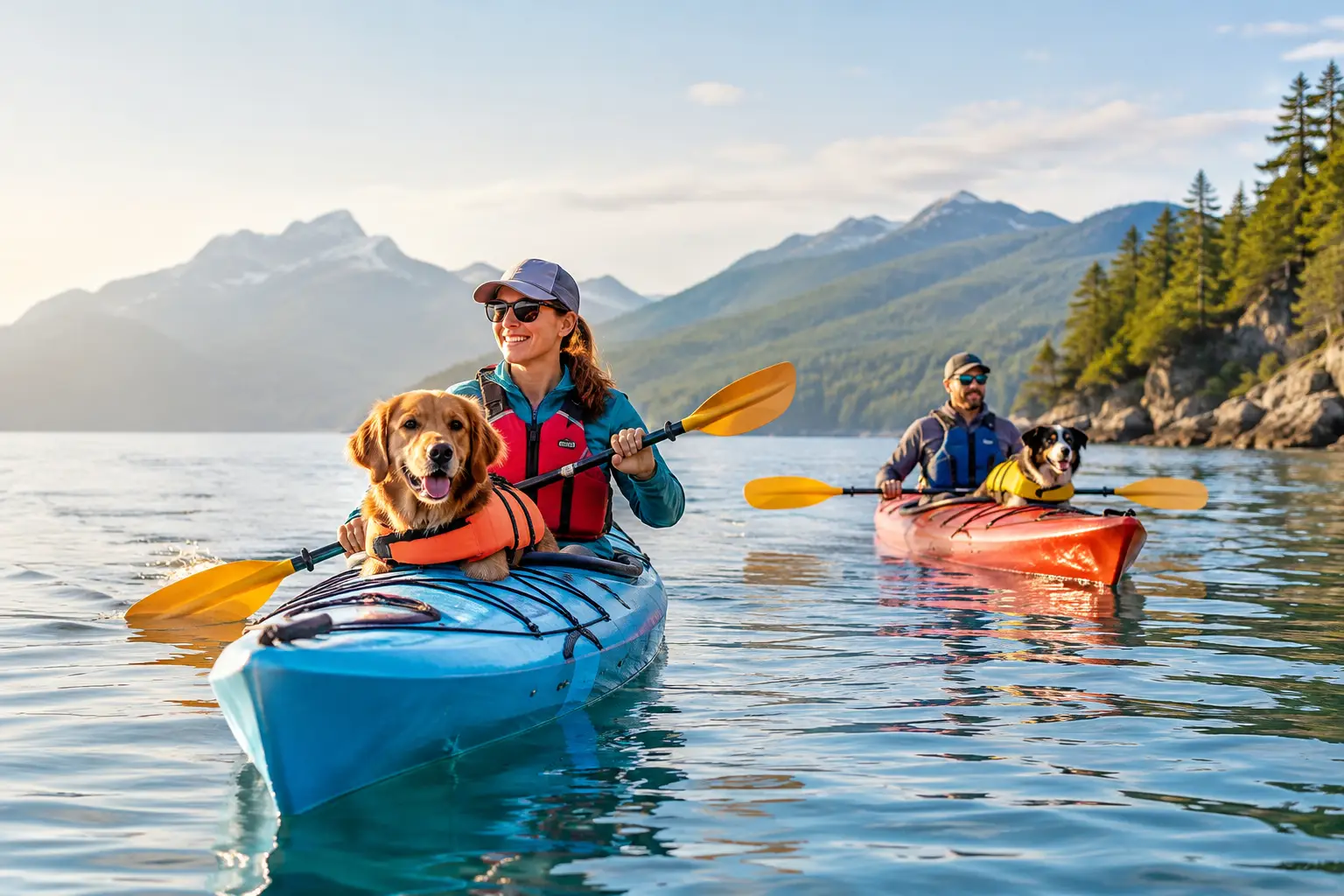
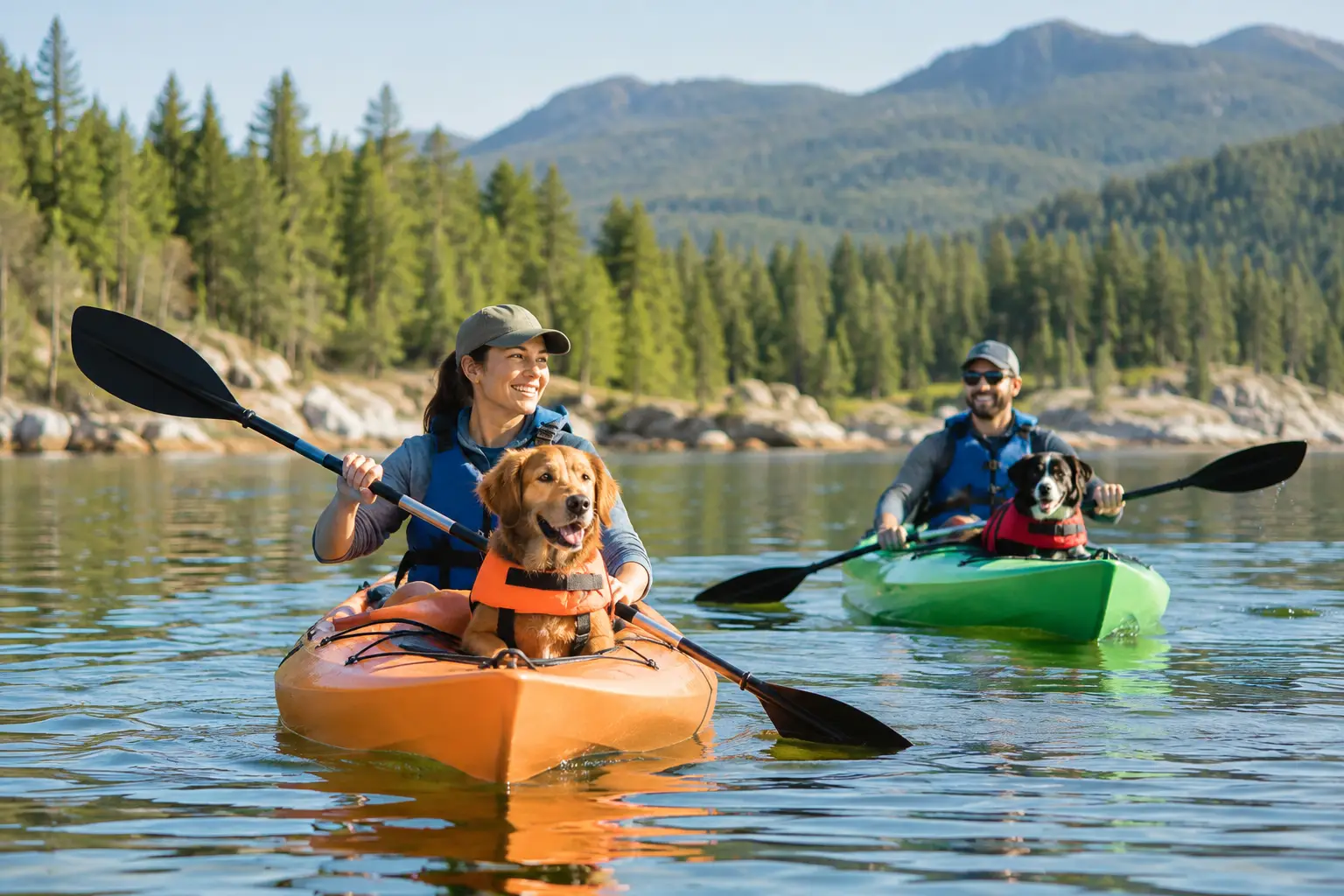
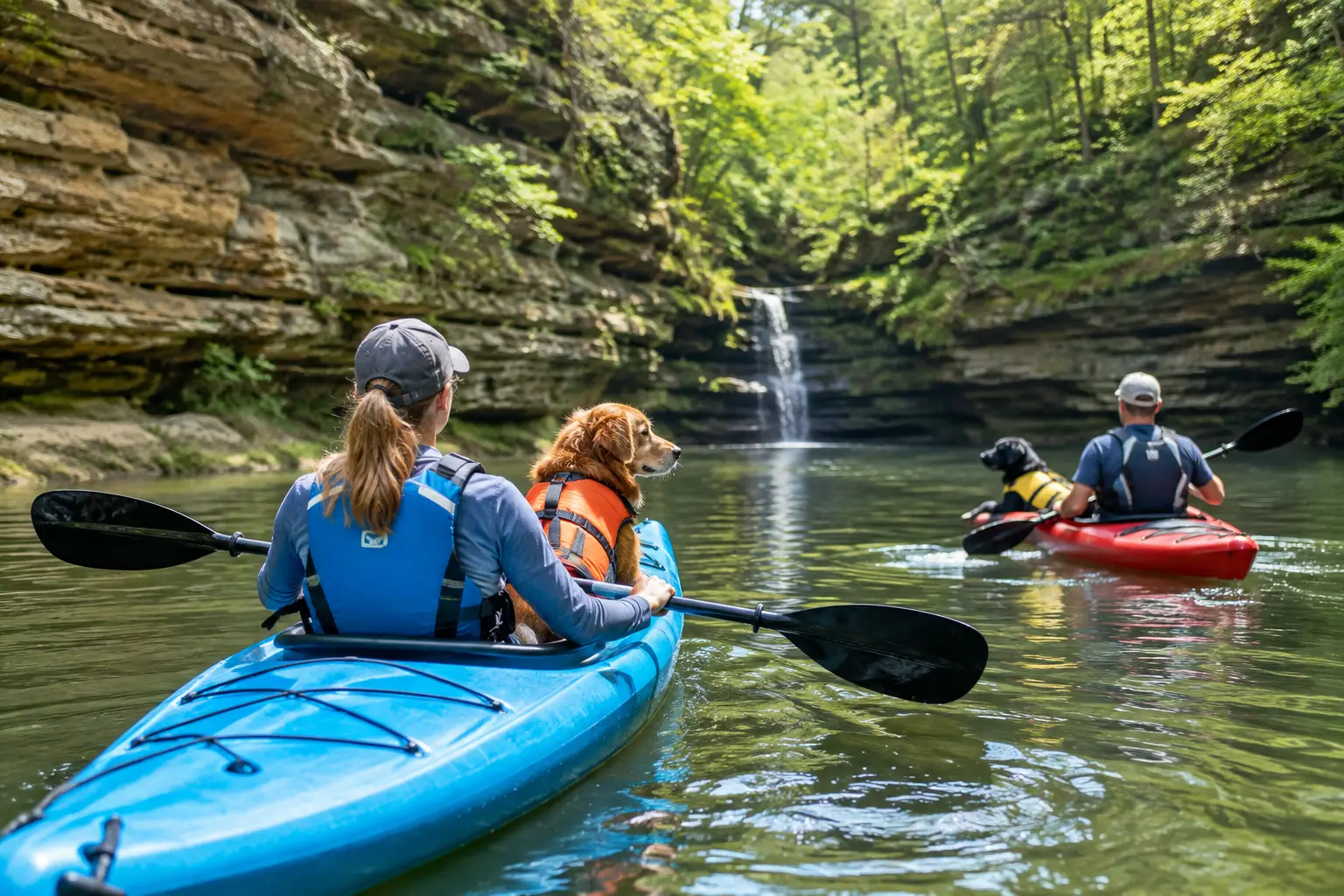
Dog-friendly kayaking can be a blast, provided your pup is comfortable around water and boats. Start with short sessions close to shore rather than assuming your dog is ready for a long paddle. Bring fresh water for them, a leash for land, towels for the ride home, and a dog life jacket that fits securely.
A calm dog can ride happily in a stable sit-on-top kayak or canoe, but not every dog enjoys the floating lifestyle. If your dog paces, leaps, or treats every passing bird like an emergency, consider a waterfront campsite and a trail walk instead. No shame in knowing your co-captain’s limits.
Keep dogs under control around the launch and campground. Other guests may be excited to say hello, or they may be managing their own kids, pets, or gear. A little courtesy keeps dog-friendly camping and kayaking enjoyable for all.
Turn Your Paddle Into a Camping Weekend
One of the best parts of bringing your own kayak is that you can make the paddle just one chapter of the getaway. Instead of squeezing everything into a single day trip from Chicago, stay waterside and let the pace slow down.
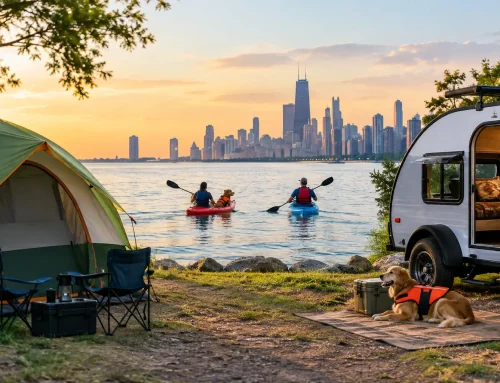
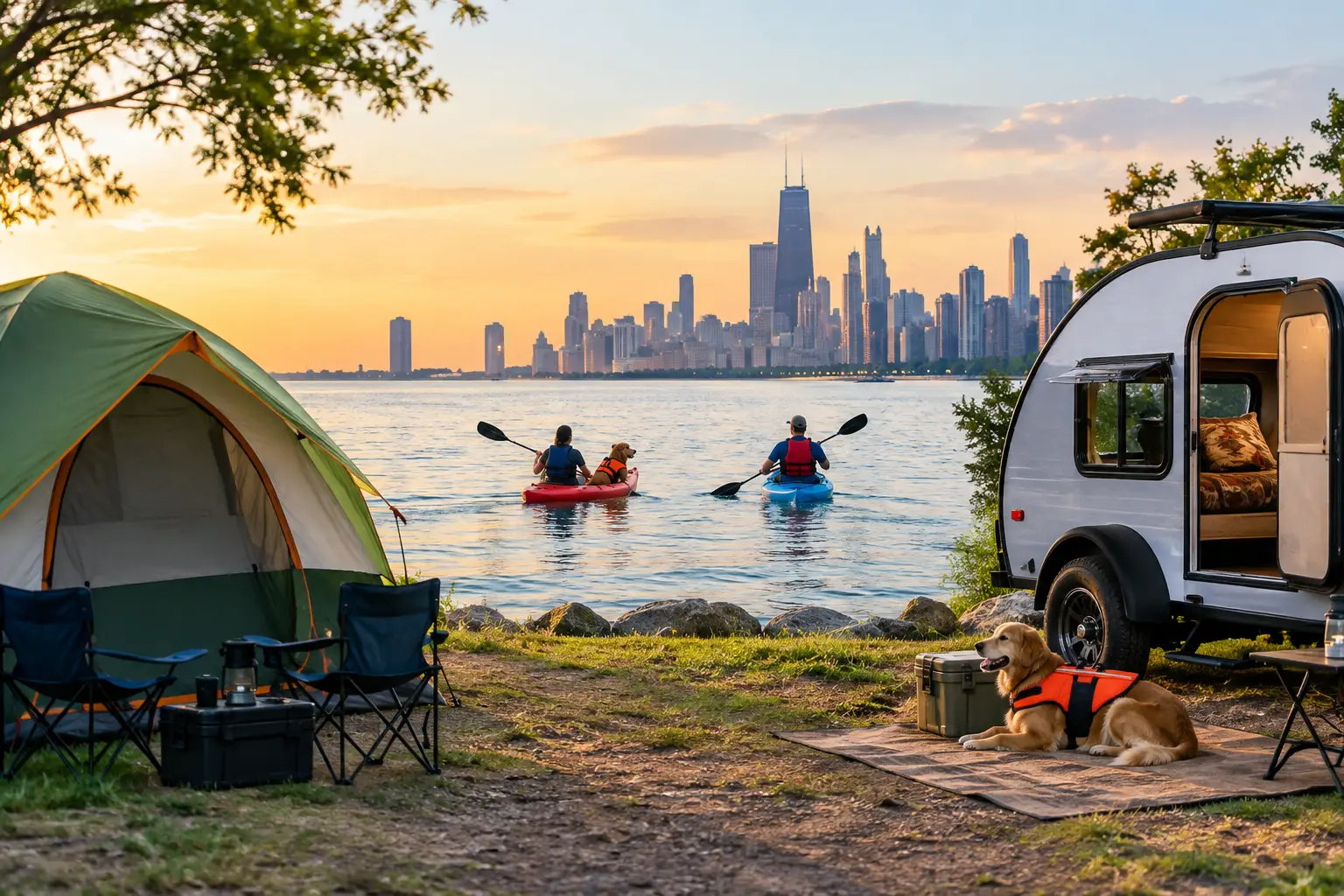
Waterfront camping near Starved Rock makes it easy to paddle, return to camp, cook dinner, and watch the evening settle over the river. Traditional tent camping is a classic choice for families and friend groups who want the full campfire-and-sleeping-bag experience. Pop-up camping offers a lighter-lift option for people who love the idea of camping more than the idea of assembling poles in the dark. Tear drop camping brings a compact, cozy setup for couples and road-trip crews who want a little more shelter without losing the outdoor feel.
Glamping near Chicago can be the right call, too. It is especially helpful when one person in the group is all-in on kayaking while another person is still negotiating with the concept of sleeping on the ground. A more comfortable camp setup can turn “maybe next time” into a weekend everyone actually enjoys.
Camping also gives you more room for a relaxed itinerary. Paddle in the afternoon, visit nearby Starved Rock State Park, enjoy dinner at camp, and wake up without a frantic drive home waiting at the end of the day. That is a pretty solid prescription for stress relief.
When a Guided Tour May Be Better Than Your Own Boat
Bringing your own kayak is ideal when you are comfortable handling your boat and want a flexible, self-directed paddle. A guided kayak tour is often a better fit if this is your first time, you are bringing kids, you want local stories and route guidance, or you would rather spend your energy enjoying the scenery than making decisions.
Guides provide safety instruction and on-water leadership, which can make a big difference for hesitant paddlers. You also get the social side of a shared experience without needing to recruit a whole crew. For couples, visitors, and friend groups, that little bit of structure often makes the day feel easier from the first paddle stroke.
Whether you bring your own kayak or choose a rental, arrive ready to wear your PFD, follow the launch schedule, and give yourself enough time to enjoy the river without rushing. The best trip is not the one with the most gear – it is the one where everyone gets home smiling, a little sun-kissed, and already talking about the next campfire.