A bald eagle cutting across the river, a great blue heron standing perfectly still at the shoreline, a turtle slipping off a sun-warmed log – those are the moments that turn a simple paddle into a story worth telling. This Illinois River wildlife guide is for paddlers who want the scenery, the sightings, and the low-stress plan to enjoy both. Near Starved Rock, you do not need expert skills or a wilderness expedition to spend a great day watching the river do its thing.
The best approach is simple: paddle quietly, keep your eyes moving, and let the animals decide whether they want to make an appearance. Wildlife is never a guaranteed show, but the Illinois River delivers plenty of chances to spot birds, reptiles, mammals, and fish along the banks.
What Wildlife Can You See on the Illinois River?
The river corridor near Starved Rock is a meeting place for water, woods, limestone bluffs, and open sky. That variety gives wildlife plenty of places to feed, nest, hide, and travel. From a kayak, you have a lower, quieter viewpoint than you do from a busy trail or roadside pull-off – which is a pretty great advantage.
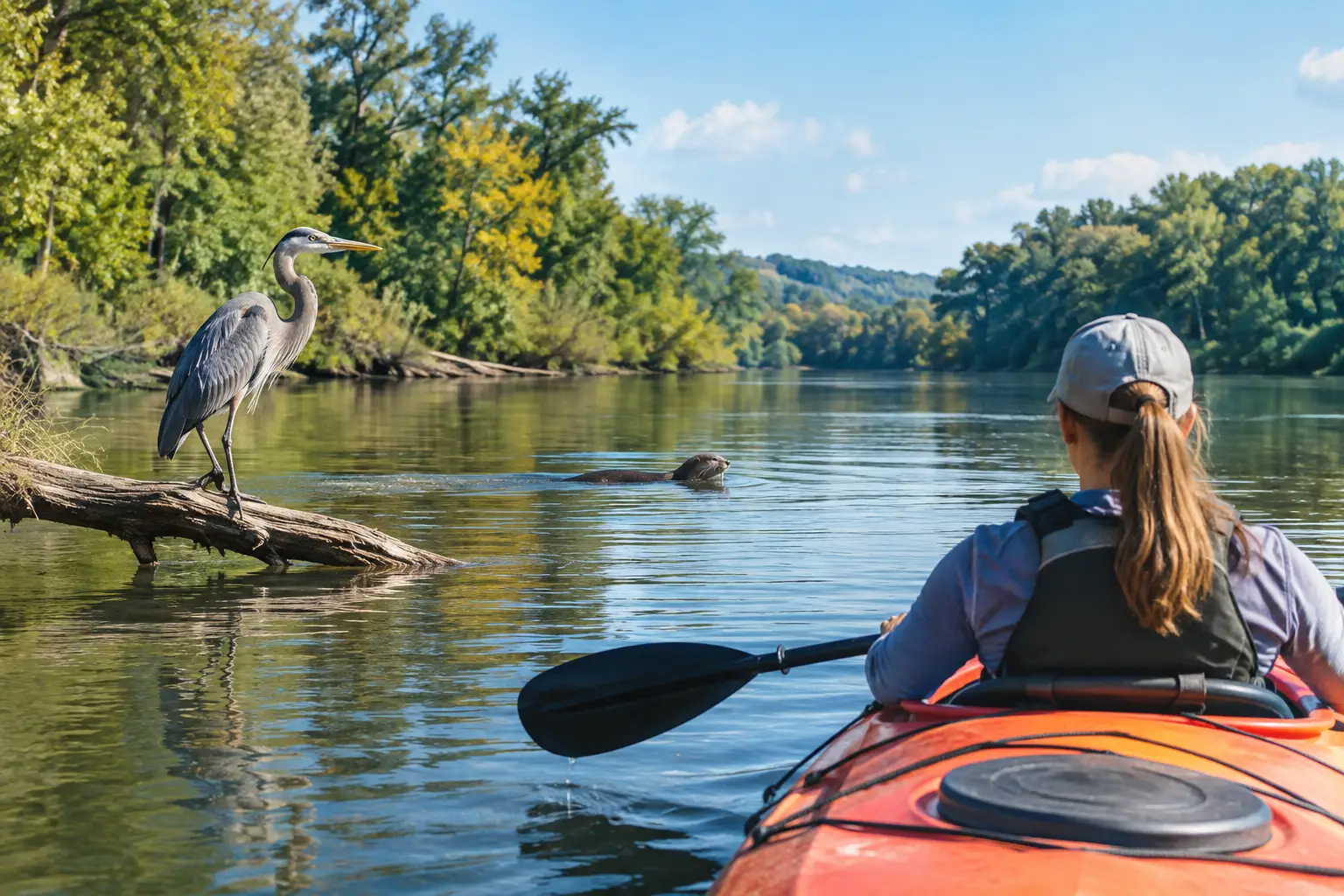
Birds are usually the stars. Great blue herons are common shoreline regulars, often standing so still they look like driftwood until they stretch their necks. You may also see belted kingfishers zipping over the water, red-tailed hawks circling above the trees, Canada geese, mallards, and double-crested cormorants drying their wings near the shore.
Bald eagles are a major reason many visitors come to the Starved Rock area, especially during the colder months. Winter can bring excellent eagle-viewing opportunities as birds gather near open water and feeding areas. Spring and fall migration can also be exciting, with changing bird activity along the river. Bring binoculars if you have them, but do not feel like they are required. A calm paddle and a patient look toward the treeline can be enough.
At water level, watch for painted turtles and snapping turtles basking on logs or muddy edges. Turtles often drop into the water before your kayak gets close, so a slow approach is your best bet. Fish may flash beneath the surface, while frogs and dragonflies add plenty of small-scale action along quiet shoreline pockets.
Mammal sightings are less predictable, which makes them extra fun. White-tailed deer may appear at the bank early or late in the day. Muskrats, beavers, and river otters are possible, though they are usually quick and shy. If you see a beaver lodge, chewed shoreline branches, or a smooth wake cutting across calm water, pause for a moment. Something may be nearby.
A Kayaker’s Illinois River Wildlife Guide: Where to Look
The easiest mistake new wildlife watchers make is staring only at the water. Keep scanning three zones: the shoreline, the trees above it, and the open sky. Herons, turtles, and muskrats tend to reward the shoreline scan. Eagles and hawks show up in the treetops or overhead. Kingfishers and swallows may suddenly appear close to the water, then vanish around the next bend.
Slow paddling helps. You do not need to stop every 30 seconds, but avoid treating the river like a racecourse. A relaxed cadence gives you time to notice movement in the reeds, a bird lifting from a branch, or a deer standing at the edge of the woods. If you are paddling tandem, make it a game: one person watches the left bank while the other watches the right.
Quiet coves, protected edges, fallen trees, and sunny logs can be productive places to look. The trade-off is that these areas are often where animals feel safest, so give them room. A closer photo is never worth pushing wildlife into the water, away from a nest, or farther into cover.
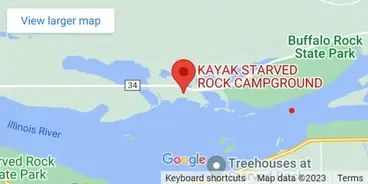
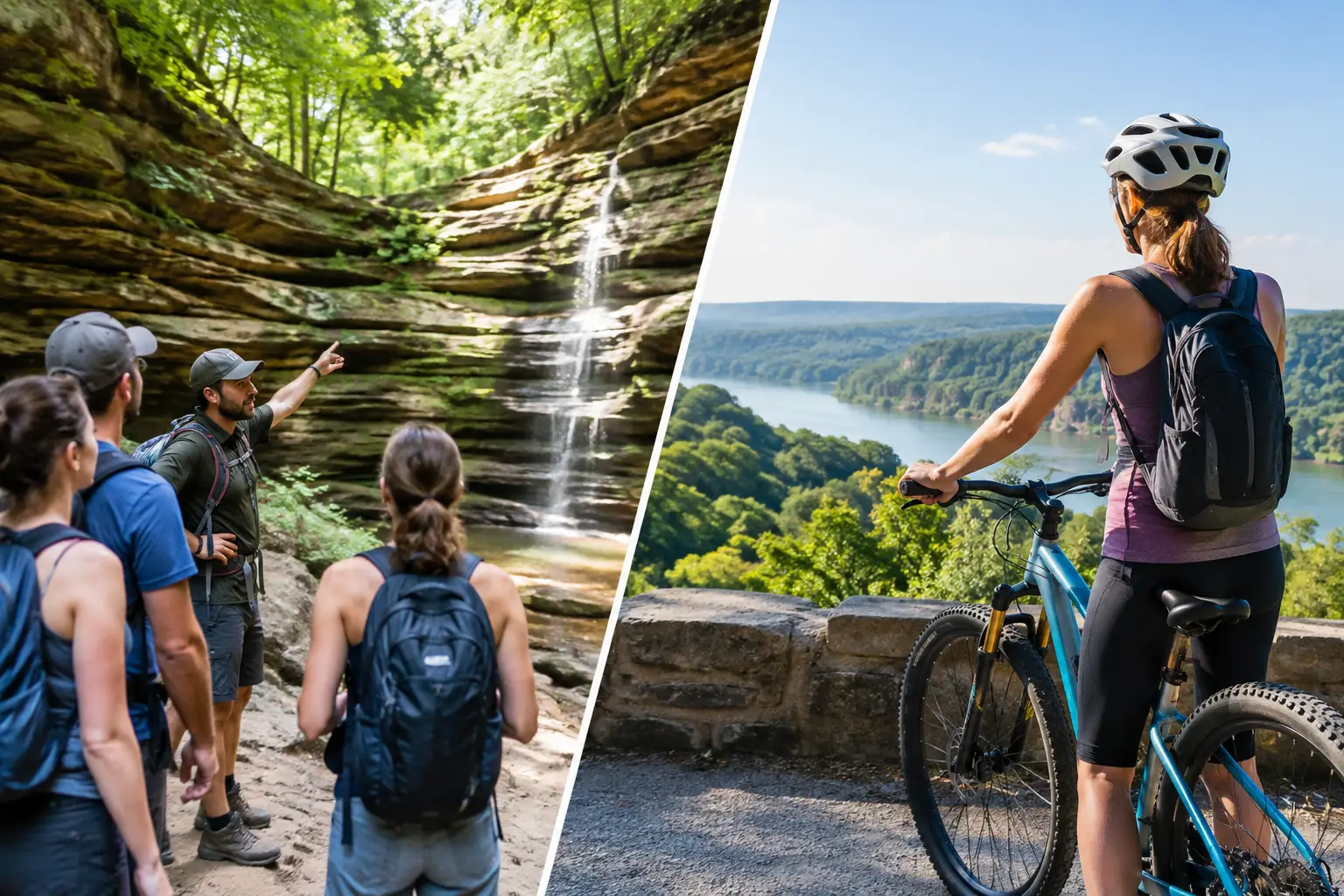
For beginning paddlers, a dam-controlled, flatwater setting is especially helpful because you can focus on the experience instead of fighting a current. At Kayak Starved Rock Campground, the beginner-friendly Illinois River conditions make it easier to practice basic paddling, take in the sandstone-bluff scenery, and watch for wildlife without feeling rushed downstream.
When Is the Best Time for Wildlife Viewing?
Early morning and the last few hours before sunset are often the most active times. The light is softer, the shoreline is quieter, and many animals are more comfortable moving around before the busiest part of the day. That said, a midday paddle can still be full of turtle sightings, soaring birds, and dragonflies.
Season matters, too. Winter is well known for eagle watching near Starved Rock, but it also requires serious preparation for cold weather. Dress for the water temperature, not just the air temperature, and choose an outfitted or guided outing that matches conditions. Cold water turns a small mistake into a bigger problem fast.
Spring brings migration, fresh green shoreline cover, and high bird activity. Summer is ideal for warm-weather paddles, family trips, turtles, and long camping weekends. Fall adds cooler air, changing leaves, and a little more visibility through the trees as foliage thins. There is no bad season for an Illinois River outing, but the best choice depends on whether your group wants warm-water comfort, birding potential, fall color, or winter eagle viewing.
Wildlife Watching Without Being That Kayaker
The good news: respectful wildlife viewing is not complicated. Keep a comfortable distance, stay in your kayak unless you are in a designated landing area, and let animals keep doing what they were doing before you arrived. If a bird repeatedly calls, changes position, or moves away, you are probably too close.
Never feed wildlife. A snack tossed toward a duck, goose, squirrel, or fish can change natural behavior and create problems for the next visitors. Pack out every wrapper, bottle, and bit of food. The riverbank is not a trash can, and neither is a campsite.
PFDs are required for a reason, and every paddler should wear a properly fitted life jacket on the water. Besides being the smart safety choice, it makes wildlife watching more relaxed. You can focus on the great blue heron ahead instead of worrying about an unexpected wobble. Kids should have adult supervision, and first-timers should take the safety talk seriously before launching.
If you bring a dog, keep the adventure dog-friendly by keeping your pup close and under control. Dogs can be excited by geese, turtles, and squirrels, but wildlife does not need a surprise chase scene. Bring fresh water for your dog, avoid disturbing nesting areas, and clean up at camp and on shore.
Turn a Wildlife Paddle Into a Camping Weekend
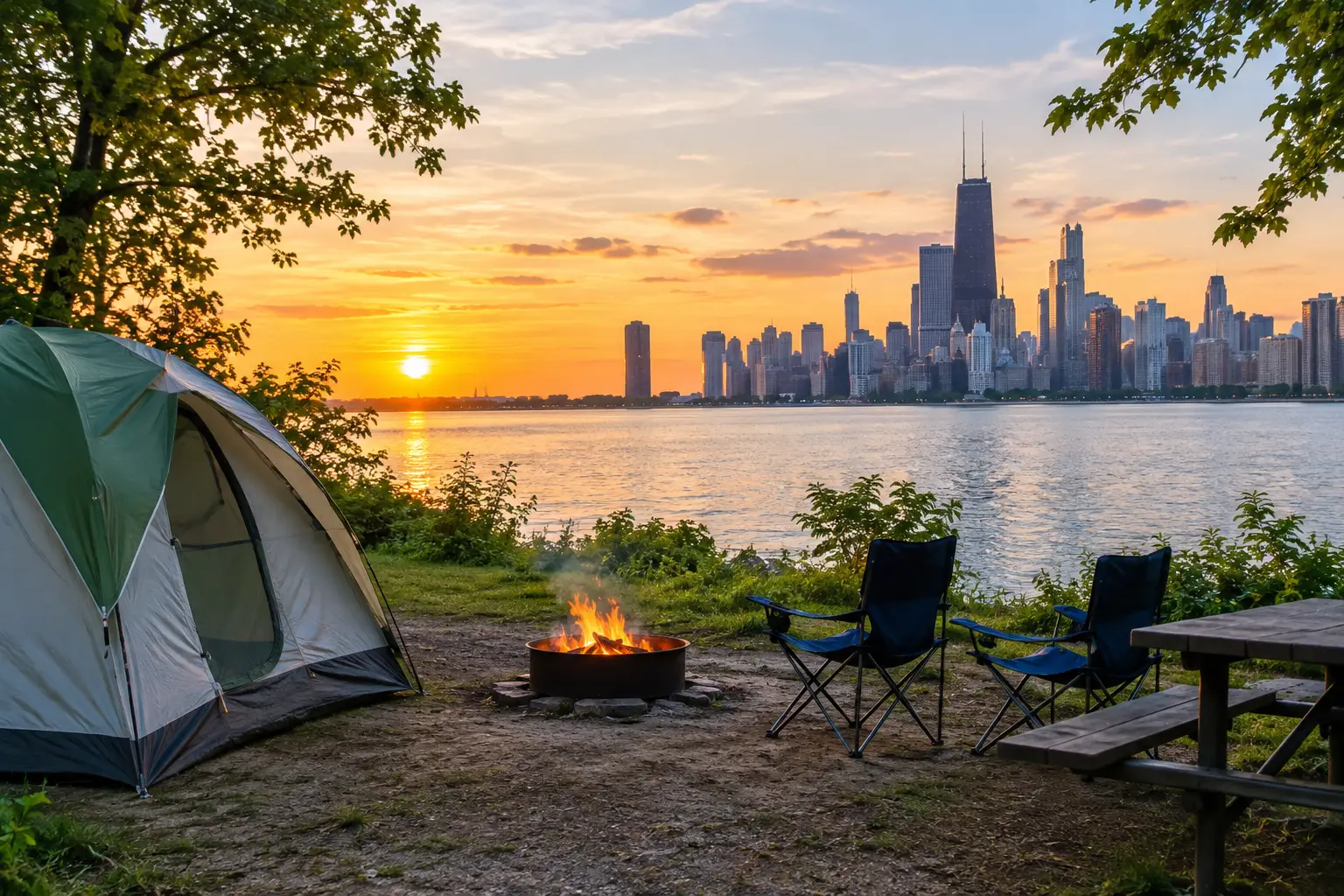
A day trip near Chicago is great. A paddle-and-camp weekend gives you more chances to see the river at its best. Camping near Starved Rock lets you enjoy the evening sounds after daytime visitors have headed home, then wake up ready for an early paddle when birds are active.
Waterfront camping works especially well for couples, families, friend groups, and first-time campers who want nature without a complicated backcountry checklist. Choose the setup that fits your crew: bring a tent, use a pop-up camper, or settle into a tear drop camper. If you prefer a little extra comfort, glamping-style touches can make a weekend outside feel more like a treat than a test of survival skills.
Pack layers for cool mornings and evenings, even in summer. Add sunscreen, bug spray, refillable water bottles, binoculars, and a dry bag for phones and cameras. Keep expectations flexible, too. Some days deliver eagles and otters; other days deliver one noisy kingfisher and a perfect sunset. Both count.
Make Space for the Good Stuff
The Illinois River is not a zoo, and that is the point. A wildlife paddle is about paying attention long enough to notice what is already there: the ripple near a log, the shadow crossing overhead, the heron waiting at the edge of the reeds. Wear your PFD, paddle gently, give animals room, and leave a little time in the schedule for the sightings you did not plan for.