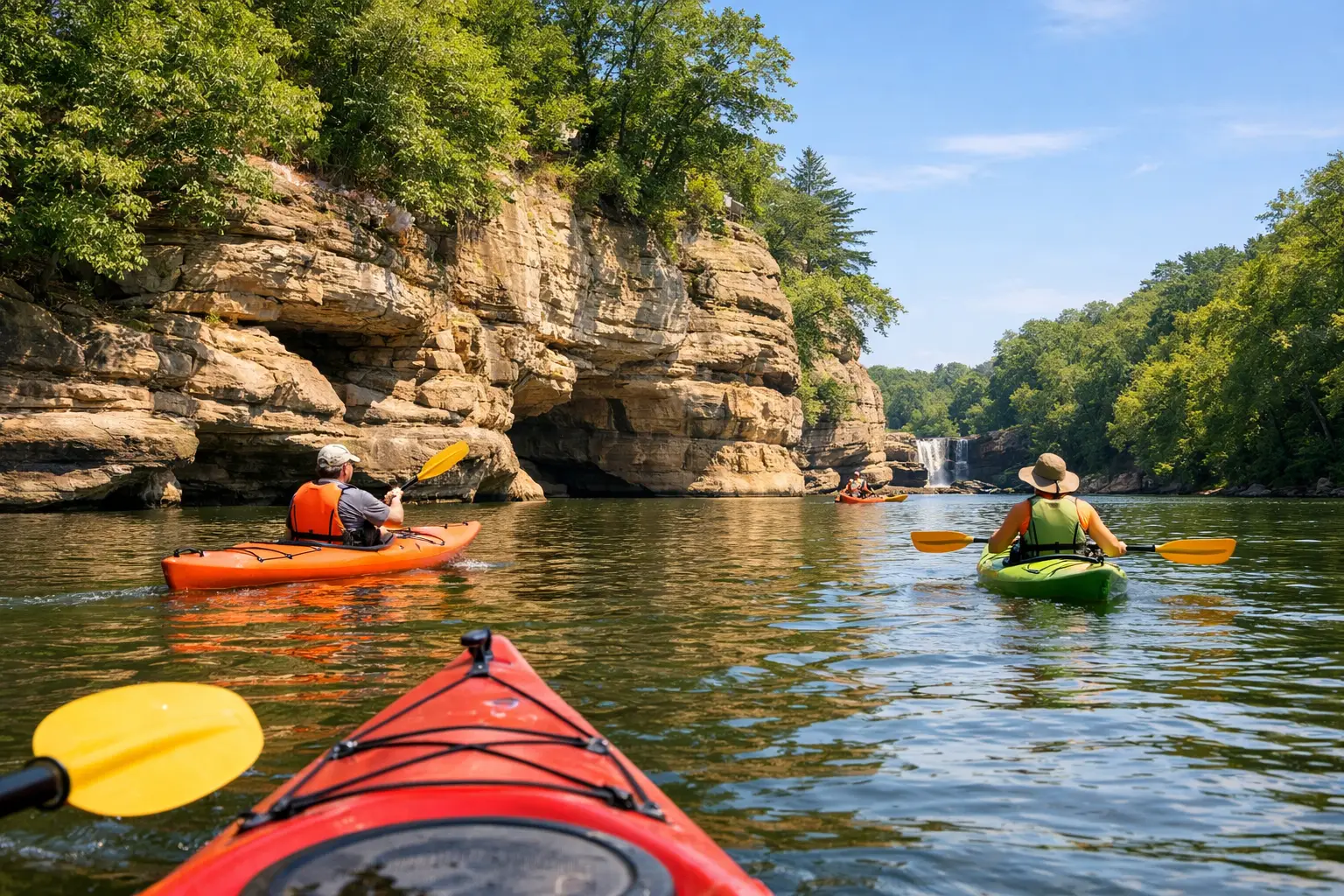
Some paddling spots near Starved Rock look easy on a map, then get a lot less charming when you are hauling a kayak down a steep bank, guessing where to park, or realizing the launch you picked works better for anglers than families. This Starved Rock paddling access guide is here to cut through that. If you want a low-stress day on the water near Chicago, access matters just as much as scenery.
The good news is that the Starved Rock area gives you several ways to get on the water, depending on whether you want a quick paddle, a beginner-friendly outing, or a full paddle-and-camp weekend. The less fun truth is that not every access point feels the same once you arrive. Some are better for experienced paddlers with their own setup. Others are much better if you want parking, clear directions, support, and an easier launch.
How to use this Starved Rock paddling access guide
Start with one question: what kind of day are you trying to have?
If your plan is a relaxed flatwater paddle with kids, a dog, or friends who have never kayaked before, you want easy entry, predictable water, and no shuttle drama. If you are bringing your own boat and already know how to load, launch, and manage your timing, you may be comfortable with a more basic public access point. The right launch is not just about location. It is about how much uncertainty you are willing to deal with before the fun starts.
That is a big reason so many first-timers look for paddling access on the Illinois River across from Starved Rock rather than trying to piece together a more complicated route. A dam-controlled stretch with flatwater conditions can be the difference between a calm, confidence-building trip and a day that feels like work.
What paddlers should know before choosing an access point
The Starved Rock region draws everyone from casual vacationers to seasoned boaters, so access points serve different needs. Some launches are public and functional, but they can be limited when it comes to amenities, direct guidance, or beginner reassurance. You may need to carry farther, deal with uneven footing, or figure out the flow of the area on your own.
For a lot of Chicago-area visitors, that is the exact moment the day starts to wobble. A place can be beautiful and still be a pain to use.
What tends to matter most is parking, launch surface, walking distance to the water, and whether the paddling environment is friendly to people who are not looking for an extreme outing. Families usually care about bathrooms, clear check-in procedures, and whether there is someone around to answer basic questions without making them feel silly. Couples planning a weekend often care just as much about what happens after the paddle – whether there is waterfront camping, tent setup, a pop up or tear drop option, or a place to sit by the river when the boats are back on shore.
The easiest option for beginners and casual groups
If your goal is simple: show up, get on the water, and actually enjoy yourself, a managed launch area is usually the smartest move. That is especially true near Starved Rock, where many visitors are making a day trip or quick weekend escape from Chicago and do not want their outing to turn into a logistics project.
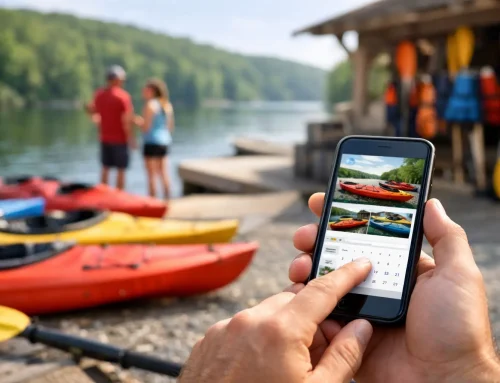
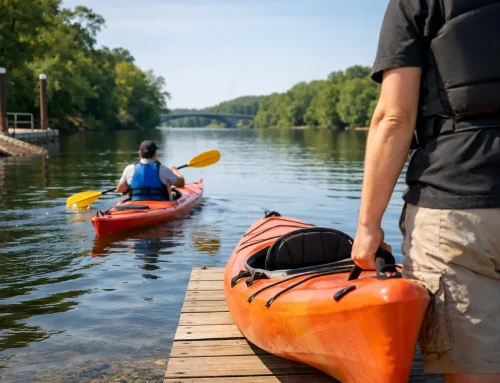
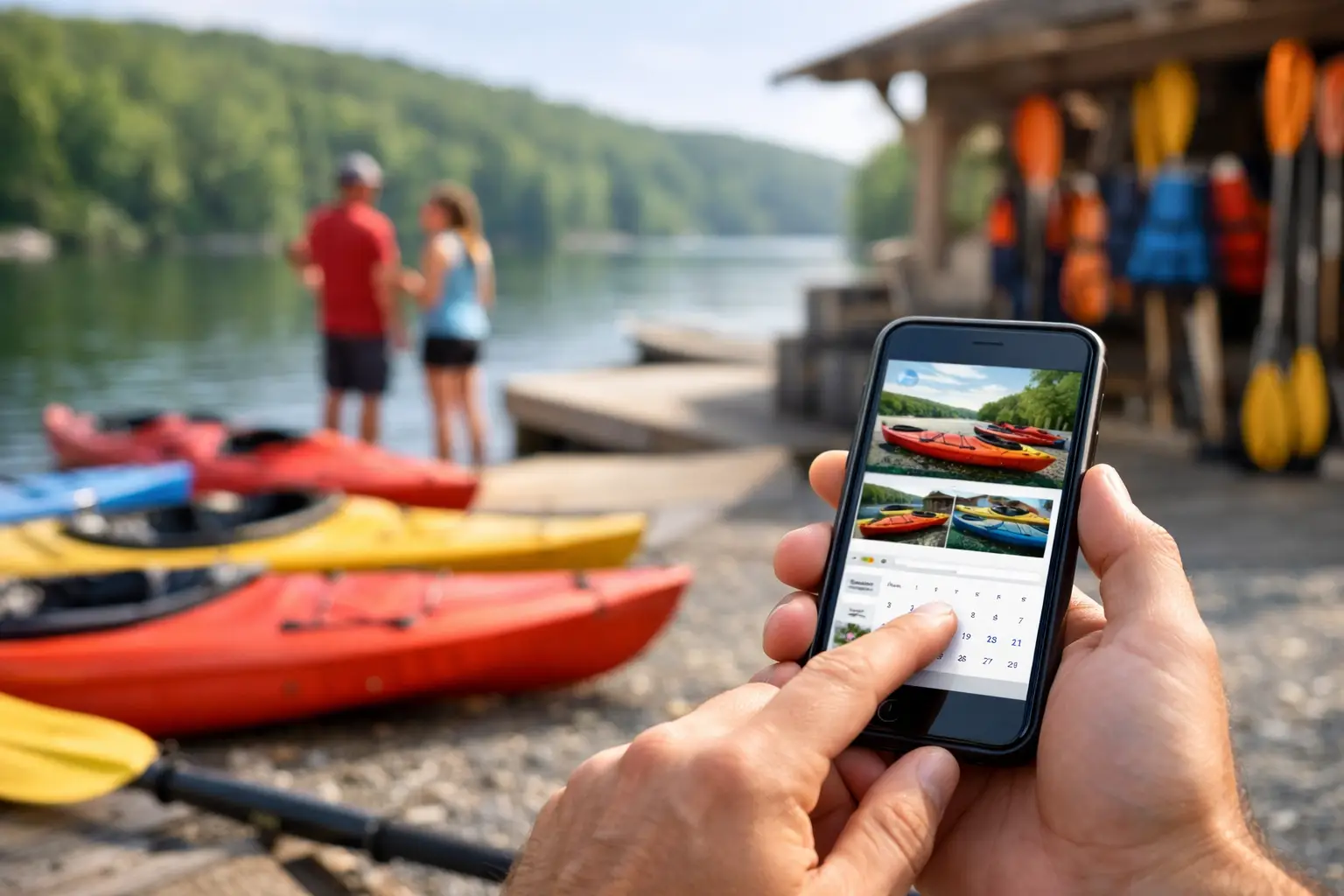
A private paddling access point with day-launch availability can be a sweet spot for people bringing their own kayaks. You get a more straightforward put-in, better orientation, and a paddling area built around recreation instead of guesswork. If you are renting, that gets even easier because the gear, launch process, and timing are handled in one place.
This is also where guided outings earn their keep. A lot of beginners assume a guided tour is only for people who are nervous, but honestly, it is often the best value for people who want to spend more time paddling and less time figuring things out. Safety instruction, route leadership, and local tips turn a first trip into a real experience instead of a trial run.
Public access versus managed access
Public access has its place. If you are a confident paddler, traveling light, and already familiar with the area, public launches can work fine. They are part of what makes the broader Starved Rock area accessible to independent boaters.
But managed access tends to be better for the crowd that actually makes up most weekend traffic near Starved Rock – beginners, casual paddlers, parents, and groups of friends who want something fun but not complicated. A managed launch usually means more structure, clearer expectations, and less wasted time. You know where to park. You know where to check in. You know when the last launch is. That matters more than people think.
There is also a comfort factor. Flatwater paddling in a shallow, controlled stretch of river gives new paddlers a chance to relax and learn without feeling like they are being thrown into the deep end. That confidence boost is a huge part of why people come back.
Access for your own kayak, canoe, or paddlecraft
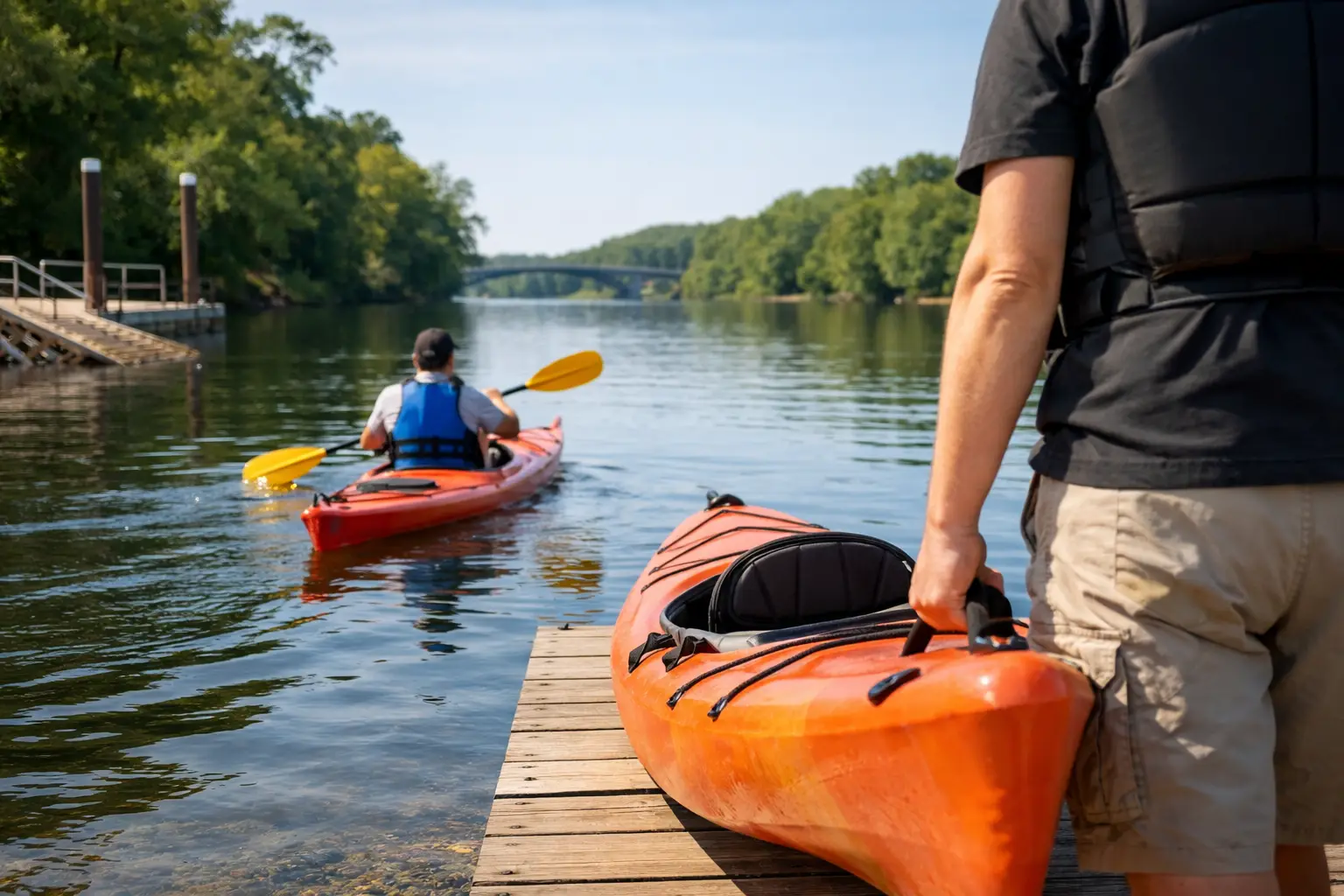
Bringing your own boat near Starved Rock can be a great move if you already have gear you like and just need a convenient place to launch. The main thing is to confirm that the access point you choose allows outside boats and has a clear process for day use. Some places are designed to keep this simple with a launch or day-access fee, which can be well worth it for the convenience alone.
When comparing access, think beyond the fee. Ask yourself whether you would rather save a few bucks and wrestle with uncertainty, or pay for easier parking, better river entry, and a smoother start. For many paddlers, especially on busy summer weekends, the second option wins fast.
If you are paddling with kids or a dog, the equation shifts even more. Easy shoreline access and a controlled environment matter. So does not needing to rush. A launch that feels manageable on your own can feel very different once you add a cooler, towels, snacks, and one excited dog who thinks every kayak trip is the best day of their life.
Turning paddling access into a full weekend
This is where the Starved Rock area really stands out. Access is not only about a day paddle. It can be the start of a full outdoor weekend without a long drive from Chicago.
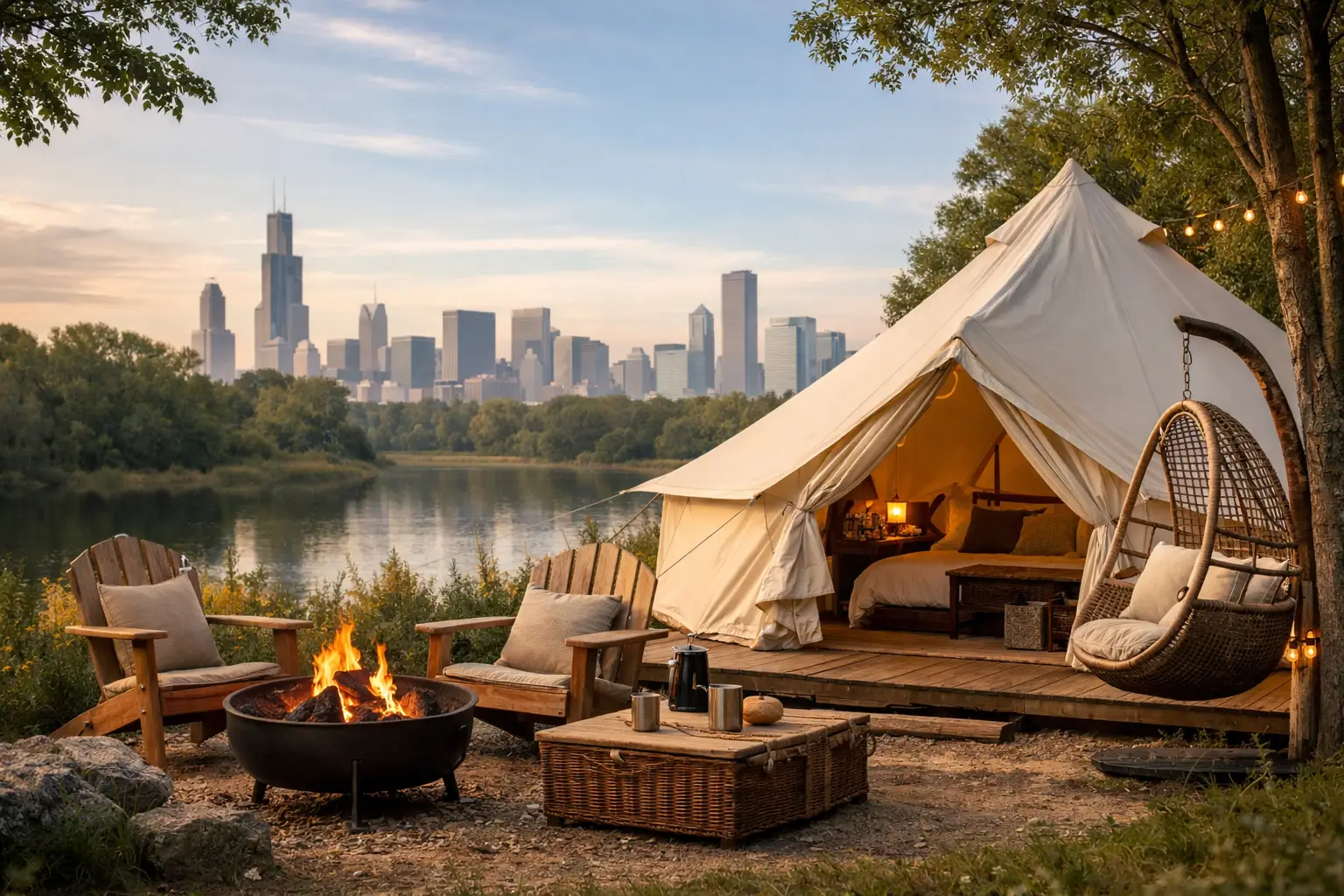
Waterfront camping changes the rhythm of the trip. Instead of watching the clock, packing everything back into the car, and sitting in traffic while still damp from the river, you can stay put. Paddle in the afternoon, make dinner at camp, and wake up next to the water ready to do it again.
That setup works well for couples who want a low-effort getaway and for families who need flexibility. Tent camping keeps it classic. Pop up and tear drop camping give people a little more comfort without losing the outdoor feel. If you are camping with a dog, having both paddling access and a dog-friendly campsite in one place makes planning much easier.
For groups, it can be even better. Friends do not need to split up across multiple locations. Scout groups and family gatherings can combine camping, kayaking, and downtime without dealing with shuttles or complicated transfers. Everything is centered around one riverfront base.
Timing, weather, and what catches people off guard
The best access point in the world can still feel frustrating if your timing is off. Summer weekends are popular for obvious reasons, so arriving early usually makes the whole day smoother. You will have more room to check in, get organized, and launch without feeling rushed.
Weather matters too, but not always in the way beginners expect. A calm, sunny day is ideal, but slightly overcast conditions can also be great for a relaxed paddle. Wind is often the bigger factor. On open water, even beginners can feel the difference quickly. That is another reason protected, flatwater areas are such a smart pick for first trips.
People also underestimate launch cutoffs. If a location has structured operating hours, respect them. Those rules are not there to ruin anyone’s fun. They exist so paddlers have enough daylight, support, and a safer experience overall.
Best fit by paddler type
For first-timers, the best access is usually the one with the least guesswork. That means easy launching, staff support, rental or tour options, and water that feels calm from the start. For families, add bathrooms, clear parking, and enough space to settle in without chaos.
For couples planning a near-Chicago escape, the best access might be the one that doubles as a weekend basecamp. A paddle is great. A paddle plus waterfront camping is usually better. For experienced paddlers with their own gear, the best access might simply be the one that gets you on the water quickly and lets you keep your plans flexible.
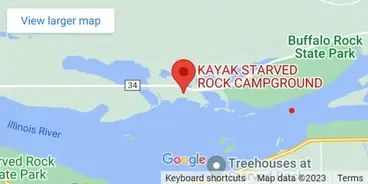
If you want the easiest version of that day, Kayak Starved Rock Campground is built for exactly this kind of trip – straightforward paddling access, beginner-friendly flatwater, and the option to stay right on the river.
A smarter way to plan your Starved Rock paddle
The biggest mistake people make is choosing access based only on the map. The smarter move is choosing based on the experience you want. Near Starved Rock, the best launch is often the one that removes friction – easy parking, simple check-in, calm water, and the option to turn a few hours outside into a real reset.
A good paddling day should feel easy before your kayak even touches the water. Pick the access point that gives you that, and the rest of the trip tends to fall into place.