You know that moment when the kayak is on the shoreline, your friends are already seated, and you suddenly wonder, “Wait – what if I flip this thing?” That little spike of panic is normal. The good news is beginner kayaking is mostly about avoiding a few common mistakes, not memorizing a million rules.
Below are kayaking safety tips for beginners who want a fun, low-stress paddle – especially on calm, flatwater where you can focus on the experience instead of fighting conditions.
Start with the right water (because conditions matter)
If you take nothing else from this article, take this: most “kayaking accidents” are really “bad match between paddler and conditions.” Windy open water, fast current, cold water, and big boat traffic are not the places to learn what a paddle stroke is.
Beginners do best on protected, shallow, low-current water with easy launch and landing spots. It’s easier to practice turning, stopping, and getting comfortable sitting in the boat when the environment isn’t adding pressure. It also makes it simpler to call it a day if someone’s tired, chilly, or just not feeling it.
“It depends” shows up here: a sunny 75 degree day can still be a rough first outing if the wind is ripping, and a calm overcast day can be perfect if the water is warm enough and you’re dressed right.
Wear the one piece of gear that’s not optional
A life jacket (PFD) is the difference between “oops” and “emergency.” Wear it. Not stuffed behind your seat, not clipped to the bungee, not “I’m a good swimmer.” On the water, swimming ability gets weird fast: wind, waves, cold shock, a tangled leash, a cramp, a bumped head. A PFD buys time and steadies your breathing.
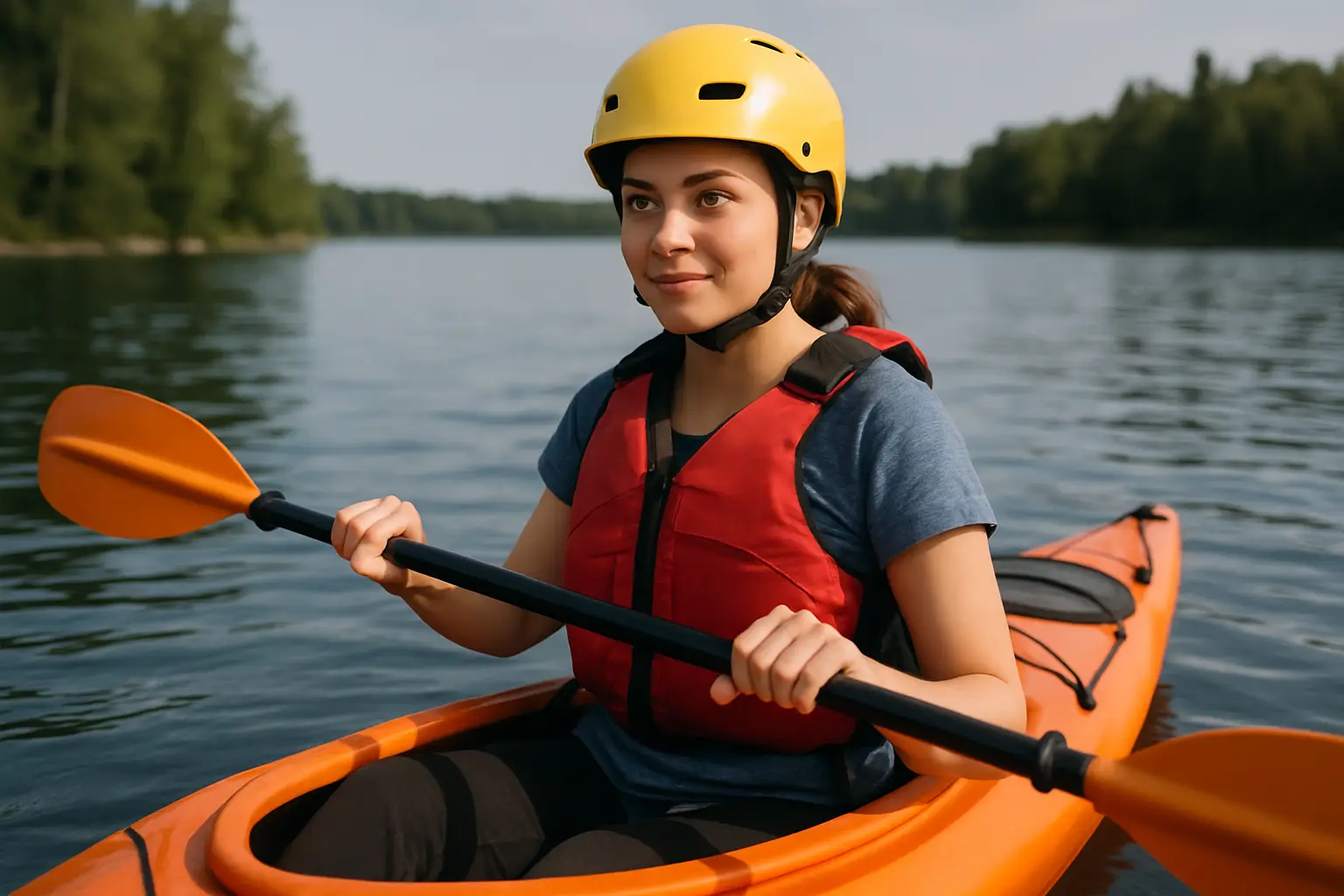
A beginner-friendly PFD should fit snugly, sit high on your torso (not riding up to your ears), and allow your shoulders to move. If you’re paddling with kids, the fit matters even more – their PFD should be properly sized and secured, with the grab handle ready if an adult needs to assist.
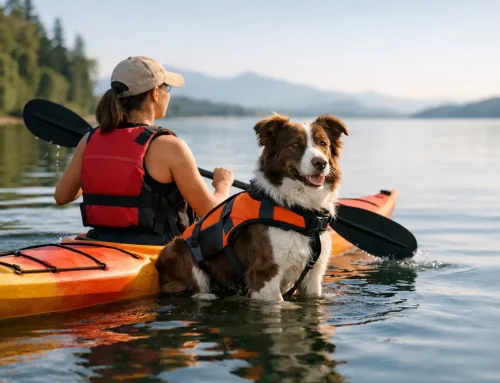
If you’re taking photos for social media, here’s a simple rule: every image should show paddlers wearing life jackets. It’s safer, and it sets the right tone for the group.
Dress for the water, not the air
Air temperature lies. Water temperature is the one that controls risk.
For warm weather flatwater, quick-dry layers are your best friend. Cotton is comfortable until it’s wet, then it’s cold and heavy. Think athletic shorts, a sun shirt, and straps on your footwear. Bring a light layer even if it feels hot in the parking lot – wind on the water can surprise you.
When the water is cold, the trade-off changes. You might still have a beautiful day, but the margin for error shrinks. Cold water can steal your breath and strength quickly, even close to shore. If you’re early or late season paddling, talk with your outfitter about what protection is appropriate.
Before you launch: do a 60-second safety check
People love to skip this because it feels “extra.” It’s not extra. It’s the cheapest safety move you’ll make all day.
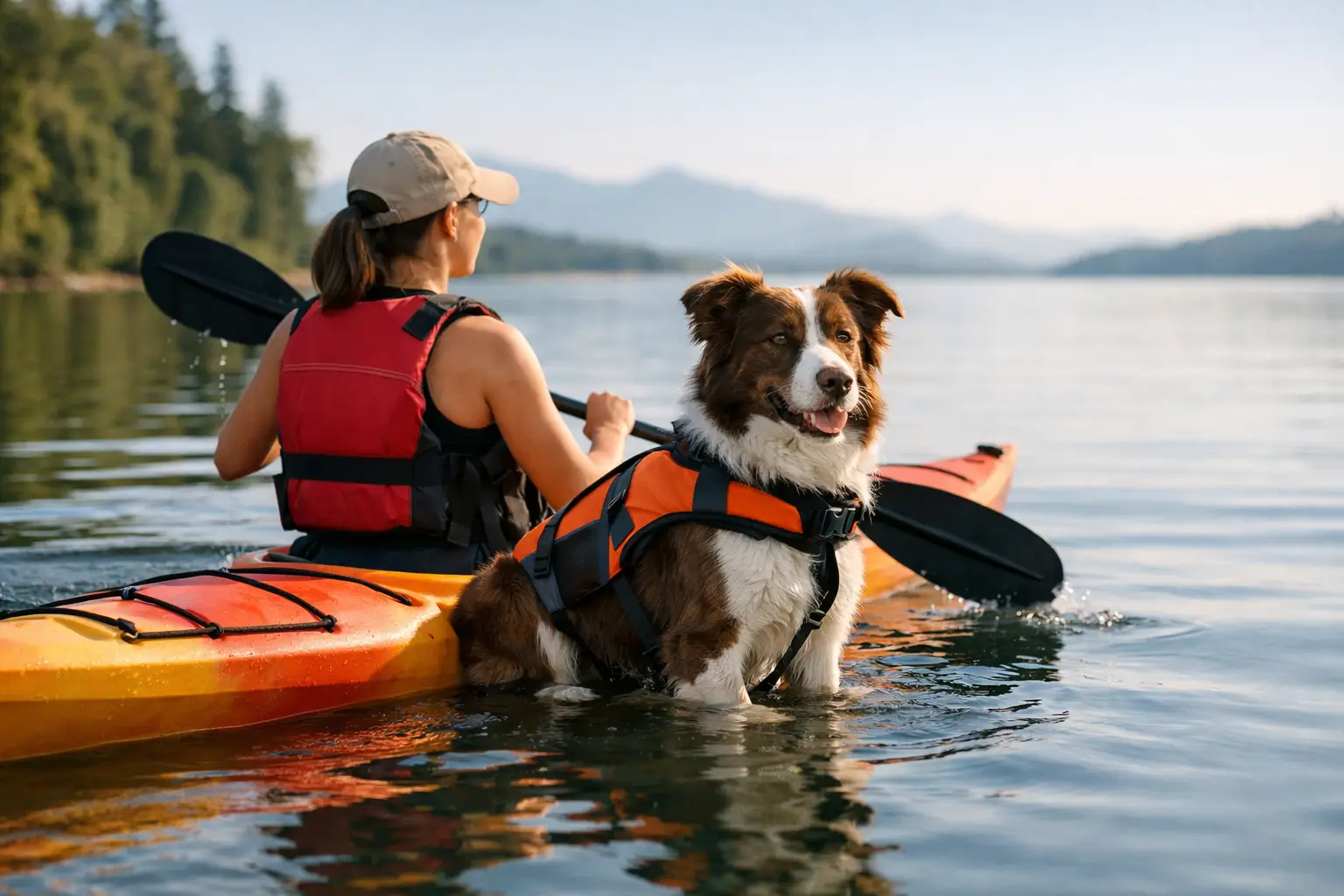
Make sure your PFD is buckled and snug, your seat is adjusted, your foot position feels stable, and your paddle is the right way around (yes, it’s a thing). If you have a dog, check their PFD fit too and do a quick “can they settle” test before you push off.
Then look at the water for a moment: wind direction, any obvious boat traffic lanes, and your closest easy landing spots. Beginners feel safer when they already know where they’d go if they wanted a break.
The beginner move that prevents most swims: stay loose
New paddlers tend to grip everything like they’re hanging from a cliff. Tight shoulders, locked elbows, stiff hips – it makes the kayak wobblier.
Instead, sit upright, keep a relaxed grip, and let the kayak move a little under you. Kayaks are designed to float. You don’t have to “fight” for balance. A calm upper body and gentle corrections keep you stable and reduce fatigue, which is a safety issue all by itself.
If you feel shaky, take smaller strokes and keep your paddle low to the water. Big dramatic swings look powerful but they can throw off your balance.
Learn three strokes and you’re basically unstoppable
You don’t need a full paddling clinic to be safe, but you do need a few basics so you can control your boat on purpose.
First is the forward stroke: rotate your torso a bit instead of pulling with just your arms. Second is the reverse stroke: same idea, used for slowing down and backing away from obstacles. Third is the sweep stroke: a wide stroke that turns you without panic-paddling in circles.
If you can go forward, stop, and turn calmly, you can handle most beginner situations without drama.
Don’t paddle past your comfort zone – and be honest about it
Beginner groups get into trouble when one person is quietly stressed and trying to “keep up.” That’s when mistakes happen: drifting into traffic, forgetting to hydrate, ignoring wind, or pushing into an area they can’t easily return from.
Set expectations before you leave shore. Agree on a pace, agree on turnaround points, and agree that anyone can call a break without getting teased. A great day on the water feels like everyone is participating, not surviving.
If you’re going with kids, build in extra time for snack stops and short paddles. If you’re going with a dog, assume the first trip will include some “we’re learning” moments.
Sun and hydration sneak up faster on the river
Flatwater feels chill, so people skip the boring stuff. Then you’re an hour in and someone’s cranky, headachey, and red.
Bring water and actually drink it. Use sunscreen you’ll reapply. Sunglasses with a strap help, and a hat is underrated. If you’re paddling midday, plan shade breaks if your shoreline offers them.
The trade-off: carrying more gear can clutter your cockpit, so keep it simple. One bottle you can reach, one small snack, and sun protection you can use without unpacking a suitcase.
Keep your phone dry – and still reachable
Phones are useful on the water for photos, navigation, and emergencies. They are also surprisingly good at slipping out of pockets.
A waterproof case or dry bag is worth it, but don’t bury it under everything. If you need to call for help, you want access without doing an on-water yard sale. If you’re paddling with a group, it’s smart for at least two people to have phones protected and charged.
What to do if you flip (yes, we’re talking about it)
Most beginners fear flipping because they’ve never rehearsed the idea. So here’s the calm version.
If you go over in warm, shallow, flatwater, your job is to keep breathing and stay with your boat and paddle. Your PFD should keep you floating while you orient yourself. Many paddlers can simply stand up if it’s shallow enough.
Getting back in can be tricky without practice, so the safest move is often to guide the kayak to shore, empty it, and relaunch. That’s not “failing.” That’s smart risk management.
If you’re paddling somewhere with cold water, current, or distance from shore, the equation changes. That’s when guided instruction and practiced re-entry skills matter more.
Boat traffic and wind: the two things beginners underestimate
You don’t have to be on a huge lake to deal with wind, and you don’t have to be near a marina to see boats. Even a few wakes can jostle a beginner.
If a wake is coming, point your kayak into it rather than letting it hit you broadside. Keep your paddle low and steady, and let the kayak rise and fall. For wind, the safest beginner move is to stay closer to shore and avoid long open crossings that force you to fight your way back.
Also, remember that “downwind is easy” is only half the story. You still have to return.
Dogs and kids: extra fun, extra responsibility
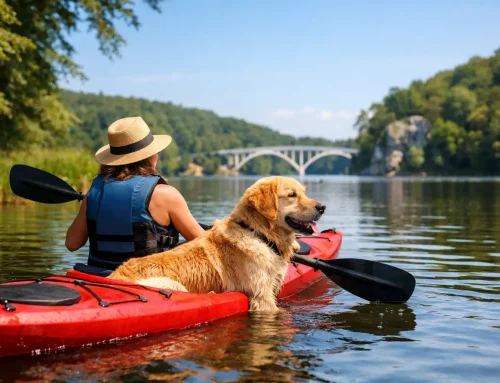
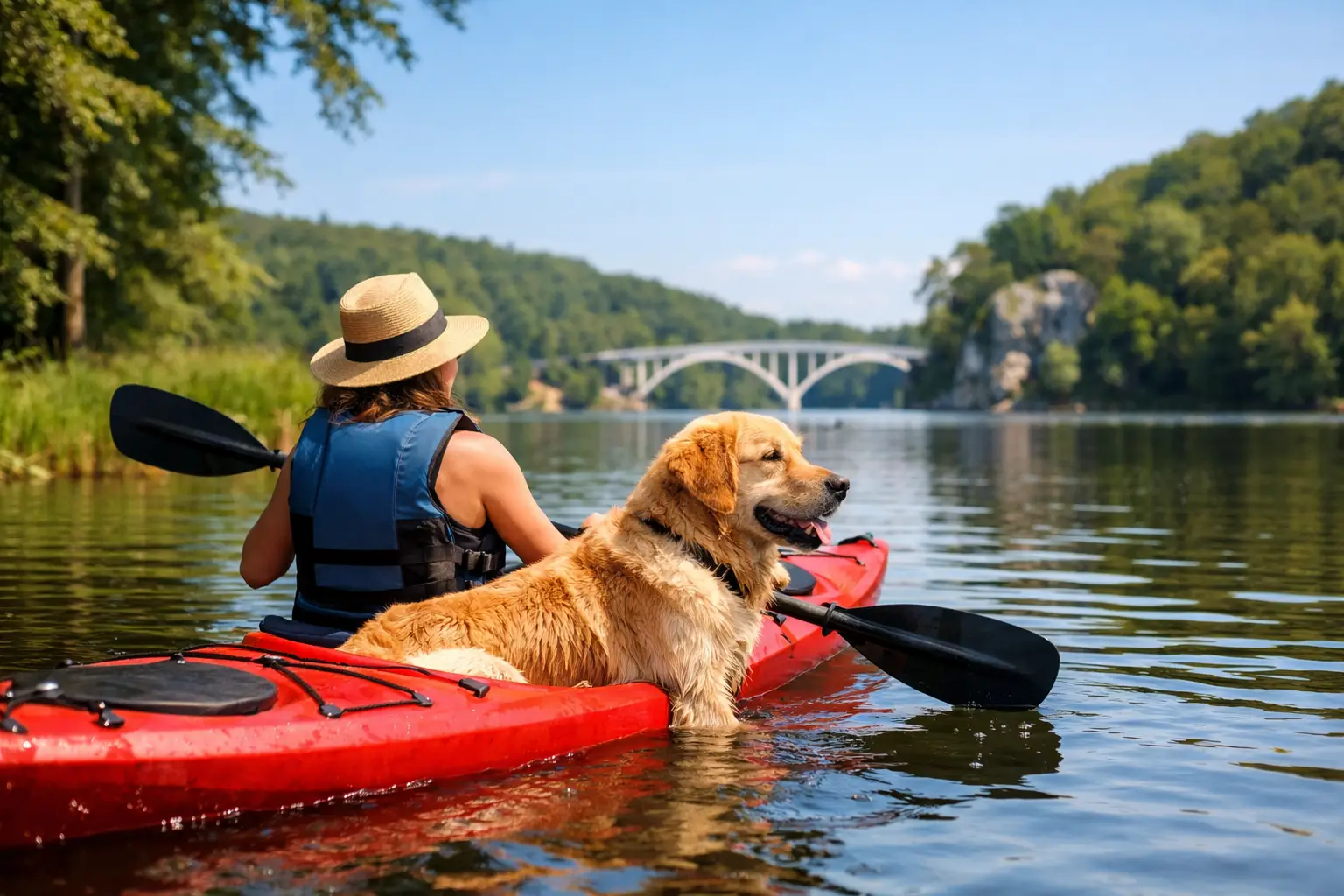
Dog-friendly kayaking is a blast when you set it up well. A dog PFD is non-negotiable, and it should have a sturdy handle. Keep nails trimmed if possible, bring water for them too, and expect them to shift their weight at the worst possible time. Start with a short paddle so everybody wins.
With kids, the biggest safety factor is attention. They get cold faster, they get tired faster, and they can become uncomfortable without explaining it clearly. Keep the trip shorter than you think you need to, and make “we can head in anytime” the rule.
When a guided tour is the safer first step
Some beginners love the DIY rental vibe. Others want a human being to say, “You’re doing great, here’s how to turn, and here’s where we’re going.” A guided tour is often the better first outing if you’re nervous, bringing kids, paddling with a dog for the first time, or just want the comfort of on-water leadership.
A good guide doesn’t just lead the route – they manage spacing, watch weather changes, correct small technique issues before they become big problems, and keep the group feeling relaxed.
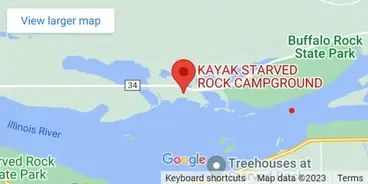
If you’re looking for a beginner-friendly, near-Chicago place to start on calm flatwater with clear structure, Kayak Starved Rock Campground offers rentals and guided trips on the Illinois River across from Starved Rock State Park, with safety instruction baked in and an easy “paddle, relax, repeat” vibe. You can learn more at https://www.kayakstarvedrock.com.
The safety secret nobody wants to admit: your turnaround time matters
Lots of first-timers launch thinking, “We’ll just see where we end up.” That’s how people finish in the dark, cold, and hungry.
Set a firm turnaround time based on daylight, energy, and how long it takes to paddle back at an easy pace. If your outfitter has a last-launch cutoff, it’s not a buzzkill – it’s a boundary that keeps the day fun and predictable.
The best beginner trip ends with enough gas in the tank to say yes to dinner, a campfire, or a second trip next weekend.
One last thought
If you want your first kayaking experience to feel like 100% fun and 0% chaos, treat safety like part of the adventure, not a separate chore. The confidence you build from one calm, well-planned paddle is the thing that makes the next one even better.