Your first kayak camping trip usually goes wrong before you even touch the water. Not because you picked the wrong paddle, but because you packed like you were car camping and then realized every item had to fit in a kayak. That is why kayak camping gear for beginners should be simple, compact, and forgiving. You do not need a hardcore expedition setup for a fun overnight on beginner-friendly flatwater.
If you are planning a weekend near Starved Rock or looking for an easy camping near Chicago option, the goal is not to buy every gadget with a carabiner on it. The goal is to stay dry, sleep comfortably, eat something decent, and wake up excited to paddle again. That is a much better first-trip standard.
What kayak camping gear for beginners really needs to do
Beginners often overpack “just in case” and underpack the stuff that actually matters. On a short trip, your gear only needs to do four jobs well: keep you safe, keep your essentials dry, help you sleep, and make camp easy to manage.
That sounds obvious, but it changes what you bring. A giant lantern, full kitchen bin, and three outfit changes feel nice in the parking lot. They feel less nice when you are trying to wedge them into a boat. Small, reliable gear wins.
Water conditions matter too. On flatwater, beginner-friendly paddles like the Illinois River near Starved Rock, you can focus less on specialized expedition equipment and more on practical comfort. That is great news for first-timers, families, and anyone who wants the outdoor version of a low-stress weekend.
Start with safety, not accessories
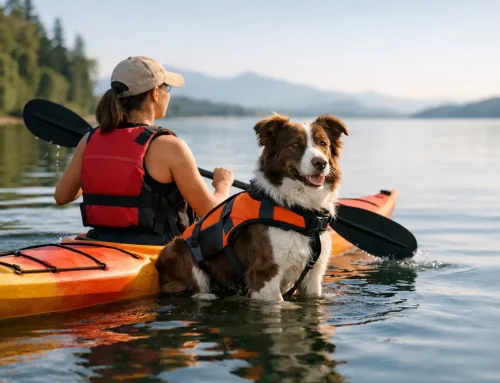
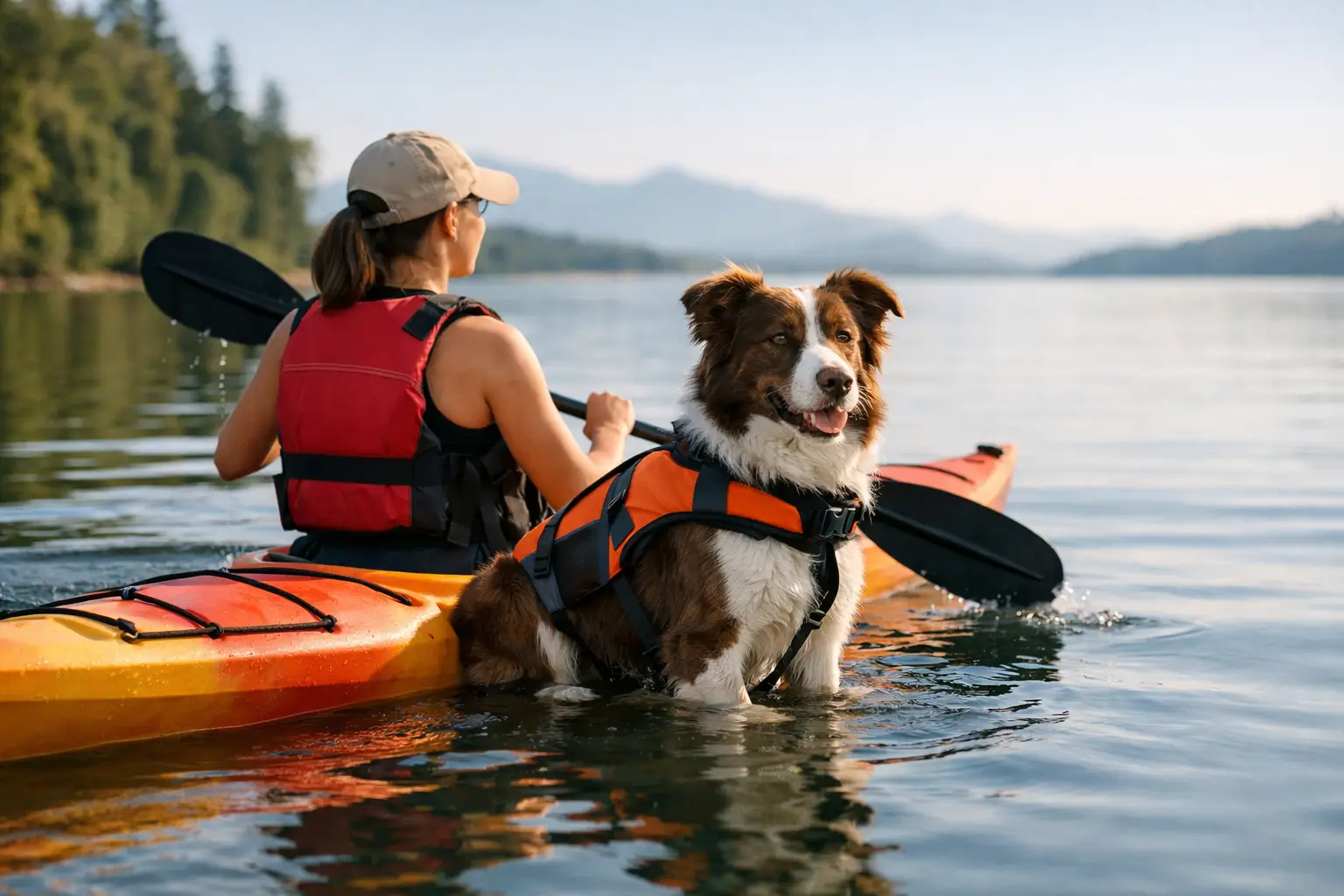
The first piece of gear is the one that should never be optional – a properly fitted life jacket, also called a PFD. If you are new to kayaking, this is not the item to toss behind your seat and forget. Wear it. Every time. Good beginner trips feel fun because they are structured, calm, and safety-forward.
After that, think sun protection and weather protection. A hat with a brim, sunglasses with a retainer strap, sunscreen, and a lightweight rain shell do more for your comfort than most fancy add-ons. If the forecast is cool, avoid cotton. It stays wet and makes a breezy paddle feel a lot longer.
A whistle, basic first aid kit, and fully charged phone in a waterproof case are also smart. You probably will not use them. That is the point.
The dry bag question everyone asks
Yes, you need dry bags. No, you do not need ten of them.
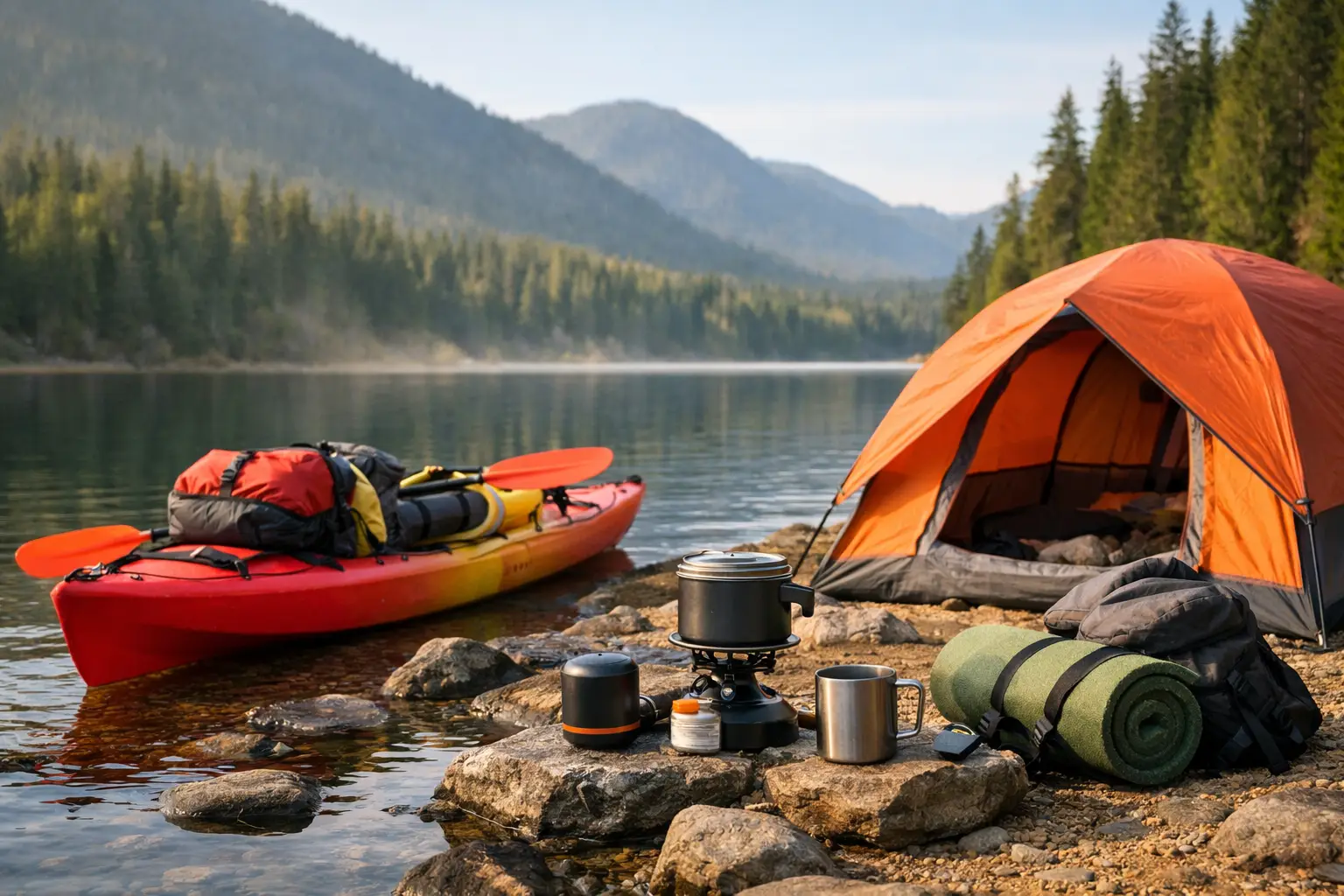
For most first trips, a simple system works best: one larger dry bag for camp gear, one medium bag for clothing and sleep items, and one small bag for quick-access essentials like snacks, sunscreen, and your phone. Bright colors help because digging through a kayak for a black zipper pouch at dusk is a bad little life lesson.
Roll-top dry bags are usually plenty for beginner flatwater trips. The main thing is to pack in categories and keep the stuff you need on the water easy to reach. If your spare layer is buried under cookware and a sleeping pad, it may as well not exist.
Shelter and sleep without overdoing it
This is where first-timers tend to bring too much. You are camping, not moving into the woods.
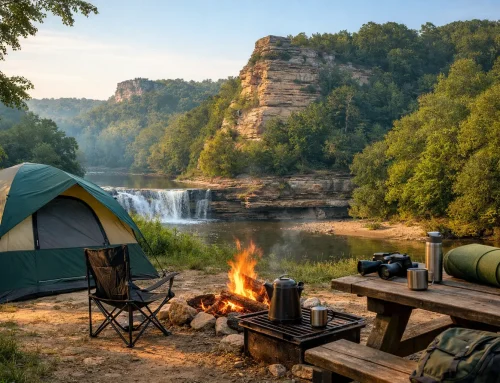
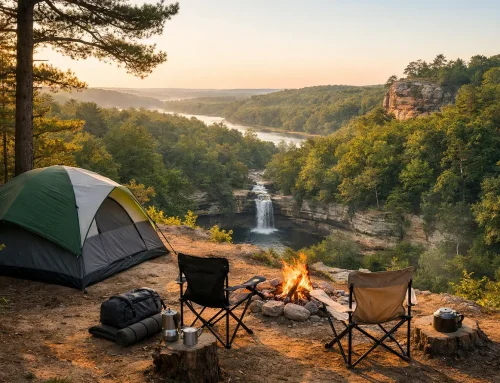
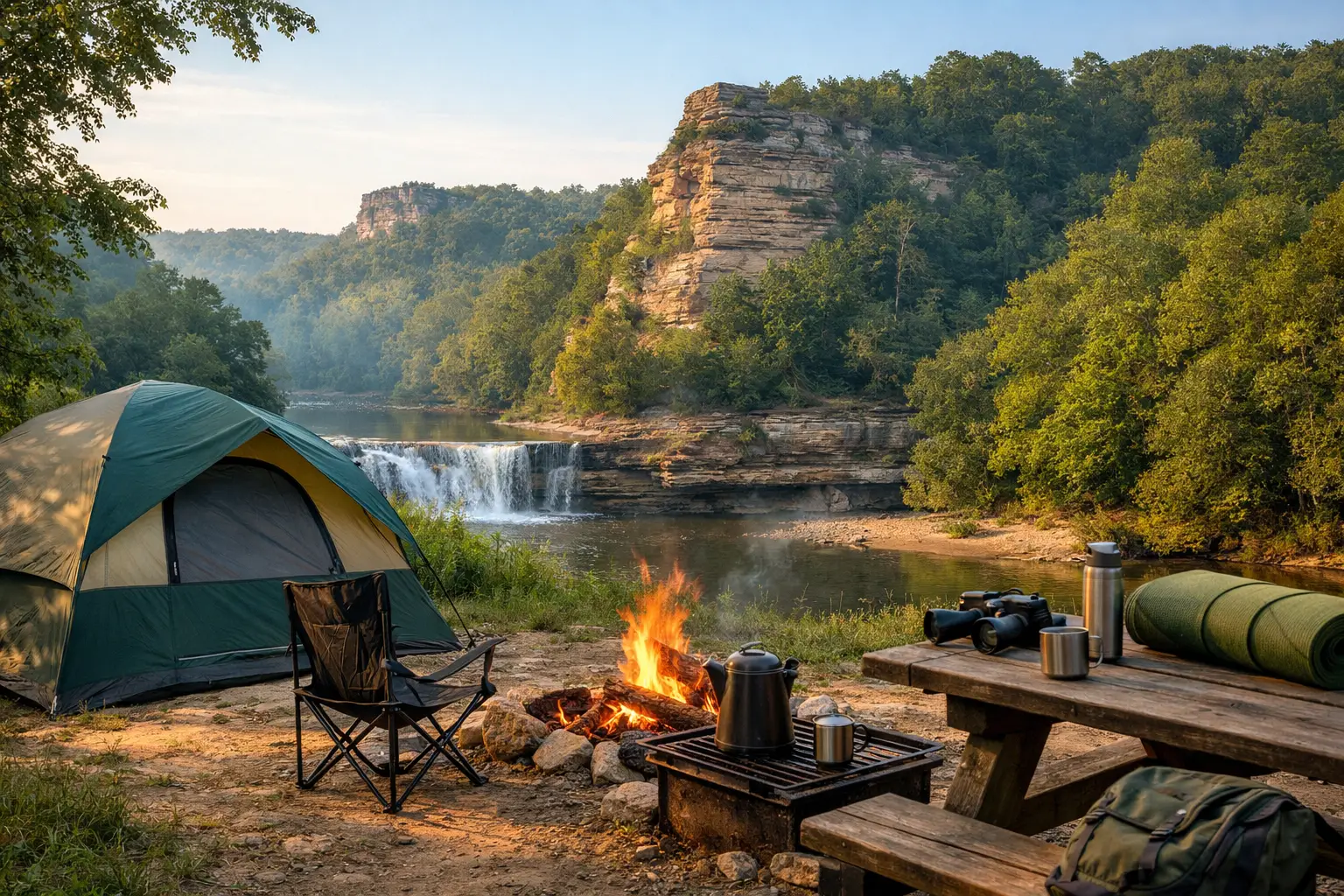
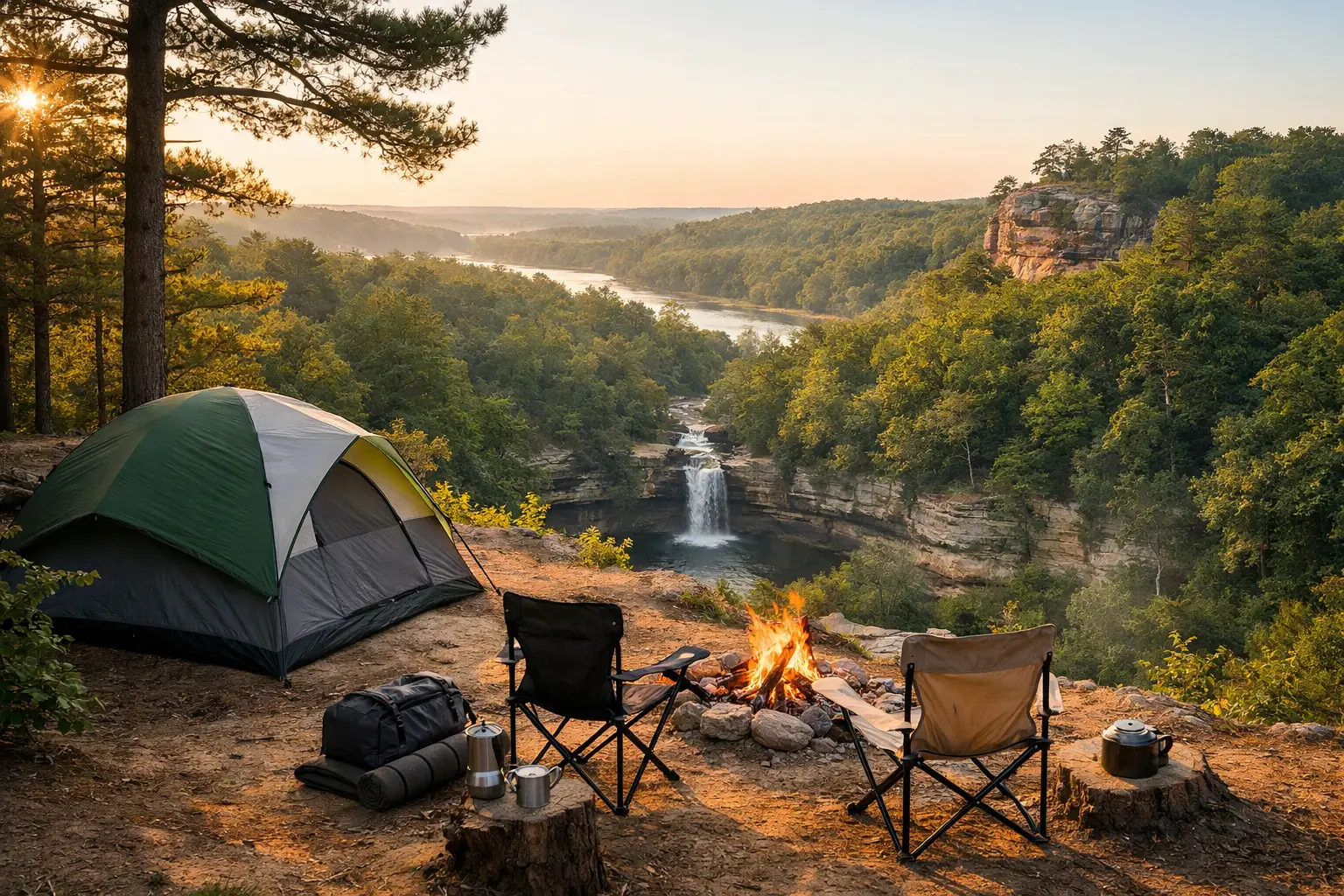
A lightweight tent is a great choice if you want the classic overnight experience. If you want even less friction, a pop up setup can feel easier, especially for families or casual campers who care more about relaxing than fiddling with poles at sunset. And if your idea of a good weekend includes sleeping off the ground with a little extra comfort, a tear drop camping setup can make the whole trip feel much more like a getaway and less like a gear test.
That is one reason waterfront camping packages are so appealing for beginners. When your site, paddle plan, and camping setup are all in one place, there are fewer moving pieces to mess up. For a first trip, less logistics usually means more fun.
As for sleep gear, bring a sleeping bag rated for the actual nighttime temperature, not your hopeful guess. Add a sleeping pad, because even a short overnight gets a lot better when your hip is not pressed into the earth all night. A compact camp pillow is worth the space if you care about sleeping like a person.
Clothing: less than you think, smarter than you think
For kayak camping gear for beginners, clothing should be about comfort and backup, not fashion variety. Wear quick-dry layers on the water. Pack one dry camp outfit. Bring extra socks. That last one matters more than people expect.
Water shoes or secure sandals are usually a better choice than flip-flops. You want something that stays on your feet when launching, landing, or stepping around a muddy shoreline. A warm layer for evening is important too, even in warmer months. Near the water, temperatures can drop fast once the sun goes down.
You do not need separate outfits for dinner, campfire time, breakfast, and the drive home. You need clothing that works wet, dry, warm, and tired.
Food and cooking for a first overnight
A beginner kayak camping menu should be easy, compact, and hard to ruin. This is not the moment for a cast iron skillet and a cooler packed like a tailgate party.
Keep meals simple. Sandwich fixings, wraps, pasta salad, instant oatmeal, fruit, trail mix, and easy grill or camp stove dinners all work well. If your campsite setup allows more comfort and storage, great. But in general, first trips go better when dinner takes 15 minutes, not an hour and a half.
Bring more water than you think you will need, especially in summer. A reusable bottle for paddling and extra stored water for camp is a smart combo. If you are relying on a camp stove, check fuel before you leave. Many beginner camping failures are just tiny planning misses wearing a fake mustache.
What beginners forget until it is annoying
A few small items make a big difference once you are actually out there. A headlamp beats a phone flashlight. A small towel helps after launching, rain, or dew-heavy mornings. Bug spray can save your mood. Toilet paper in a sealed bag is one of those things you appreciate deeply when you need it.
Camp chairs are nice if you have room. Not essential, but nice. Same with a small battery pack for your phone. If you are taking photos, using maps, or checking weather updates, your battery may disappear faster than expected.
And bring a simple trash bag. Clean campsites are part of keeping these places fun, welcoming, and dog-friendly for the next group.
Don’t buy your way into your first trip
This may be the most useful advice in the whole article: you do not need to own everything before you go. For a first overnight, it often makes more sense to rent, book a package, or choose a campground that makes the experience easier.
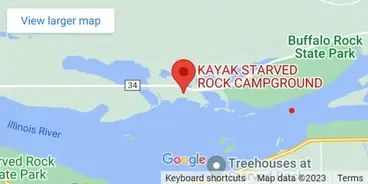
That is especially true if you are trying kayak camping for the first time near Chicago and want to keep planning low-stress. A place like Kayak Starved Rock Campground can make the learning curve feel much shorter because you are pairing beginner-friendly paddling with waterfront camping in one destination. If you can book your kayak, campsite, and even a more comfortable camping setup without piecing it together from five places, that is a win.
It also helps to choose conditions that are friendly to beginners. Calm, shallow, dam-controlled water is a very different first experience than guessing your way through current and complicated shuttle logistics. Confidence grows fast when your first trip feels manageable.
A better packing mindset for first-timers
When you are deciding what to bring, ask one question: will this make the trip easier, safer, or more comfortable in a real way? If the answer is no, leave it behind.
Beginners do best with gear that is simple to use, quick to pack, and not a big emotional event if it gets a little dirty or damp. You are not preparing for a documentary expedition. You are setting yourself up for one good night outside and a really fun paddle the next morning.
That is why the best first trip is usually the one with fewer decisions. Pick a beginner-friendly place. Keep the gear list short. Leave some room in the kayak. You will enjoy the bluffs, the quiet water, the campfire, and the whole near-Chicago escape a lot more when your boat is not stuffed like an overconfident garage sale.
If you are new to this, aim for easy, not impressive. Easy is what gets you back on the water.