You can usually tell when someone is nervous about their first paddle trip by the first question they ask: “But what’s the water like?” That is exactly why dam controlled river kayaking conditions matter. For beginners, families, and anyone who wants a fun day outside without wondering if they accidentally signed up for a survival show, a controlled stretch of river changes the whole experience.
At a place like the Illinois River near Starved Rock, water conditions are a big part of the appeal. People want scenery, fresh air, and that happy, tired feeling after a few hours outside. They do not want surprise current, sketchy depth changes, or a trip that feels better suited to experts. A dam controlled area helps create a more predictable paddle, which is a huge reason first-timers tend to relax faster and enjoy more.
What dam controlled river kayaking conditions actually mean
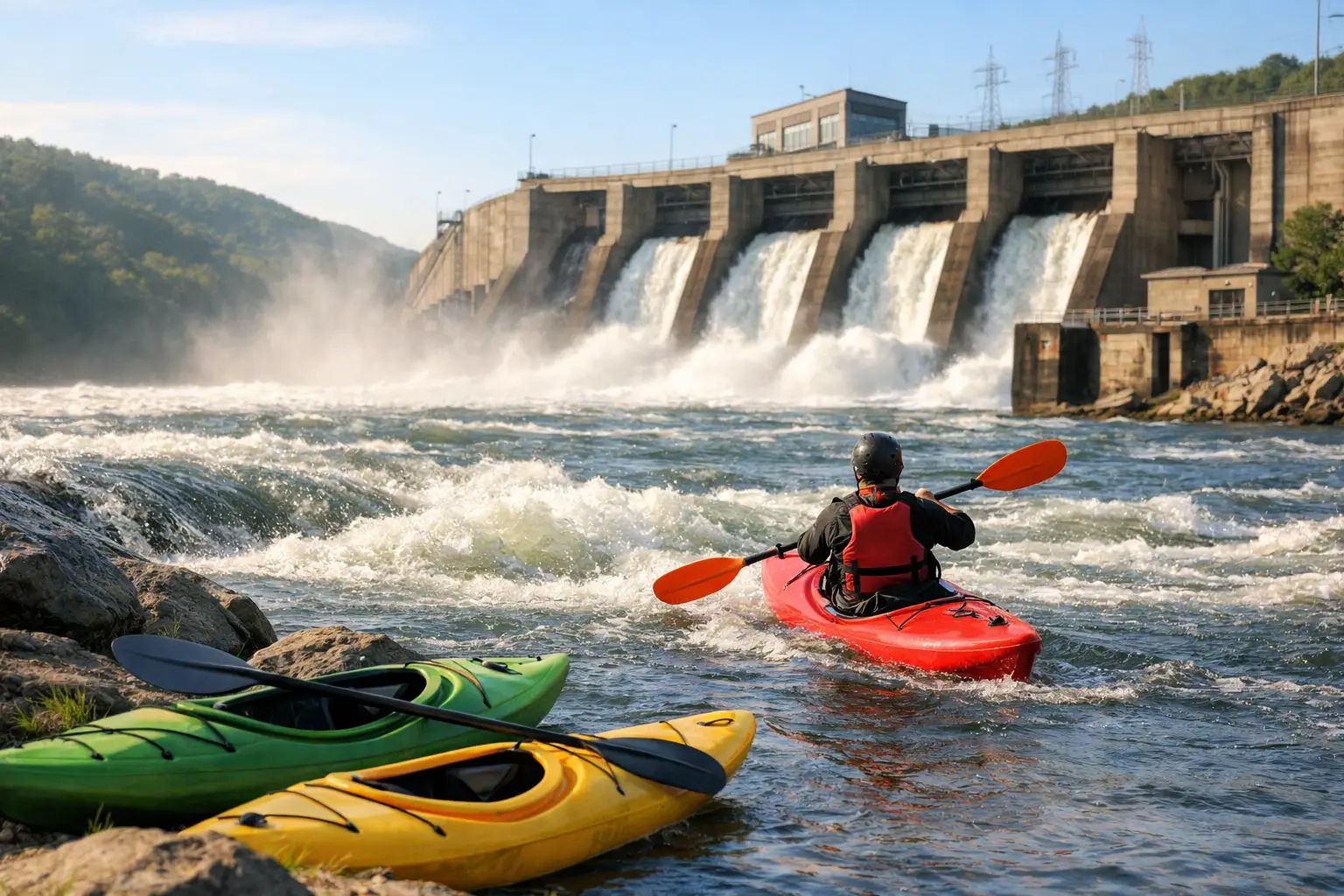
A dam controlled river is still a river, but the water level and flow are influenced by a dam system rather than left entirely to whatever the weather did that week. That does not mean the river is frozen in place or identical every day. It means conditions are generally more stable and more manageable than on rivers that swing wildly from low and rocky to fast and pushy.
For kayaking, that usually shows up in a few ways. Water levels tend to stay more consistently runnable. Current is often much lighter in the paddling area. Depth can remain more forgiving for recreational paddlers, especially compared with rivers that get skinny after a dry spell. If you are bringing kids, paddling with your dog, or just trying not to tip over while figuring out how to steer, those details are not small. They are the difference between “That was amazing” and “Never again.”
Why these conditions are so good for beginners
Beginner-friendly water is not just about calm vibes. It changes how people learn.
When the current is minimal, new paddlers have time to practice basic strokes without feeling rushed. They can stop, regroup, laugh at the weird first few paddle strokes, and keep going. In faster moving water, mistakes stack up quickly. In calmer water, every correction feels more manageable.
That is especially helpful for couples and families. One person is always a little more confident than the other, and if you have ever watched a tandem kayak at the beginning of a trip, you already know communication can get very creative. A flatter, controlled section of river gives everyone room to settle in without fighting the water.
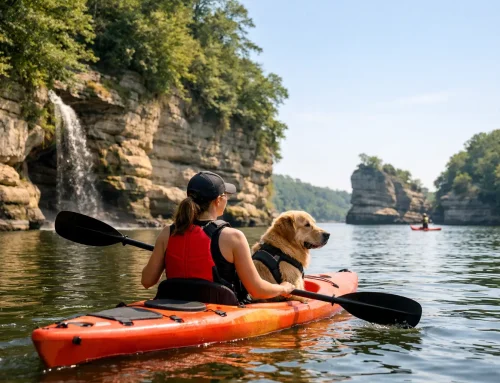
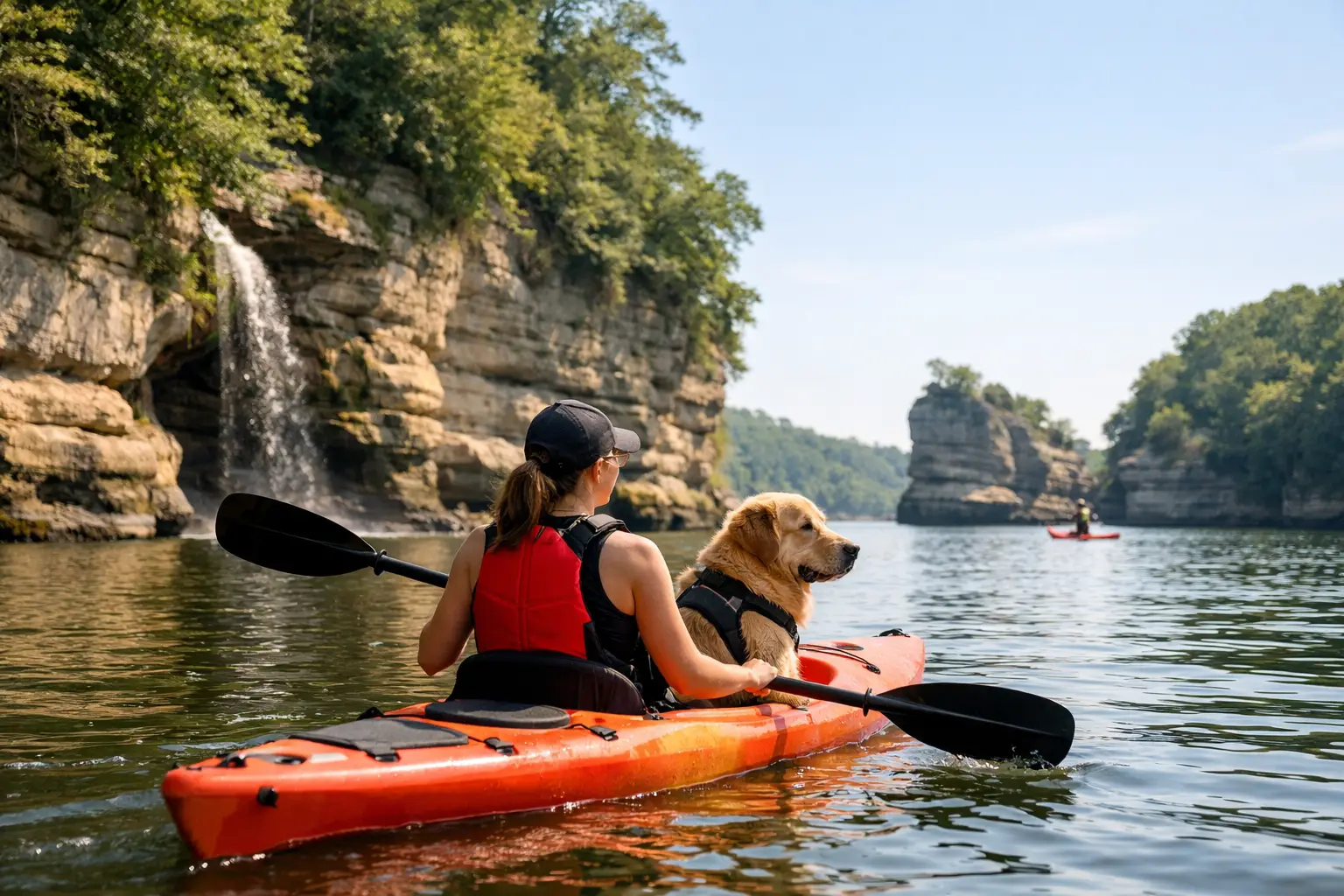
Kids benefit too. Parents are usually not looking for “challenging conditions” when planning an outdoor day trip near Chicago. They want something active but realistic. Shallow, calm water helps make kayaking feel approachable instead of intimidating. The same goes for dog-friendly paddling. Most dogs do better when the boat is not getting pushed around by current or bouncing through rough water.
Dam controlled river kayaking conditions and water confidence
A lot of people think confidence comes first, then they try kayaking. Usually it works the other way around. Good conditions build confidence.
That is one reason controlled flatwater paddling is such a strong first experience. You are not trying to master technical river reading. You are learning the fun stuff first – how to move the boat, how to turn, how to float for a minute and take in the bluffs, how to enjoy being on the water without feeling overmatched.
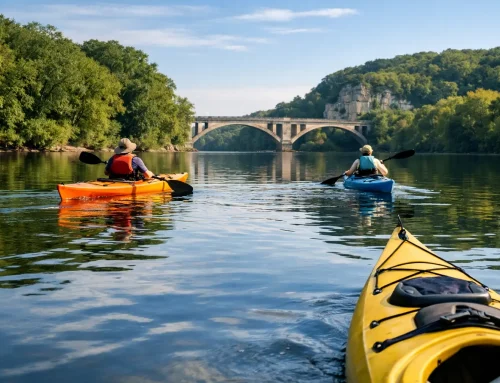
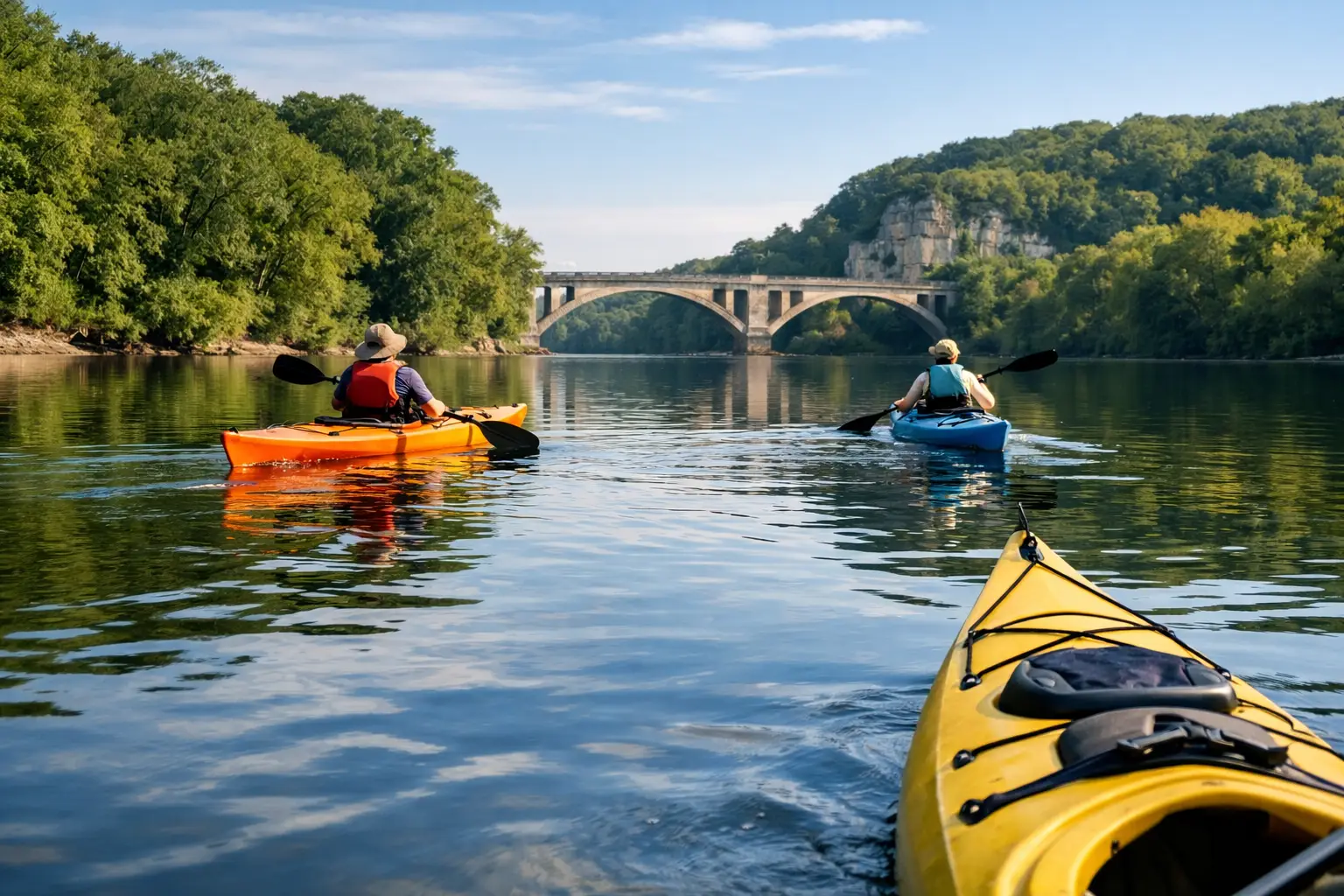
The best beginner trips create that “Oh, I can do this” moment early. Once that happens, people loosen up. They start noticing the canyon walls, birds, reflections on the water, and the fact that paddling is actually pretty relaxing. When conditions are too aggressive, all of that gets replaced by stress.
The trade-off: controlled does not mean careless
This is the part worth saying clearly. Dam controlled river kayaking conditions are more predictable, but they are not a free pass to ignore safety.
Conditions still vary with weather, season, boat traffic, wind, and operations. Wind can be a bigger factor than many first-timers expect, especially on open water. A sunny day can still be tiring. A cooler day can still feel chilly if you get splashed. Controlled water is easier water, not consequence-free water.
That is why the structure around the trip matters too. Clear launch windows, local guidance, maps, and properly fitted PFDs all make a real difference. Every paddler should wear a life jacket on the water, period. If you are using article images for this topic, they should always show kayakers wearing PFDs. That is not just a rule. It reflects what smart paddling looks like.
Why this matters near Starved Rock
The Starved Rock area attracts people for obvious reasons – sandstone bluffs, river views, wildlife, and easy escape-from-the-city energy. But scenic only gets you so far if the activity itself feels stressful.
That is where a dam controlled section of the Illinois River stands out. You get the outdoor payoff without the usual friction that scares off beginners. For a lot of Chicago-area visitors, that is the sweet spot. It is close enough for a day trip, but it still feels like you actually went somewhere. Add calm water and an easy launch, and suddenly kayaking becomes the kind of thing people say yes to.
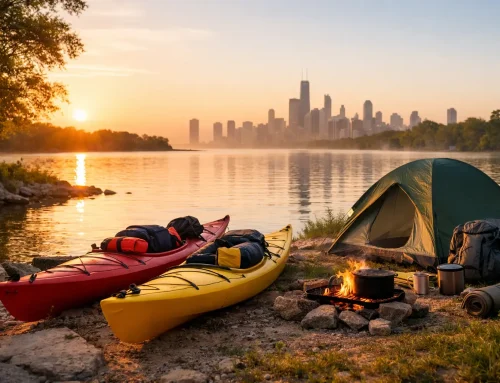
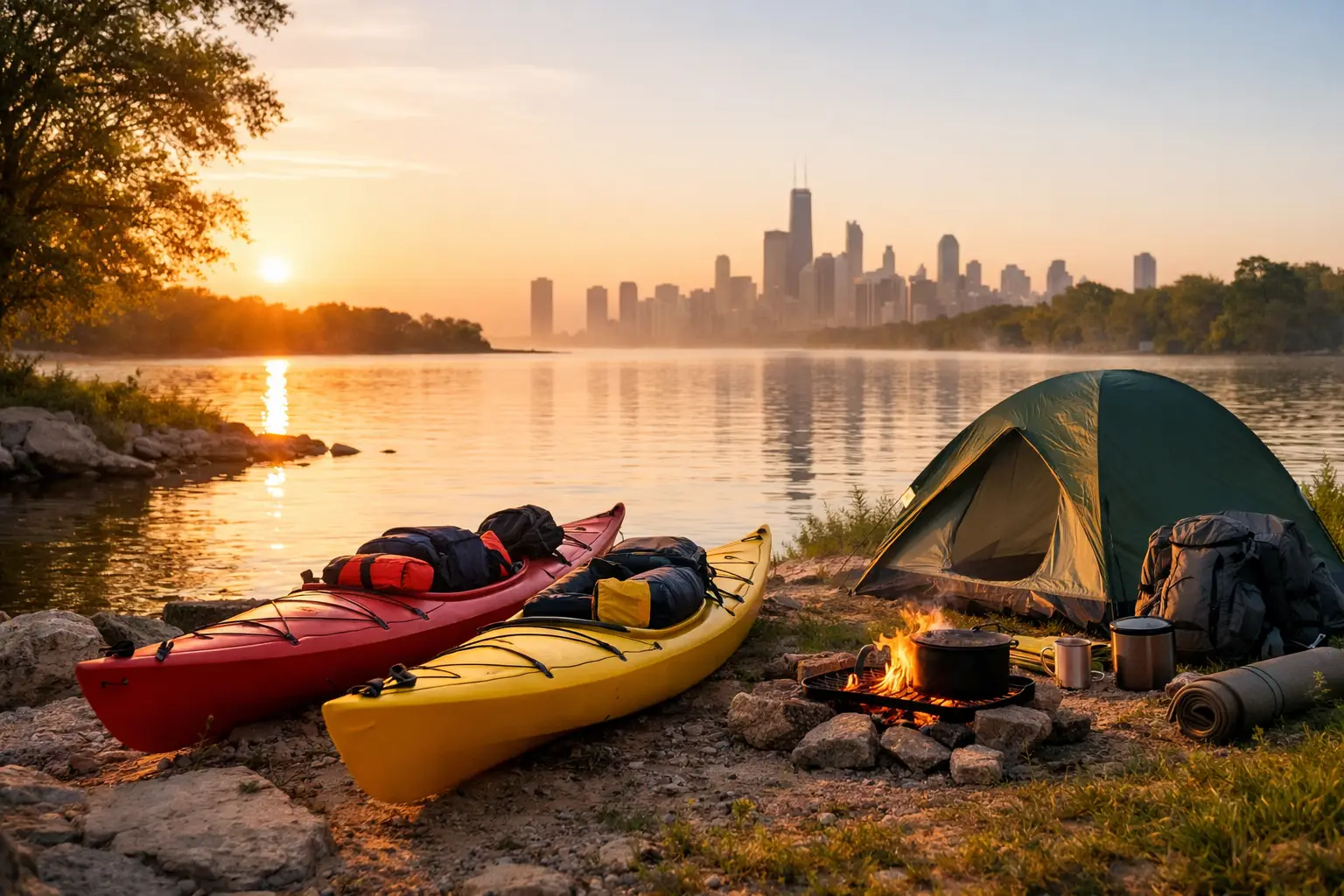
This also makes it a strong fit for weekend plans that mix paddling with camping. If your group wants waterfront camping, a pop up camper, a tent setup, or even a teardrop camping weekend, calmer water keeps the whole trip feeling low-stress. You can paddle, head back to camp, grill dinner, walk the riverfront, and do it again the next day without needing expert skills or a complicated shuttle plan.
What to expect from a beginner-friendly paddle day
On a controlled river stretch, the day usually feels simpler from the start. You check in, get oriented, put on your PFD, and get clear instructions before launching. If you are renting, better recreational or touring kayaks also help more than people realize. Stable boats track better, feel less twitchy, and make first-timers look more talented than they feel.
Once on the water, the pace is usually up to you. Some groups want a mellow float with lots of photo stops. Others want a little workout before lunch. The nice thing about calmer conditions is that both can work. You are not racing the river. You are getting an outdoor experience that bends around your comfort level.
Guided trips can be an even better choice for nervous paddlers. A good guide does more than point the way. They help people settle down, answer the “am I doing this right?” questions, and keep the trip feeling fun instead of technical. That support matters for first-timers, but it is also great for groups where nobody wants to be the unofficial trip leader.
Who benefits most from dam controlled river kayaking conditions
Honestly, almost everyone does, but a few groups really feel the difference.
First-timers get a more forgiving place to learn. Families get water that is better suited for kids. Couples get an activity that feels adventurous without turning into an argument about paddling technique. Dog owners get a more stable environment for bringing a four-legged copilot. Friend groups get an easy, photo-worthy outing that does not require everyone to be outdoorsy in the same way.
More experienced paddlers can still enjoy it too, especially when they want a scenic, relaxed outing instead of a technical challenge. Not every kayak trip needs to test your soul. Sometimes you just want to be outside on dependable water with good company.
How to plan around conditions without overthinking it
The best move is to treat the river with respect while keeping your planning simple. Book with an operator that knows the local water and gives clear guidance. Ask about launch times, weather considerations, and what to wear. Show up ready to listen, wear your PFD, and leave room in the schedule to enjoy the experience instead of rushing through it.
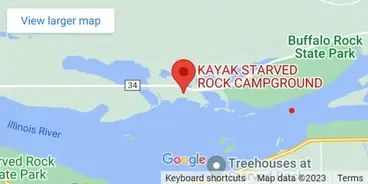
If you are looking for an easy paddle-and-camp weekend near Starved Rock, this is exactly where a place like Kayak Starved Rock Campground fits. The setup works well because the water conditions are beginner-friendly, the logistics are straightforward, and the whole trip can stay focused on fun instead of uncertainty.
That is really the big win with controlled water. It removes enough of the chaos that more people get to enjoy the best parts of kayaking – the quiet, the scenery, the laughs, and that little spark of confidence you take home with you.