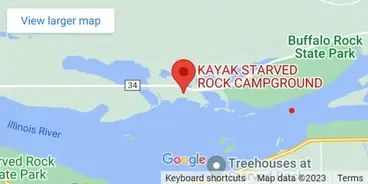

Starved Rock State Park , Illinois
Click here to book an amazing Guided Kayak Tour of this area
Explore Starved Rock State Park: Canyons, Kayaking & Camping
Starved Rock Park in Illinois is a breathtaking natural destination characterized by 18 scenic canyons spread across 2,630 acres. Located near Ottawa, IL, along the south bank of the Illinois River, Starved Rock, IL, welcomes more than two million visitors annually, the highest attendance of any state park in the state.
Historical Inhabitants
Before European settlement, the area now known as Starved Rock, Ottawa, Illinois, was home to Native American triibes, particularly the Kaskaskia, who lived in the Grand Village of Illinois across the river. The first Europeans recorded as exploring the Ottawa, IL, Starve Rock Park region were Louis Joliet and Jacques Marquette.
The Siege
According to local legend, after the French moved on, the Illiniwek (or Illini) triibe was pursued by the Ottawa and Potawatomi in the late 18th century. Around 1769, the Ottawa and Potawatomi surrounded the butte until the Illiniwek starved — giving rise to the name “Starved Rock.” The area was later designated a National Historic Landmark in 1960.
Visitors today can grab a Starved Rock trail map and explore Starved Rock State Park, Ottawa, IL, on their own, discovering the same rugged terrain and natural beauty that have captivated generations.
Historic Geological Formation
The dramatic geology of Starving Rock State Park was shaped by the ancient Kankakee Torrent, a catastrophic flood from a melting glacier between 14,000–17,000 years ago. This massive event carved the park’s signature canyons, cliffs, and waterfalls, features rare in the flat Midwestern landscape.
Location and Geography
Situated on the north bank of the Illinois River between the Fox and Vermilion Rivers, Kayak Starved Rock Campground offers access to scenic river views and nature trails. Before the construction of the Lock and Dam, rapids could be found at the base of the butte, and sandbars at the Vermilion’s junction limited upriver navigation.
Current Geology
Starved Rock, Ottawa, IL, is renowned for its outcrops of St. Peter Sandstone. The sandstone, exposed by a geological anticline, forms deep canyons and striking cliffs. Its pure, lightly cemented texture makes it soft and workable, a defining feature of the State Rock Park in Illinois landscape.
Local Legend
Local legends about the origin of the park’s name remain popular. The most enduring story tells of the Ottawa and Potawatomi avenging their leader Pontiac’s death by besieging the Illiniwek atop the butte until they starved. Though there’s no historical proof that the siege occurred, this legend continues to shape the mystique surrounding the park in Ottawa, Illinois.
Historical Ownership
In 1835, Daniel Hitt purchased the land that now comprises the Starved Rock State Park Campground from the U.S. government. Decades later, in 1890, he sold it to Ferdinand Walther, who saw its potential as a tourist destination. Walther built a hotel, dance hall, and pool near the base of Starved Rock, Illinois, attracting visitors eager to explore its canyons and riverside trails.
The property was sold to the Illinois State Parks Commission in 1911 for $146,000. In 1912, Starved Park, Ottawa, IL, officially opened as a public facility, becoming one of the state’s most cherished outdoor destinations.
Civilian Conservation Corps (CCC)
During the 1930s, under Franklin D. Roosevelt’s New Deal, the Civilian Conservation Corps (CCC) established Camp 614 at Starved Rock Campground. The crew, including African American workers, built trails, benches, and shelters, and laid more than 25 miles of paths. Camp 1609, from Fort Sheridan, later joined and constructed the Starved Rock State Park Lodge and Cabins, as well as log cabins and parking lots still in use today.
Accessibility and the Modern Era
The opening of Illinois Route 71 in 1942 improved access to Starved Rock in Ottawa, Illinois, making it a popular weekend getaway from Chicago. In 1960, it became a National Historic Landmark. Although occasional challenges arose, including erosion from foot traffic, efforts by conservation programs have preserved its beauty. The Starved Rock State Park Lodge and Cabins were added to the National Register of Historic Places in 1985, and in 2007, Starved Rock, Illinois, was listed as one of the “Seven Wonders of Illinois.”
Today, Starved Rock State Park welcomes nearly three million visitors annually for hiking, photography, and Starved Rock State Park Camping.
Childhood Memories and Trail Systems
Many Illinois residents remember growing up exploring the three major trail systems of Starved Rock State Park, Ottawa, IL:
- Bluff Trails – Offering panoramic 360° views of the canyons and surrounding forest.
- River Trails – Running along the river’s edge and into the canyon bases, with close-up views of waterfalls and flora.
- Ridgeline Trails – Once winding along canyon walls, but now closed for safety reasons.
Today, visitors can also explore nearby Matthiessen State Park for additional trails and scenic beauty.
Starved Rock State Park Activities
There are countless Starve Rock State Park activities to enjoy, from scenic hiking to fishing, birdwatching, and seasonal guided tours. Outdoor enthusiasts can explore miles of trails, starved rock kayaking, picnic areas, and observation decks overlooking the Illinois River.
Adventurers can even try Starved Rock Rock ice climbing in the Wintertime under guided supervision, one of the most thrilling ways to experience the park’s sandstone cliffs.
Starved Rock State Park Camping and Cabins
For those looking to extend their visit, camping options include rustic campsites and cozy Starved Rock State Park Cabins near the lodge. Campers enjoy modern facilities, river views, and easy access to the park’s canyons, waterfalls, and trailheads. Reservations for the Kayak Starved Rock Campground are available online and fill quickly during peak season.
Guests can also purchase tickets for guided hikes, kayaking adventures, and seasonal nature programs, offering fun and education for visitors of all ages.
Preservation and Conservation
The Illinois Department of Natural Resources manages the park in Ottawa, IL, ensuring the preservation of its ecosystems and historical sites. Ongoing efforts include erosion control, trail maintenance, and educational programs that highlight the park’s cultural and natural heritage.
Conclusion
Nestled along the Illinois River, Starved Rock Park, Illinois, is more than just a natural wonder — it’s a living piece of Midwestern history. From the cliffs and canyons carved by glaciers to the Starved Rock State Park Activities that bring visitors closer to nature, this destination continues to inspire awe and adventure. Whether you’re camping, hiking, climbing, or staying in a Starved Rock Park Cabin, the park offers endless opportunities to connect with the great outdoors.
FREQUENTLY ASKED QUESTIONS
1. Where is Starved Rock State Park located?
Starved Rock State Park is located in Ottawa, Illinois, along the south bank of the Illinois River. The park spans over 2,600 acres and features 18 scenic canyons, towering sandstone bluffs, and beautiful waterfalls, making it one of the most popular destinations in the Midwest for hiking and outdoor recreation.
2. What activities can I do at Starved Rock State Park?
Visitors can enjoy a wide range of Starved Rock activities, including hiking, kayaking, birdwatching, fishing, and seasonal guided tours. The park also offers Starved Rock rock climbing and rappelling opportunities for adventure seekers, as well as picnic areas and scenic overlooks for families and nature lovers.
3. Does Starved Rock State Park offer camping and cabins?
Yes! Starved Rock camping options include a modern campground with over 90 sites for tents and RVs. For a more comfortable stay, starved rock park also offers cozy Starved Rock State Park cabins located near the historic lodge. Both camping and cabin reservations can be made online, especially recommended during the summer and fall seasons. Kayakstarvedrock.com has camping right next to starved rock state park and directly on the Illinois river
4. How can I get tickets for tours or events?
You can purchase Starved Rock State Park tickets online or at the visitor center for guided hikes, educational tours, kayaking trips, and seasonal nature programs. Tickets often sell out quickly during peak seasons, so booking in advance is recommended to secure your preferred activity.
5. Why is Starved Rock State Park considered one of Illinois’ top attractions?
Starved Rock Park in Ottawa, IL, is one of the most visited natural attractions in starved rock Illinois due to its unique sandstone formations, waterfalls, and rich Native American history. It offers a blend of breathtaking scenery, diverse wildlife, and year-round outdoor recreation, making Starved Rock, Illinois, a must-visit destination for both locals and tourists.