A wiggly dog, a tippy boat, and a phone held over the water is not the peaceful paddle anybody pictured. The best kayaks for kayaking with dogs give your pup a stable place to settle, leave you enough room to paddle comfortably, and make getting on and off the water far less dramatic. For beginners near Chicago, the right boat matters just as much as choosing calm water and bringing a properly fitted PFD for every human and dog.
Dogs do not need a luxury vessel. They need traction, space, shade breaks, and a paddler who is prepared for the moment a squirrel, fish, or mysterious floating stick becomes extremely exciting. That is why a wide, open recreational kayak usually beats a sleek, narrow touring kayak for a pet-friendly afternoon on the Illinois River.
What Makes a Kayak Dog-Friendly?
The first thing to look for is stability. A wider hull feels steadier when your dog shifts from one side to the other, stands up to investigate the scenery, or decides your lap is suddenly the best seat in the boat. Flatwater recreational kayaks are made for relaxed exploring, not racing, and that makes them a smart match for first-time paddlers and four-legged copilots.
Next, think about usable floor space. Your dog needs a spot that is low, secure, and out of the way of your paddle stroke. Open cockpits and sit-on-top decks make this easier than tight, enclosed boats. A small dog may be happy on a nonslip pad between your feet. A bigger dog usually needs the room of a tandem kayak, where one seat can become the dog zone.
Entry and exit are the final test. Can your dog step in without climbing over a high edge? Can you steady the boat at shore while they board? A kayak that looks perfect online can be a poor fit if your dog has to leap into a narrow cockpit. When possible, try the setup on land before launch day.
8 Best Kayaks for Kayaking With Dogs
There is no single best boat for every pup. A calm 15-pound terrier and a happy 85-pound Labrador have very different ideas about personal space. These kayak styles are the strongest starting points.
1. Wide sit-on-top kayaks for easy boarding
A sit-on-top kayak has an open deck rather than an enclosed cockpit. That means fewer walls for your dog to climb over and easier recovery if they step off for a quick swim. Look for a wide model with a textured deck, a high weight capacity, and a flat area ahead of the seat.
The trade-off is that everyone gets wetter. Sit-on-tops are great for warm-weather paddles and dogs that enjoy hopping in and out, but they are less appealing on a cool, breezy day.
2. Recreational tandem kayaks for medium and large dogs
For many pet owners, a tandem recreational kayak is the clear winner. One person paddles in back, another person can sit up front, and the center area gives a dog room to lie down on a pad. If you are paddling solo with a larger dog, the front seat can often become their roomy passenger lounge.
Choose a true recreational tandem with a wide beam and open cockpit instead of a long, narrow performance tandem. Speed is nice. Keeping your dog from turning the boat into a balance challenge is nicer.
3. Canoe-style open kayaks for dogs that need room
Some wide, open recreational boats blur the line between kayak and canoe. They often have raised seats, lots of interior space, and a very easy layout for a dog bed or nonslip mat. They are especially useful for families, two adults with one dog, or people bringing a cooler and dry bag along.
Their downside is wind. A tall-sided, roomy boat can be more affected by a gusty afternoon, so stick with protected flatwater when conditions are calm.
4. Inflatable kayaks for occasional paddles
A quality inflatable kayak can be a good option for an occasional dog-friendly outing, especially if storage space at home is limited. Many have broad, stable floors and feel surprisingly steady on quiet water. They are also gentle on paws.
Be realistic about your dog’s nails and behavior. Tough materials help, but an inflatable is not the right choice for a dog that digs, chews gear, or becomes restless when excited. Bring a dog mat anyway, both for comfort and to protect the floor.
5. Short recreational kayaks for small, settled dogs
A compact recreational kayak can work beautifully for a small dog that stays put. The key is a large cockpit opening, not simply a short overall length. Your dog should be able to turn around, lie down, and get out without a struggle.
Avoid cramming a dog into the bow of a tight cockpit because the kayak technically has enough weight capacity. Capacity is only one part of the equation. Safe, comfortable space matters more than a number on a spec sheet.
6. Fishing kayaks with a clear deck layout
Fishing kayaks are known for stability, and that is a major perk for dog paddling. Some have wide platforms and roomy standing areas that can double as a pup perch. A dog that likes to sit upright and watch the shoreline may appreciate the extra deck space.
Before choosing one, inspect the deck carefully. Pedal drives, rods, tackle mounts, sharp hooks, and loose gear are not dog-friendly. A clean, uncluttered fishing kayak can be excellent. A fully rigged one can be a paw hazard.
7. Three-person recreational kayaks for family outings
A three-person kayak can make sense for two adults, a child, and a dog, provided the boat stays within its weight limit and everyone has a defined place to sit. These are often great for relaxed family paddles because nobody has to hold a dog in their lap for the whole trip.
They are heavier and harder to maneuver on land, so consider your launch plan. A smooth, easy shoreline launch beats wrestling a big boat down a steep bank while your dog is ready to go.
8. Rental tandems before buying your own
The smartest first dog-kayak purchase might be no purchase at all. Renting a stable tandem lets you see how your dog handles the sounds, motion, and routine of a real paddle. It also gives you a chance to learn whether they settle in the center, prefer the front, or would honestly rather stay on shore with snacks.
At Kayak Starved Rock Campground, dog-friendly paddlers can pair a roomy kayak outing with beginner-friendly, dam-controlled flatwater across from Starved Rock State Park. Ask ahead about current pet policies, recommended boat setups, and launch timing so your crew arrives ready instead of rushed.
Gear That Helps Your Dog Settle In
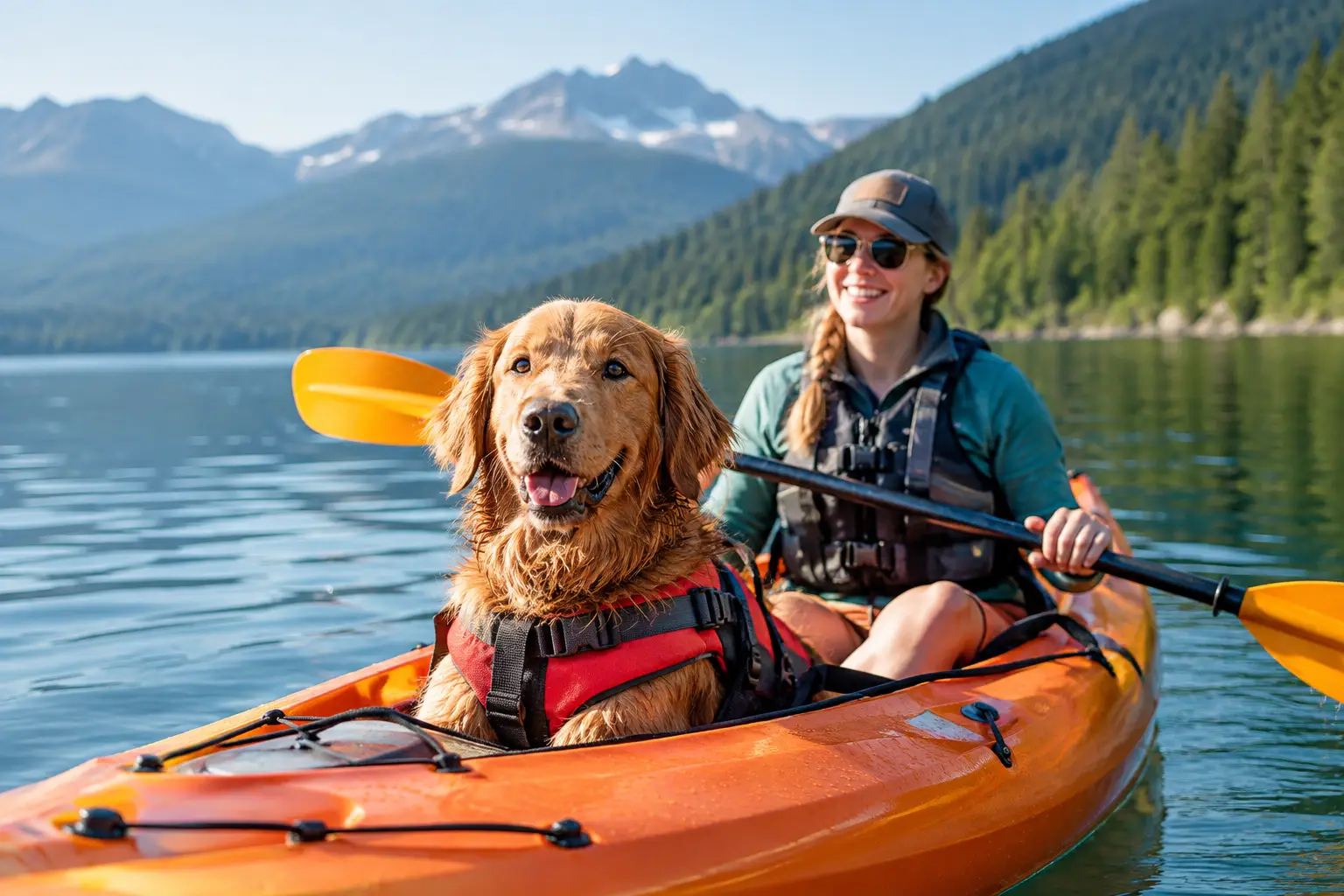
A dog PFD is not optional gear. Even strong swimmers can tire, get disoriented, or struggle to climb back aboard. Choose one with a handle on the back so you can assist them safely, and make sure it fits snugly without rubbing under the legs. Humans need properly fitted PFDs, too. Wear them on the water, not just clipped to the boat.
A nonslip mat is the small upgrade that can change the whole experience. It gives your dog traction and clearly marks their resting place. Bring fresh water, a collapsible bowl, treats, poop bags, and a towel. Keep food and anything chewable secured in a dry bag.
Skip the standard leash while the kayak is moving. A leash can snag on the boat or create a dangerous entanglement if your dog jumps out. At shore, use it as needed, but on the water, focus on a well-fitted PFD, calm conditions, and a dog that has practiced basic stay and settle commands.
A Low-Stress First Paddle Plan
Start short. A 30- to 60-minute calm-water paddle is plenty for a first outing, even if your dog has endless energy on land. Let them explore the boat on shore first, reward calm behavior, then launch from a shallow area with one person holding the kayak steady.
Keep the first trip boring in the best way. No big waves, no busy boat traffic, no long crossings, and no pressure to cover miles. If your dog seems tense, shakes, pants heavily, whines, or keeps trying to get out, head back in. A happy ten-minute outing is better training than a stressful two-hour adventure.
For a full dog-friendly weekend, a waterfront campsite adds a useful rhythm: paddle when the water is calm, take a long sniff-and-rest break on land, then settle in by the tent. Whether you prefer tent camping, a pop-up setup, or a teardrop camper, your dog will probably remember the shoreline smells and campfire downtime more than your paddle speed.
The best boat is the one that leaves your dog relaxed enough to curl up after the launch, look around at the bluffs and trees, and ride home pleasantly tired. Start with calm water, a stable layout, and a PFD-first plan, then let your pup decide whether kayaking is their new favorite adventure.