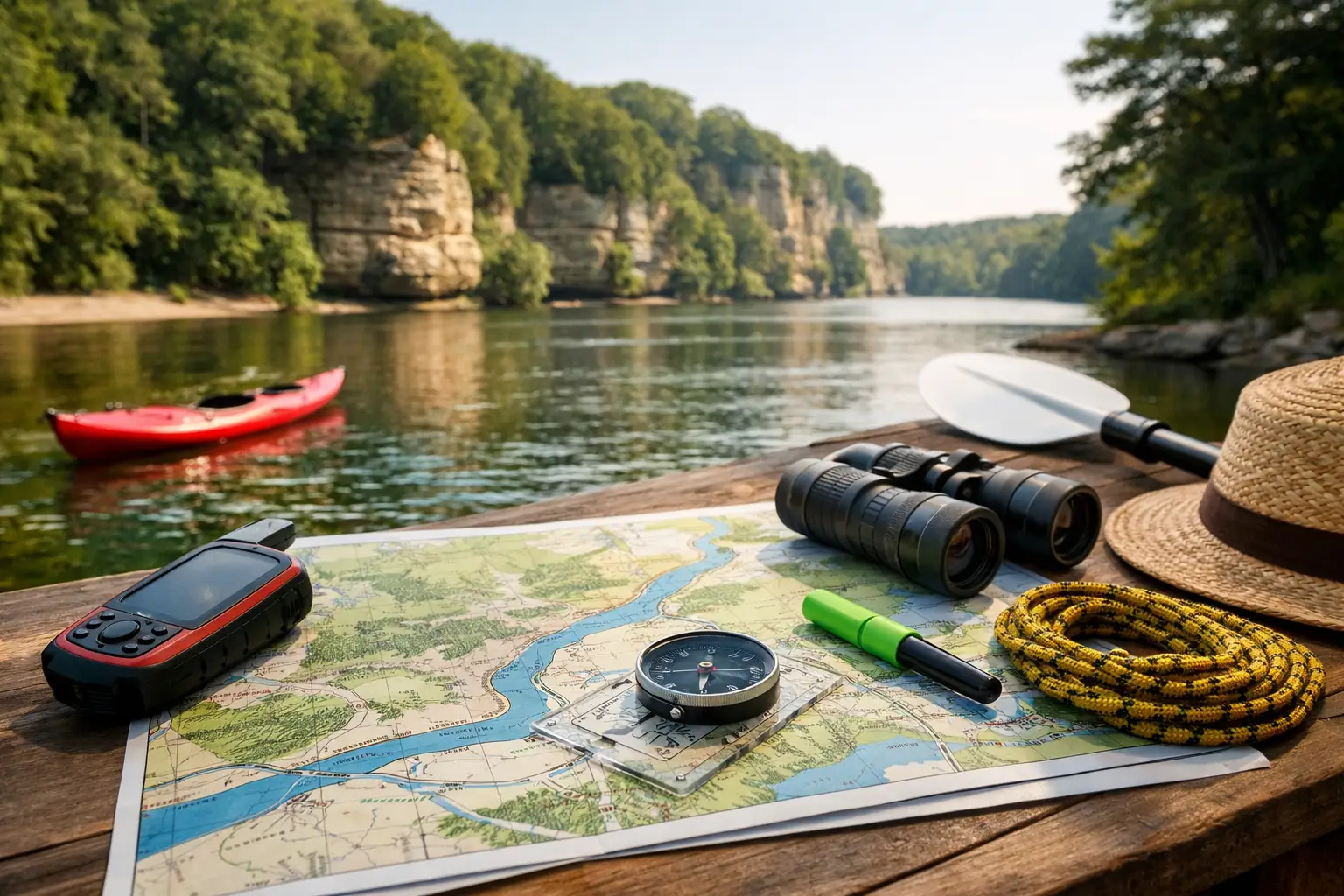
The best river paddle maps do more than show a blue line and a few boat ramps. For a Starved Rock getaway, they help turn “Should we bring the kayaks?” into a real plan: where to launch, how far you will paddle, where your group will regroup, and whether camping makes more sense than racing back to Chicago before dark.
That little bit of planning is especially helpful for first-timers. The Illinois River can look big from shore, but a well-chosen route in a dam-controlled, flatwater setting can feel refreshingly simple. No whitewater bravado required. Just good gear, life jackets, a route that fits your crew, and enough time to enjoy the bluffs instead of staring at the clock.
What River Paddle Maps Should Tell You
A useful map is not just a navigation tool. It is a decision-making tool. Before your trip, look for the launch location, return point, approximate paddling distance, shoreline landmarks, nearby roads, and any places where boating traffic may change the feel of the water.
For casual paddlers, the most valuable detail is often the shape of the outing. Is this an out-and-back paddle where you return to the same launch? Is it a loop? Does it require a shuttle? A map may show several access points, but that does not mean each one is equally practical for a family with a cooler, a dog, or two people trying kayaking for the first time.
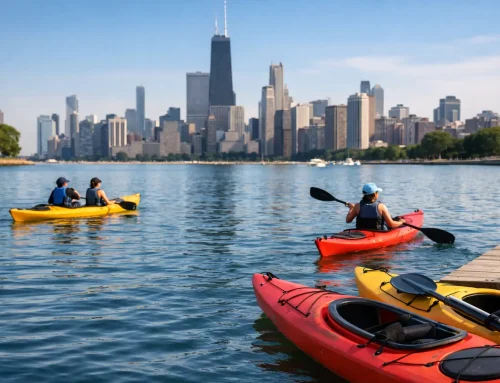
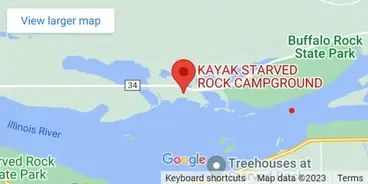
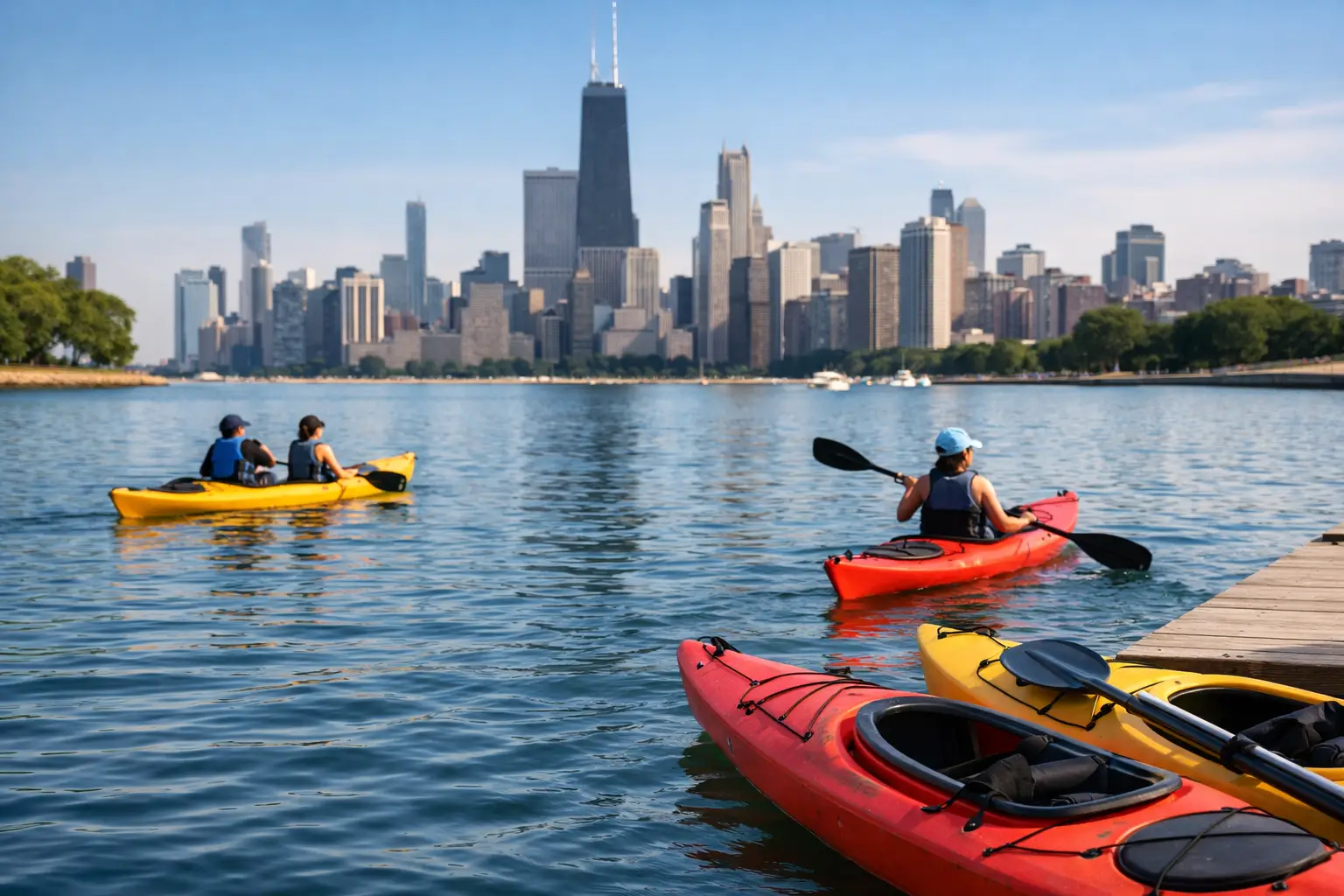
At Kayak Starved Rock Campground, the appeal is wonderfully low-drama: launch, paddle the flatwater, return to the same waterfront area, and keep the day moving without a complicated vehicle shuffle. That is a much better fit for a first date, a family weekend, or a group that wants stories and photos instead of logistical math.
Distance Means More Than Miles
A three-mile paddle is not automatically short, and a six-mile paddle is not automatically long. Wind, temperature, boat traffic, breaks, group size, and paddling experience all matter. On a calm summer morning, a longer route may feel easy. On a breezy afternoon with a child in a tandem, a shorter route may be the smarter call.
When you read a map, think in time as well as distance. Leave room for a slow start, a snack break, and the moment someone spots a great view and wants to drift for a minute. That is not falling behind. That is the point.
Read the Illinois River Like a Relaxed Paddler
Maps can tell you where the water goes. They cannot always tell you how the day will feel. Pair your route planning with a quick look at weather conditions, especially wind direction and the chance of thunderstorms.
Wind has a bigger personality on open water than many new paddlers expect. A light breeze can be pleasant. A steady headwind can make a return paddle feel like unexpected leg day for your arms. If your route is out and back, consider heading into the wind first while everyone is fresh, then enjoy an easier ride back if conditions cooperate.
The Illinois River near Starved Rock also welcomes more than kayaks. Larger boats may be present, so river awareness matters. Stay alert, keep your group together, and give other water users plenty of room. A beginner-friendly environment does not mean “zone out and float wherever.” It means you can focus on learning good habits without needing advanced technical skills.
Your personal flotation device is one of those non-negotiable good habits. Every paddler should wear a properly fitted PFD on the water, not stash it behind the seat for decoration. It is more comfortable than people expect, and it lets everyone relax a little more – parents, guides, friends, and paddlers themselves.
Landmarks Beat Tiny Screen Stares
Phone maps are handy, but water can be hard on phones, batteries, and attention spans. Before launching, take a minute to identify a few big-picture landmarks: the launch area, a visible bluff line, a bridge, a marina, or the shoreline feature that signals it is time to turn back.
This is especially useful when paddling with kids or a larger group. Instead of repeatedly asking, “Are we almost there?” everyone has a shared reference point. It also helps you avoid the classic first-time paddler move: drifting farther than planned because the scenery keeps getting better.
Plan a Route That Fits Your Crew
The best route is not the longest one on the map. It is the one that leaves your group happy, comfortable, and ready to do it again.
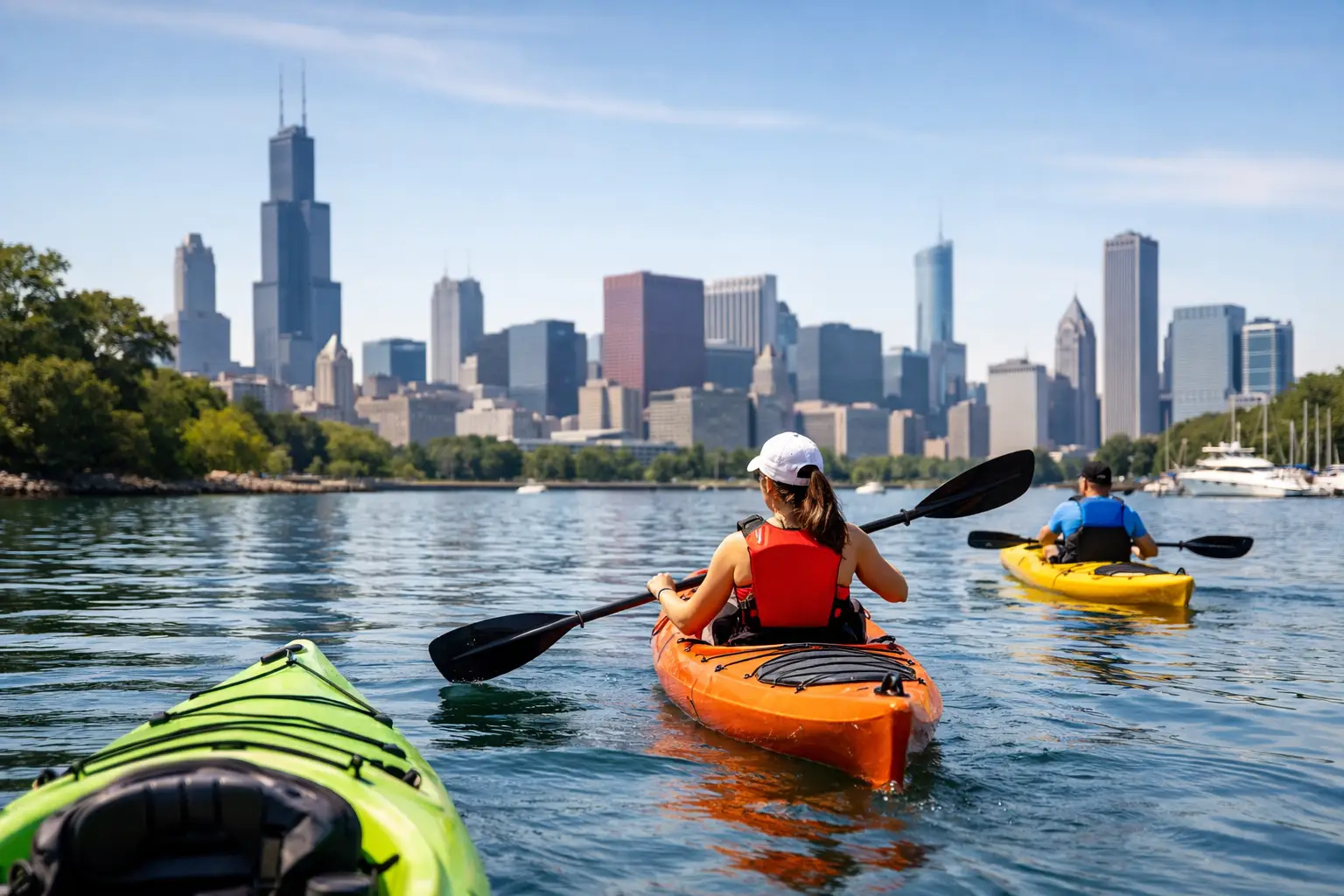
For first-time kayakers, an out-and-back paddle near the launch is usually the sweet spot. You can practice basic strokes, get comfortable steering, take a break whenever needed, and return without wondering where the pickup vehicle is hiding. Tandem kayaks can be a great option for couples, a parent and child, or anyone who wants a little extra confidence from sharing the work.
Families should also plan around attention spans, not just fitness. A shorter paddle with time for shoreline snacks, campground games, and a campfire can be a bigger win than a long route that ends with tired kids and grumpy adults. Dogs deserve the same consideration. Dog-friendly kayaking can be a blast, but bring fresh water, a secure dog PFD, and a plan for keeping your pup calm around new sounds and passing boats.
More experienced paddlers can use river paddle maps to build a longer scenic outing, but they should still leave a generous cushion before the final launch cutoff. Darkness changes everything on the water. A map is not a permission slip to squeeze in “just one more mile.”
Turn a Day Paddle Into Illinois River Camping
The smartest map-based decision may happen before you ever pick up a paddle: deciding to stay overnight. Camping near Starved Rock State Park gives you more breathing room than a packed day trip. You can paddle in the afternoon, settle into camp, make dinner, and wake up near the water instead of spending the evening on the highway.
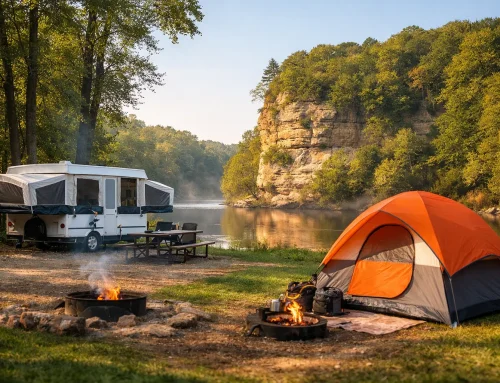
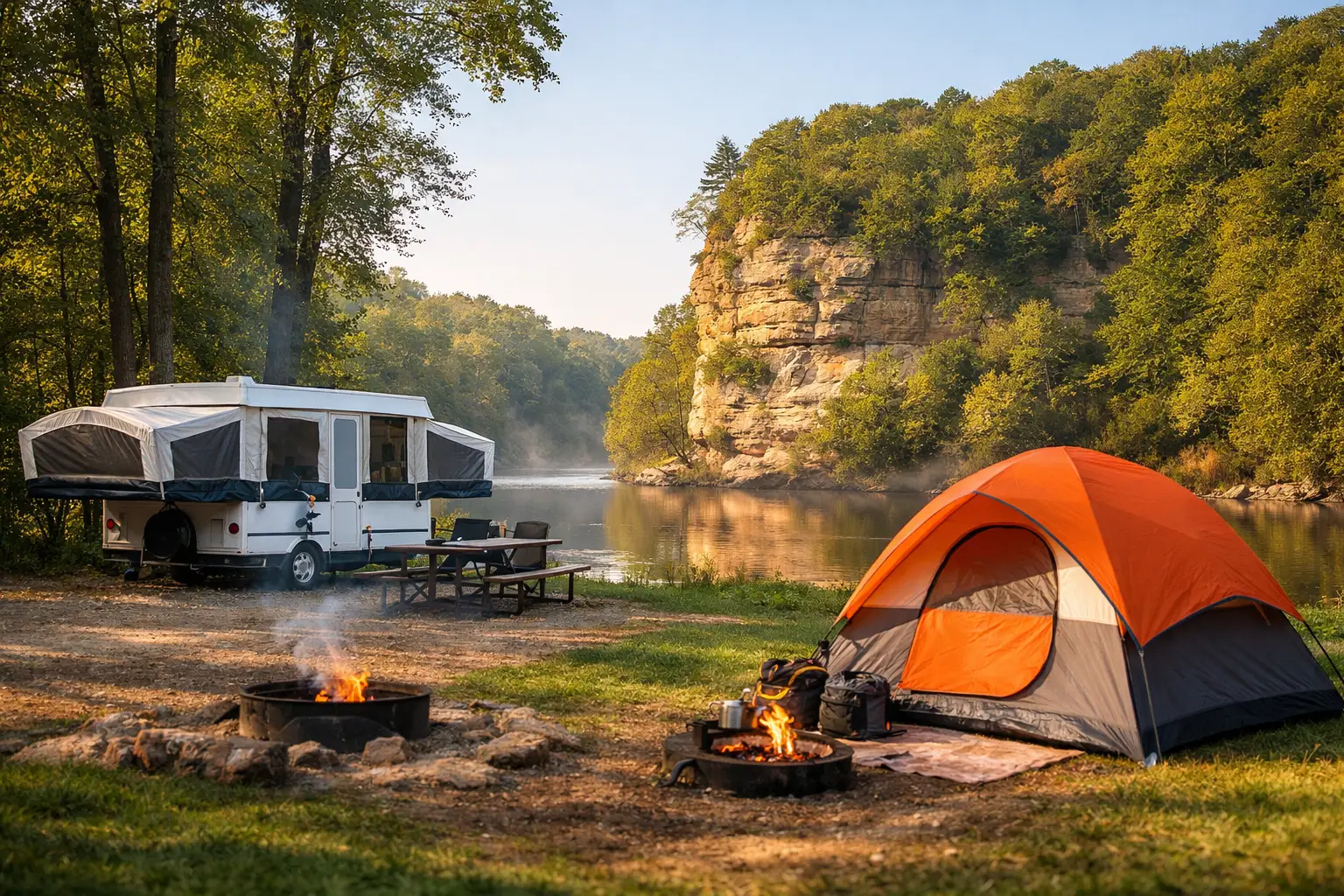
Waterfront camping works especially well for Chicago-area visitors who want the outdoor reset without a giant expedition. Tent camping keeps it classic and simple. A pop-up camper can add convenience for families or friends who want a more organized home base. Teardrop camping brings a compact, cozy setup for couples who like their nature with a little extra comfort.
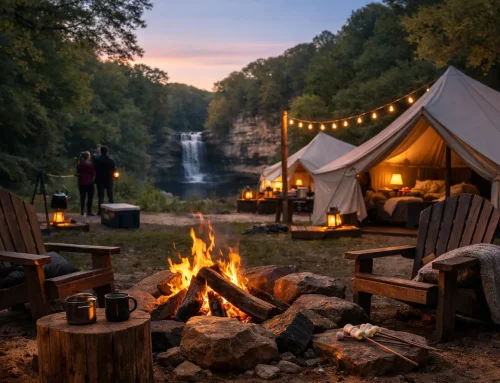
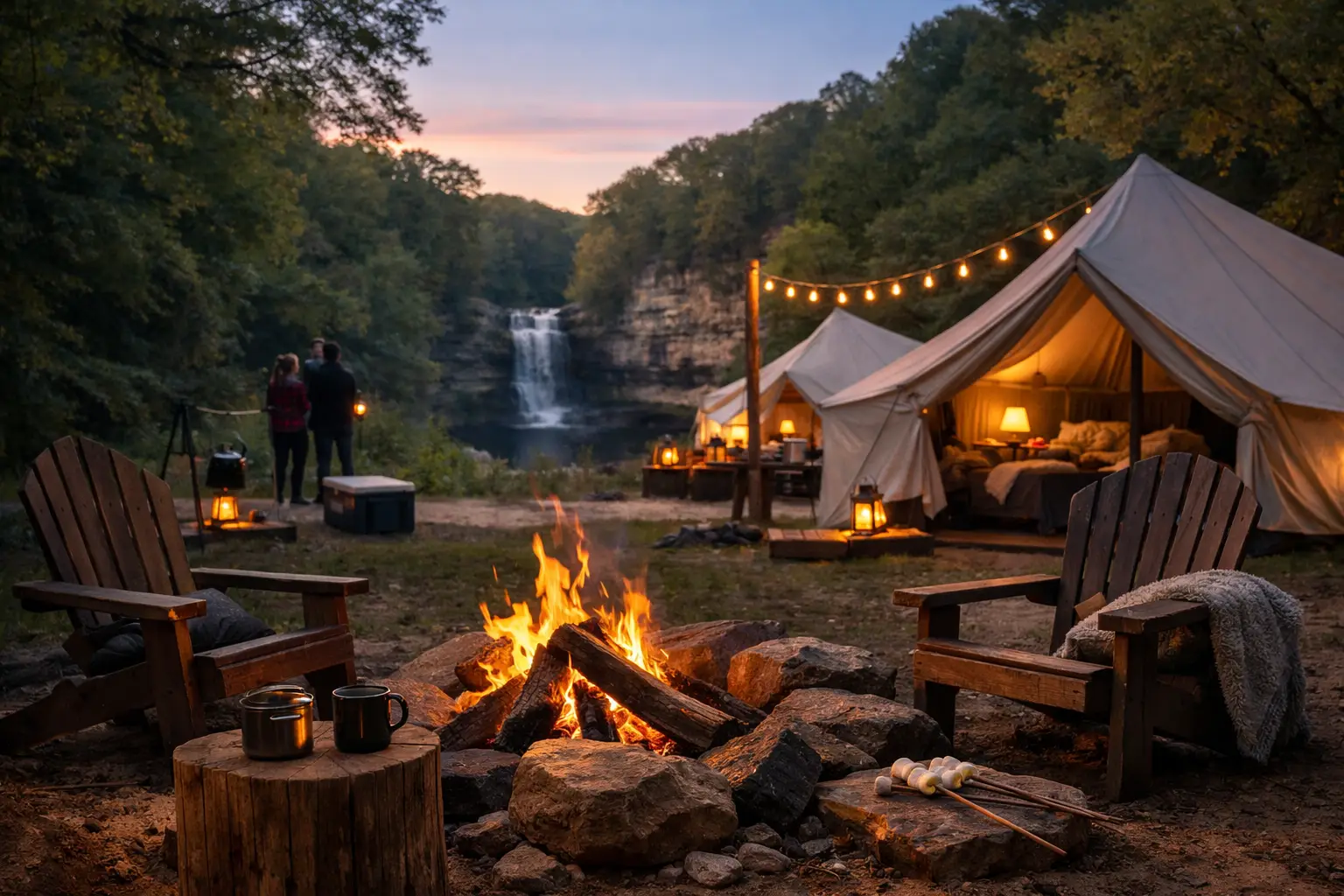
If sleeping on the ground is not your version of stress relief, glamping near Chicago can make the trip feel more like a getaway than a gear test. The trade-off is simple: more comfort often means less flexibility and more advance planning. Book early for popular weekends, especially when the weather is finally perfect and everyone else has the same excellent idea.
Camping also gives you the chance to enjoy Starved Rock country at a better pace. Spend one part of the day on the Illinois River, another exploring the nearby park area, then come back to camp with no pressure to cram every good thing into a few hours.
A Simple Map Check Before You Launch
You do not need a giant planning spreadsheet. A five-minute route check can prevent most avoidable hiccups. Confirm your launch and return location, the direction you plan to paddle, the approximate time you will be on the water, and the weather window. Make sure everyone knows the group plan if someone wants to turn around early.
Then handle the practical stuff: charge your phone, keep it protected from water, bring drinking water, apply sunscreen, and wear your PFD. If you are renting, listen closely during the safety instruction. A guide or outfitter knows the local conditions, the practical boundaries, and the small details that rarely show up on a general map.
If you bring your own boat, check the site rules and day-access process before arriving. That way, your group is ready to unload, launch, and start having fun instead of circling the lot while the paddling window gets smaller.
Let the Map Create Space for the Good Part
A river map should make your outing feel easier, not more complicated. Use it to choose a realistic route, understand your surroundings, and give your group a little structure. Then put it away often enough to notice the water, the sandstone bluffs, the laughter from the next kayak, and the satisfying quiet that happens when nobody is refreshing their inbox.
Pick a route that matches your crew, wear the life jacket, leave time for camp if you can, and let the Illinois River handle the rest of the reset.