The Illinois River flatwater kayaking safety guide starts with a reassuring truth: your first paddle does not need to feel like an expedition. Across from Starved Rock State Park, flatwater gives Chicago-area families, couples, friend groups, and curious first-timers room to settle in, find their rhythm, and enjoy the scenery. But easy water still deserves smart habits. The goal is 100% fun and 100% stress relief, with a PFD on your body and a plan in your head.
Why Flatwater Still Calls for a Safety Plan
Flatwater kayaking is a fantastic entry point because there is no whitewater to negotiate and no technical rapids demanding quick decisions. In a dam-controlled environment, water levels are generally more predictable than on a free-flowing river. Shallow areas and calm conditions can make the experience feel approachable even if you have never held a paddle before.
That said, calm is not the same as consequence-free. Wind can build across open water, weather can change, boats may create wakes, and a kayak can tip if someone leans too far, stands up, or treats it like a floating couch. The good news is that the right preparation handles most of those concerns before your boat leaves shore.
Think of safety as part of the vacation package, not homework. A few minutes spent fitting a life jacket, learning a basic turn, and checking the forecast buys a much more relaxed afternoon on the water.
Start With the Right Paddle Plan
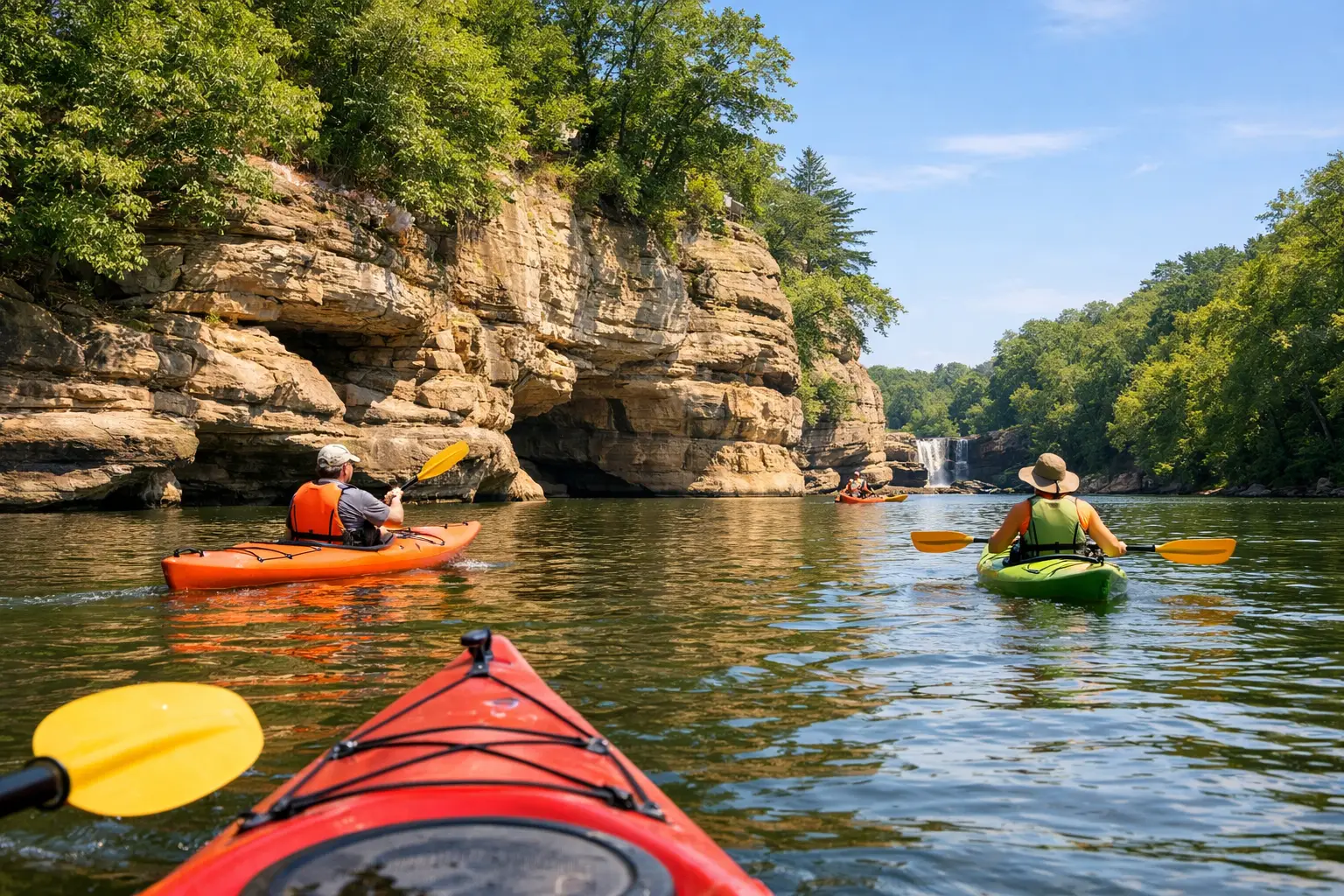
Your safest outing is the one matched to your group, your comfort level, and the day’s conditions. If this is your first time, a guided kayak tour is often the easiest choice. You get equipment, safety instruction, a route, and a guide who knows how to keep the group moving comfortably. That means less time wondering where to go and more time looking up at the bluffs.
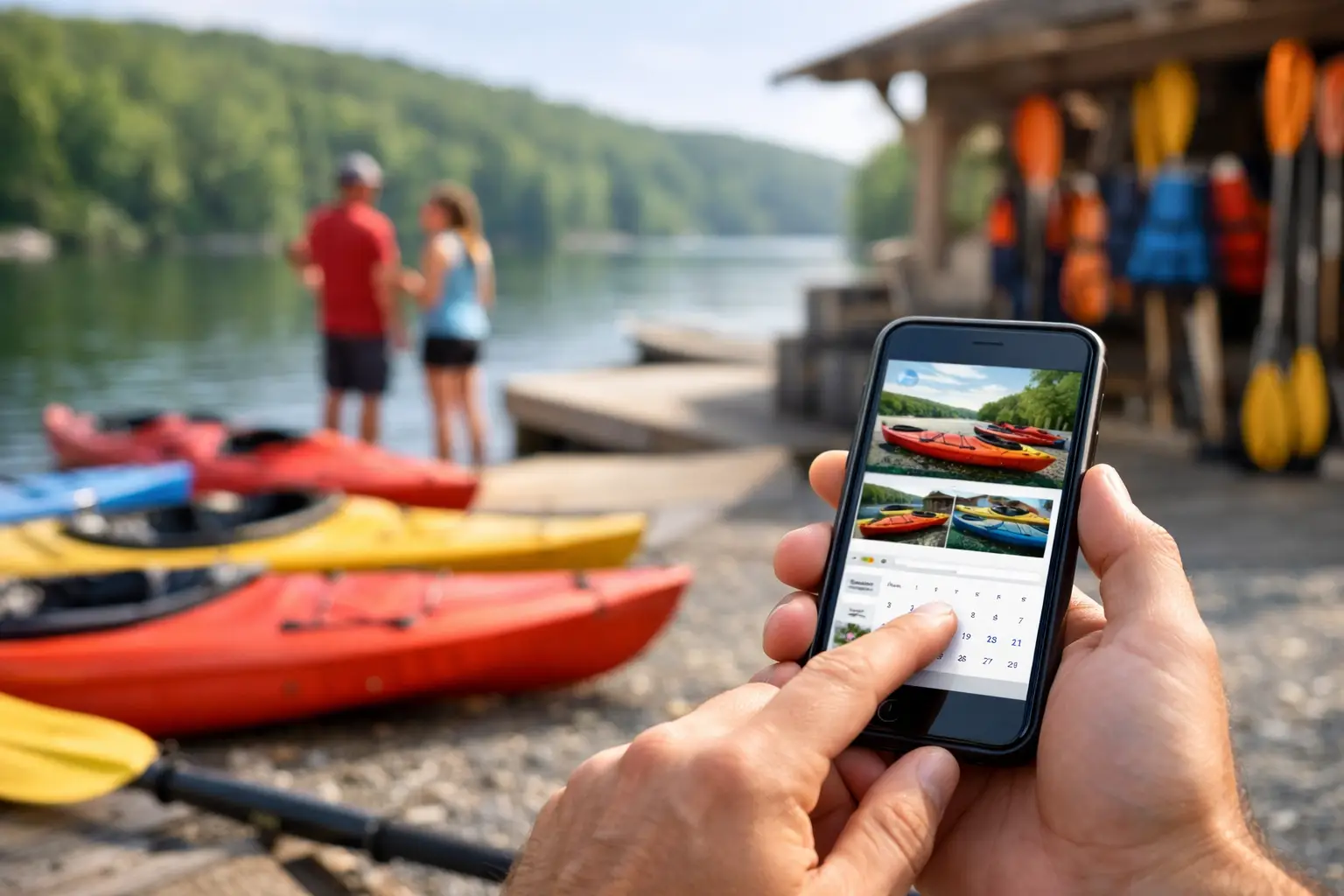
A rental can be a great fit for paddlers who want a slower, independent day. Before launching, make sure everyone understands the route, turnaround point, expected return time, and any last-launch cutoff. Launch cutoffs exist for a reason: they protect your group from getting caught out as daylight, weather, or staffing conditions change.
Tandem kayaks are a smart option for an adult and child, a nervous first-timer paired with a confident paddler, or a couple willing to communicate. The trade-off is coordination. Pick one person to call the rhythm and direction. A simple “easy strokes,” “stop,” and “back up” can prevent the classic tandem move where both paddlers work hard and somehow travel in circles.
Illinois River Flatwater Kayaking Safety Guide: Gear That Matters
The most essential piece of gear is also the least negotiable: a properly fitted personal flotation device, or PFD. Wear it from the moment you step near the launch until both feet are back on land. Do not strap it to the kayak. Do not use it as a seat cushion. A PFD only helps when it is on you.
A good fit is snug but comfortable. Tighten the straps, then have someone gently lift the shoulder area. If the vest slides up toward your ears, tighten it again. Kids need PFDs sized for their weight, and adults should check theirs before every launch, especially if the straps were adjusted for someone else earlier in the day.
Bring water, sunscreen, and clothes that can get wet. Secure your phone, keys, and any medication in a dry bag or waterproof case. Sunglasses are excellent on bright water, but use a retainer strap. The river has collected enough expensive sunglasses already.
For dog-friendly kayaking, give your pup an appropriately sized canine life jacket too. Even strong swimmers can tire, get disoriented after a surprise splash, or struggle to climb back into a kayak. Start with a calm dog, introduce the boat slowly from shore, and keep the outing short the first time. A dog that is stressed, overly excited, or determined to leap after every bird will have more fun enjoying camp than riding in a kayak that day.
Get In, Sit Low, and Stay Centered
Most beginner wobbles happen before the kayak has even moved. Use the launch instructions provided by your outfitter, keep your weight low, and step into the center of the boat one foot at a time. Lower yourself into the seat instead of dropping down quickly. Once seated, keep your feet on the foot braces or floor and your hips centered.
On the water, your best stability tool is boring posture: sit low, look ahead, and avoid sudden leaning. If you need to reach for something, bring it close rather than stretching dramatically over the side. If a friend paddles up beside you, resist the urge to grab their kayak for balance. Two unstable boats do not make one stable boat.
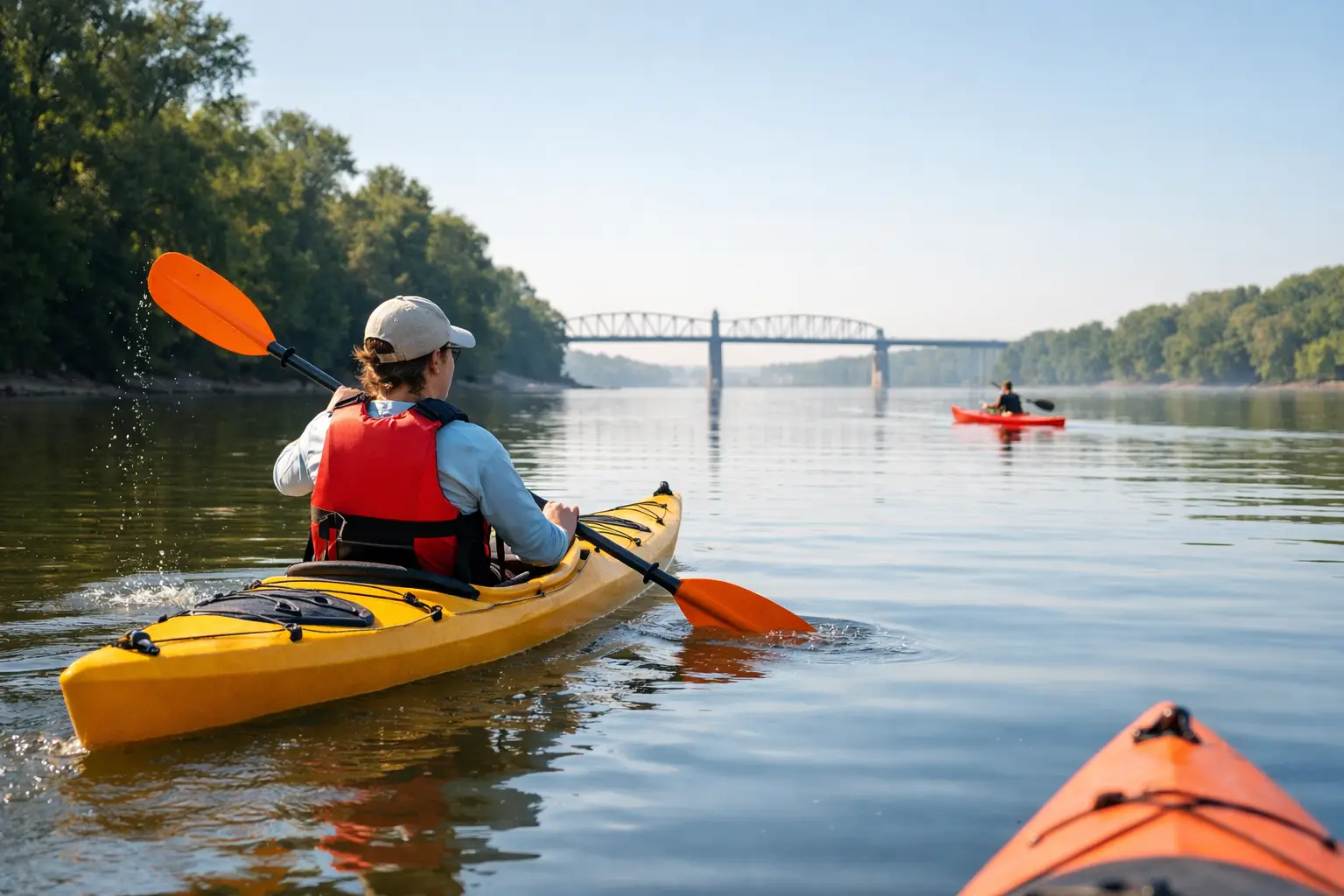
A basic forward stroke, reverse stroke, and wide sweep stroke are enough for a relaxed flatwater outing. Hold the paddle with hands just wider than shoulder width. Use your torso to rotate rather than trying to muscle every stroke with your arms. For turning, sweep the paddle in a broad arc on the opposite side from the direction you want to go.
Watch Weather, Wind, and Boat Traffic
Check conditions before leaving home and listen closely to staff instructions at the launch. Thunder, lightning, strong wind, dense fog, or changing conditions are reasons to delay, shorten, or cancel a paddle. That is not a ruined day. It is a good excuse to set up the tent, take a hike, or enjoy the campground first and save the water for better conditions.
Wind is often more tiring than first-timers expect. A light breeze can become a workout when it blows directly against your route, especially later in the day. Start by paddling into the wind when possible, so you have an easier return. If the breeze builds, stay close to shore and turn around before everyone becomes exhausted.
Other vessels may create wakes. When a wake approaches, point the front of your kayak toward it at a slight angle rather than letting it hit broadside. Keep your body loose, take a pause if needed, and let the kayak rise and settle. There is no prize for racing a wake.
Give fishing lines, docks, wildlife, and other paddlers plenty of room. Avoid crowding birds or trying to paddle close for a photo. The best wildlife viewing happens when animals do not feel like they are being chased by a bright plastic boat full of camera phones.
What to Do if Your Kayak Tips
First, stay calm. Your PFD is doing its job, and flatwater is one reason this is an excellent place to learn. Stay with your kayak if it is safe to do so. A kayak is easier for others to spot than a swimmer, and it provides flotation and something stable to hold.
Do not rush to stand up in uncertain depth or uneven bottom conditions. Signal for help, follow your guide’s instructions if you are on a tour, and move carefully toward shore when appropriate. If you are renting, ask before launch what the local recovery plan is and where to go if you need assistance. Knowing the answer ahead of time makes a surprise situation feel much smaller.
The prevention piece is simple: keep your PFD on, avoid standing in the kayak, do not overload it, and skip alcohol or anything else that affects balance and judgment. Save the celebration for dry land.
Make It Easy for Kids and First-Timers
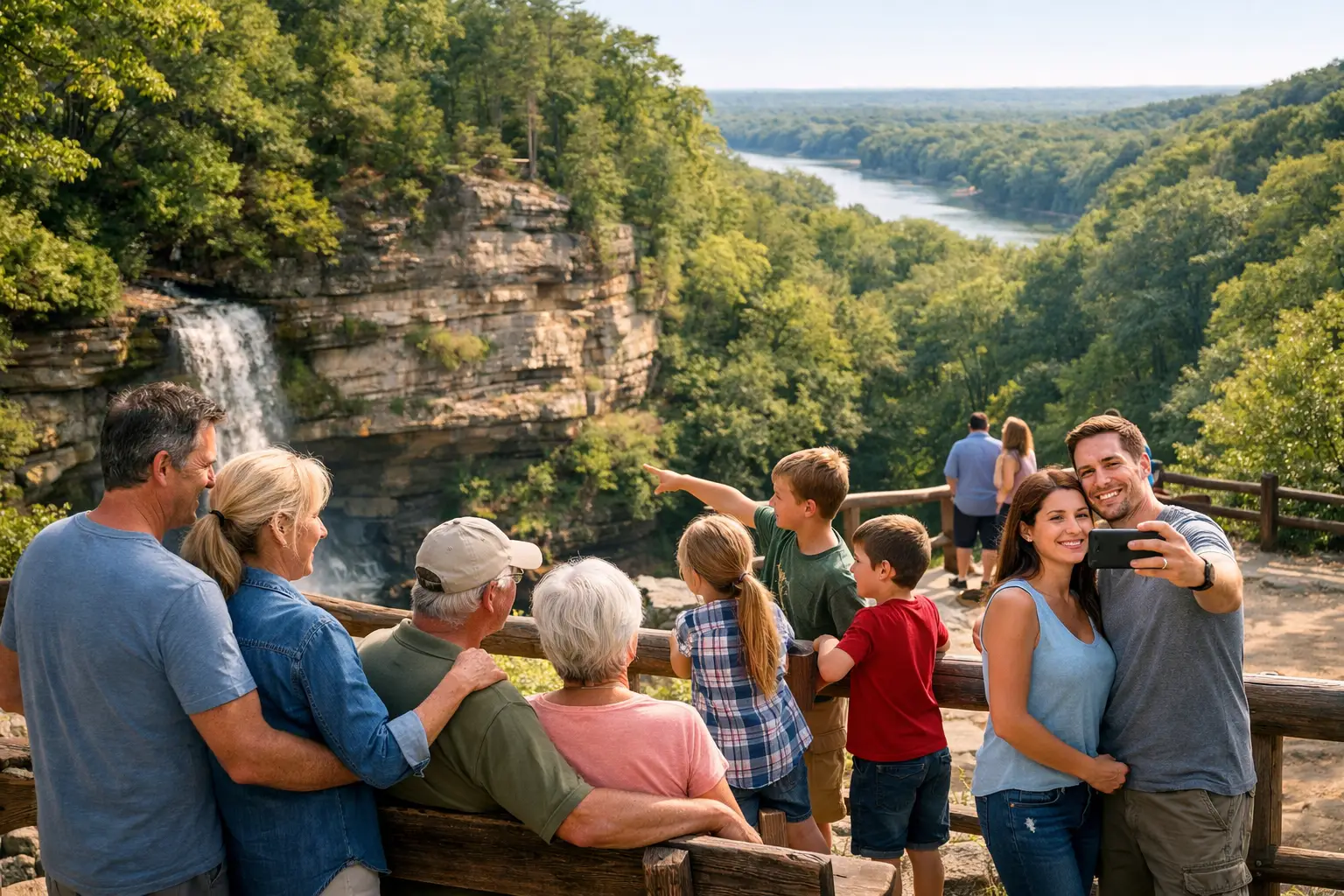
The best family paddle is not the longest one. Set a modest goal, leave plenty of time, and let kids know that turning around early is completely fine. Offer water breaks, point out landmarks, and keep the mood light. A child who ends the trip saying “Can we do that again?” is more successful than one who paddled an extra mile while miserable.
First-timers should say so out loud. Good guides and outfitter staff want to know who needs extra help with fitting a PFD, entering a kayak, or practicing a turn near shore. There is zero kayaking street cred attached to pretending you know what you are doing. Asking one question at the dock can prevent twenty anxious thoughts on the water.
If you are making a weekend of it, waterfront camping turns a day trip near Chicago into a real reset. Tent camping, pop-up camping, tear-drop camping, and glamping-style stays all give your crew a home base without adding a complicated travel day. Paddle when conditions are best, then trade wet shoes for a camp chair and let the river do the rest.
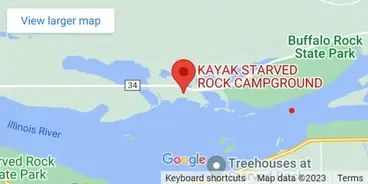
Kayak Starved Rock Campground is built for that kind of easy escape: clear on-site direction, flatwater access, guided options, and the simple reminder that good outdoor days start with good decisions. Fit the PFD, respect the weather, stay aware of your group, and leave enough time to enjoy the quiet parts of the river.